
Issuing securities alone is not enough to internationalize Armenia’s capital market. Infrastructure is needed to make the Armenian market visible and accessible to foreign investors.
The work carried out in this direction in recent years is already producing its first results — from reciprocal accounts with international depositories to attempts to establish direct links between stock exchanges.
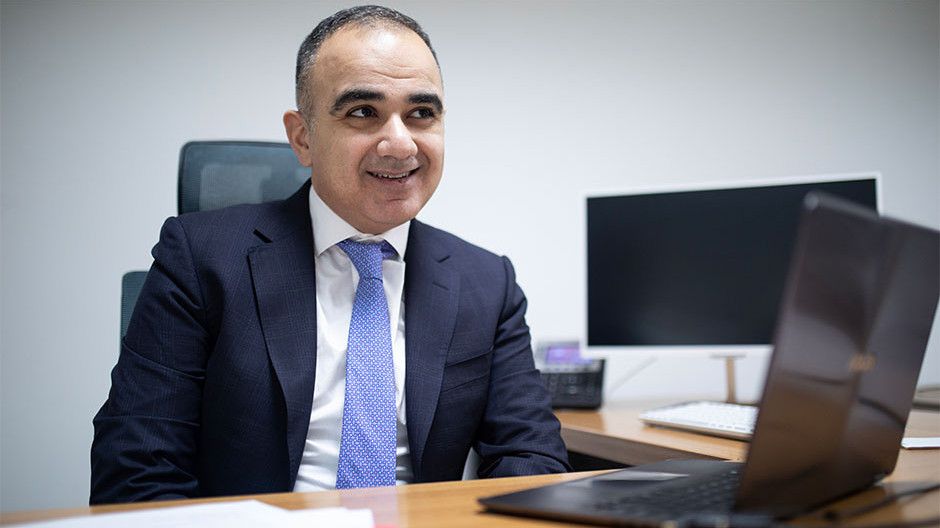
According to Hayk Yeganyan, CEO of the Armenian Stock Exchange, the exchange itself is neither an investor nor an issuer in this process but an important part of the market infrastructure.
In his words, if a country wants to internationalize its capital market and become visible internationally, it needs the appropriate infrastructure.
“We are infrastructure; we create infrastructure. One of our mandates and missions is to connect Armenia’s capital market with foreign investors through infrastructure,” Yeganyan said.
From Reciprocal Accounts to International Markets
In recent years, these connections have begun to take shape through cooperation with international central securities depositories.
According to Yeganyan, such reciprocal accounts have already been established with several countries.
Cooperation with the UAE began in previous years, followed by a similar arrangement with Uzbekistan, while reciprocal accounts had already existed with Kazakhstan. Last year, the Polish side also opened an account in the Armenian market.
The practical significance is fairly straightforward: a foreign institutional investor can purchase an Armenian security and hold it in its home country’s depository without having to build the entire process of working with the Armenian market from scratch.
The same mechanism works in the opposite direction, giving Armenian investors access to securities traded in other markets.
According to Yeganyan, the next stage is to establish connections at the stock-exchange level.
The goal is for a participant in the Armenian exchange to be able to see other countries’ exchanges within their working environment, while participants in those markets would also be able to see the Armenian exchange.
“That is what we are working on — building bridges and infrastructure,” he said.
A Foreign Account Must Be Used
However, an important measure of the effectiveness of international connections is not simply whether accounts have been opened.
According to Yeganyan, if an account is opened for a foreign institutional investor but is not used, it is difficult to consider such a project successful.
Real results begin when that infrastructure becomes part of an active investment connection.
In this respect, he considers the growing presence of institutional investors to be one of the changes taking place in the market.
According to him, institutional investors now account for around 12%, representing an important structural change in the market.
At the same time, offering Armenian securities to foreign investors is not limited to opening accounts or creating technical infrastructure.
It also requires roadshows, presentations, research and sustained work.
Yeganyan notes that foreign investors previously came to Armenia, attended presentations and explored local opportunities. Now the reverse process is also becoming visible: Armenian investment companies and even small and medium-sized banks are looking abroad for institutional investors to whom they can offer Armenian government or corporate securities.
According to him, it is impossible to move forward without research.
A security cannot simply be offered to an investor. The investor needs to understand its risks, returns and the prospects of the market.
The Capital Market Is Not the Work of a Single Institution
Hayk Yeganyan views capital market development as a transformation of the entire financial ecosystem.
According to him, domestic securities issuance has also become more active in recent years, including among small and medium-sized businesses. This demonstrates that market development is expanding beyond large companies.
A government support program has played an important role in this process, resulting in more than 20 issuances.
Companies that had never previously considered issuing securities as a financing option have also entered the market.
According to Yeganyan, this is important because capital market development is not the result of the work of a single company or institution.
It simultaneously requires government policy, regulation, exchange infrastructure, investment companies, banks, underwriters and, ultimately, investors.
Retail Investor Activity Could Be the Market’s Most Important Change
According to the head of the exchange, another notable change in Armenia’s securities market is the growing activity of retail investors.
When companies are listed or securities are placed, one important issue is the composition of investors, and retail investors have recently come to occupy a significant place within that structure.
For Yeganyan, this is particularly important because institutional investors generally already possess financial knowledge, an investment strategy and clear criteria.
The situation is different for retail investors. Bringing them into the market requires financial education, explanatory work and accessible tools.
“An institutional investor already knows what they want. You can talk to them for 15 minutes, answer a few questions, and they will make a decision. But with a retail investor, work needs to be done,” he said.
As a result of this work, the number of retail investors is already approaching 15,000, according to Yeganyan, while some data put the figure at around 11,000.
He says that digital investment solutions developed recently are also contributing to the expansion of this segment of the market.
From Armenian Bonds to Equities
In the context of developing digital platforms, Yeganyan considers it important that investment applications not be limited solely to Armenian securities.
In his view, these systems would be more effective if they also allowed investors to see securities available on international exchanges and over-the-counter markets.
The logic, he says, is simple: investors must first see that such an instrument exists, then begin asking questions and interacting with a financial services provider.
That interaction gradually helps develop an investment culture.
Yeganyan believes market development could also change the way Armenian businesses view equity capital.
Today, many businesspeople already act as investors, study securities and understand the logic of the market.
The next step may be the realization that their own companies can also become capital market participants by issuing bonds or shares.
According to him, the current activity in the bond market could gradually pave the way for equity offerings.
At the same time, Yeganyan points to an important issue: expectations must also be clearly defined when entering international markets and presenting Armenian securities to foreign investors.
Local issuers sometimes expect that after roadshows and increased international visibility, major foreign investors will automatically come and purchase their shares and bonds.
However, market visibility alone is not enough to attract international capital.
Financial research, continuous engagement with investors, reliable infrastructure and a market in which Armenian securities are not merely accessible to foreign investors but also understandable and attractive as investments are all necessary.