
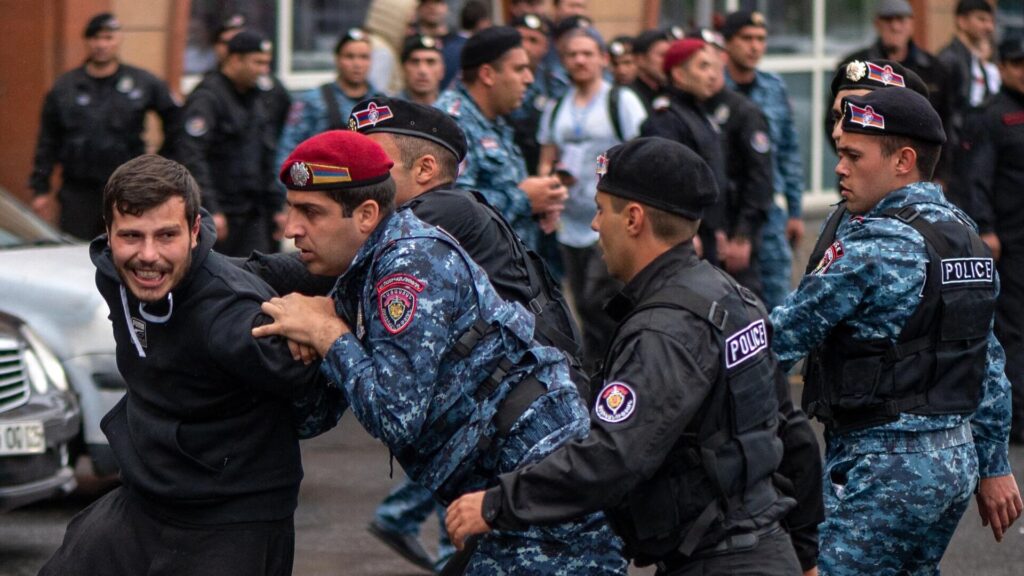
Political analyst Hakob Badalyan sharply criticizes the ongoing police reform in Armenia. He argues that it is not a reform, but a deformation of the entire system. According to him, it fails to address the core issues of public safety.
Badalyan notes that the Minister of Internal Affairs presented the results of the past year in a video. The presentation highlighted a polished and attractive “package,” with different elements labeled as reforms throughout the year. However, the real situation tells a different story. The growing criminal environment shows that the so-called reform is, in fact, a deformation of the police system.
The Preventive Function Has Collapsed
According to Badalyan, the police system no longer functions as a system. Most importantly, it no longer fulfills its primary role — prevention.
He explains that some people respond to criticism by saying the police cannot place officers at every possible crime scene. Badalyan agrees that Armenia is not small enough to eliminate crime completely. Yet the situation today clearly demonstrates that the entire preventive function of the internal affairs system has collapsed.
Crime Becomes Routine
Badalyan points out that in recent years different types of “showdowns” involving firearms or cold weapons have become almost routine. The volume of illegal weapons remains extremely high. Criminal subculture “freely flourishes,” including in areas near schools.
As a result, the public increasingly feels that there is no visible law and order. Many people believe that “everything is allowed.” The criminal element appears to have received an invisible green light and lost any sense of caution.
Rebranding Instead of Reform
Badalyan also criticizes what he calls “rebranding under the name of reform.” He refers to the introduction of the new patrol service and the police guard.
He argues that work efficiency has not changed at all. The patrol service is new, and the guard is new, but the same officials continue to use the same methods. According to him, it is unrealistic to expect fundamentally different results under a new brand. What is being presented as reform, he concludes, is merely a change of label.
Superficial Changes Cannot Fix the System
Badalyan emphasizes that without systemic, structural, and deep changes in the mindset of the institution, no reform can succeed. Any reform lacking these elements will remain superficial. It will neither restore public trust nor provide real security.