
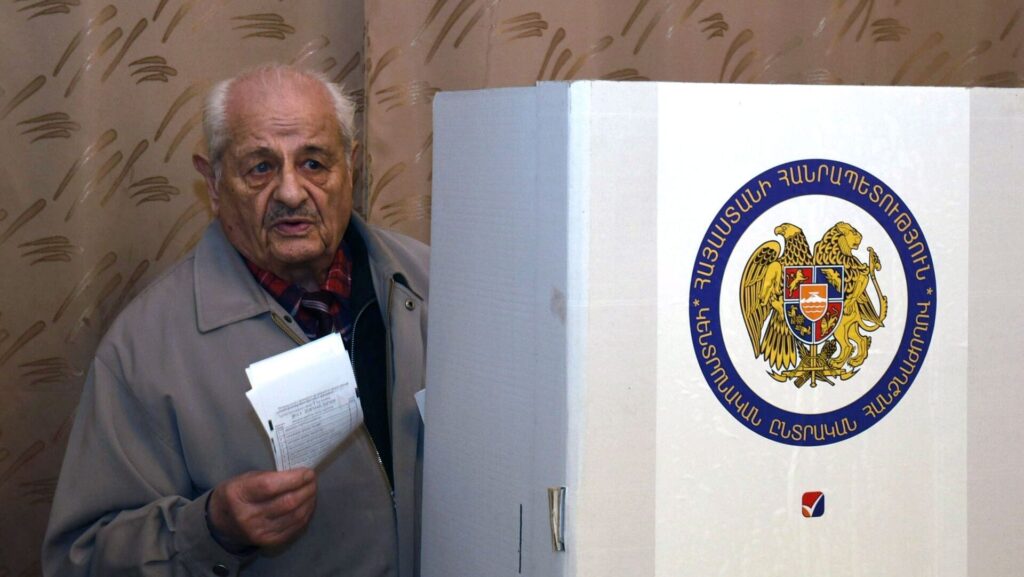
Discussions around electoral processes in Armenia continue to intensify, focusing not only on political competition but also on predicting voter behavior. Sociologist Artur Paronyan argues that there is a segment of voters who do not genuinely support the ruling authorities but may still participate and vote for them under certain conditions.
According to him, this largely relates to administrative resources. Individuals working within the state system, due to their positions and dependencies, often find themselves in situations where they ensure participation and support for the власти, both for themselves and their subordinates. “There are those who are interested, those who may be misled, and those who may be compelled under certain conditions,” he notes.
At the same time, the sociologist emphasizes that even with these factors, the picture is not straightforward. He explains that sociology measures not administrative pressure, but the real voter — the individual who is ready to get up in the morning, go to a polling station, and cast a vote. From this perspective, he argues, the number of voters genuinely willing to support the ruling authorities is smaller than those with opposition-leaning views.
However, a second key issue arises — the fragmentation of the opposition. According to Paronyan, the absence of a unified opposition means that even voters who are dissatisfied with the authorities often struggle to make a clear choice. “People say that on the day of the election they will decide in the morning who to vote for,” he explains.
This group, described as “latent opposition voters,” often either does not participate or fails to decide in time. As a result, the outcome of the elections depends not only on turnout, but also on whether the opposition can mobilize this specific segment.
Paronyan also highlights the strategy of the ruling authorities, noting that it is clearly structured. The власти rely on a stable core and adjacent groups, focusing their campaign efforts on mobilizing these voters. “They are not trying to appeal to everyone, but are working in a targeted way with those most likely to support them,” he emphasizes.
From a sociological standpoint, the focus remains on the real voter rather than those influenced by pressure. This leads to the conclusion that the власти’s stable support base is smaller than the broader pool of opposition-minded citizens.
This implies that a large number of voters would not support the власти under any circumstances. If they participate, they are likely to vote for any opposition force, regardless of its chances of passing the threshold. Therefore, their turnout becomes a decisive factor.
The fragmentation of the opposition further complicates the situation. Without a dominant force, many voters remain uncertain and delay their decision until election day. This undecided yet opposition-leaning group could ultimately determine the outcome.
Speaking in numerical terms, Paronyan estimates that in Yerevan the ruling authorities may receive around 30–32%, while opposition forces could surpass 50%, creating a gap of over 100,000 votes. In smaller cities, the situation becomes more balanced, with власти potentially reaching about 40%, though this still does not ensure an advantage.
Recognizing this, the authorities focus on rural areas, aiming to secure over 50% support there. This explains their campaign emphasis on rural communities and older voters.
Meanwhile, the opposition faces the complex task of engaging diverse social and ideological groups. According to Paronyan, there are social, ideological, and nationally oriented opposition segments, as well as groups that are not being addressed by any political force.
Ultimately, the election outcome will depend not only on overall turnout, but on how effectively political actors mobilize their constituencies — especially the “latent opposition” voters.