
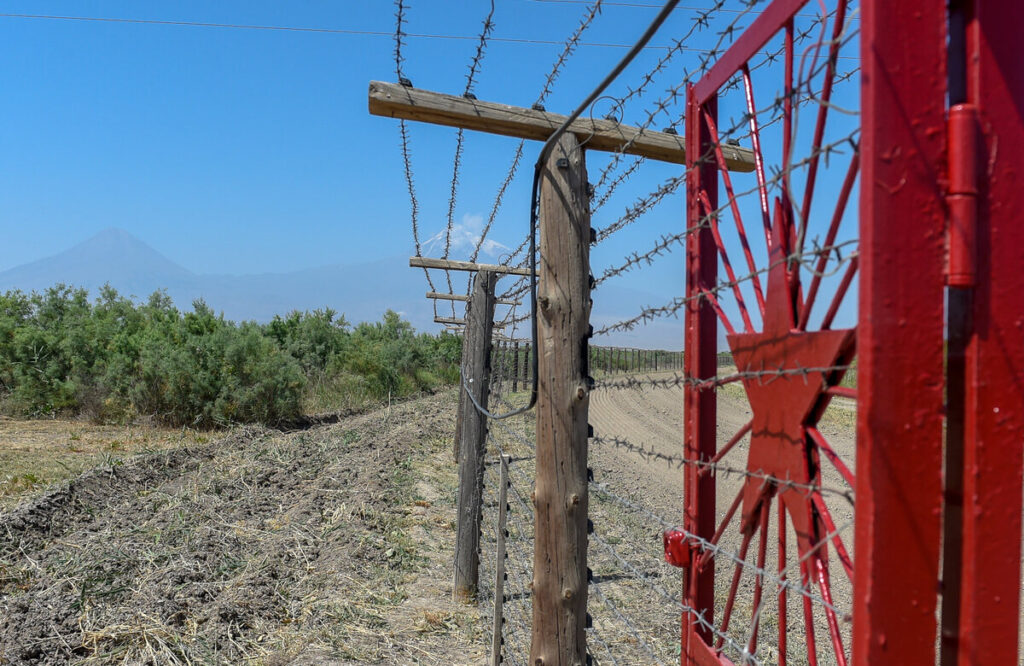
No one in Armenia opposes the unblocking of borders, particularly with Turkey, but when raising this issue, it’s crucial to consider the timeliness of such a step: how prepared are Armenia’s economy and Armenian producers for this move? This was stated by David Ananyan, former head of the State Revenue Committee (SRC).
He reminded that Armenia, as a member of the Eurasian Economic Union (EAEU), must also take these aspects into account. “We need to ask ourselves whether Armenia has the right to pursue a customs and tariff policy independently of the EAEU to mitigate potential damage from opening the border through specific duties,” Ananyan noted, emphasizing the need to consider the risks of the economy’s insufficient readiness for this step.
David Ananyan added that, in addition to having a large number of major enterprises, Turkey actively subsidizes its production. This applies not only to agriculture, as commonly assumed, but also to industry, particularly export-oriented companies. This enhances the competitive advantages of Turkish businesses.
Former Finance Minister Vardan Aramyan clarified what specific risks his colleague referred to. “It is well known that when borders are opened, a stronger economy and larger enterprises tend to displace smaller companies from a weaker economy unless the state takes measures to support local producers. This is an objective reality: large companies benefit from the so-called economies of scale, which allow them to reduce production costs, offer lower prices, and thereby increase competitive pressure on small businesses,” Aramyan explained.
According to Aramyan, a key factor is the readiness of the structures shaping the state’s trade policy for border opening. “We cannot rely on unilateral protection of domestic producers. There’s no need to fear opening borders, but it’s essential to implement a comprehensive set of effective protective measures to prevent domestic enterprises from being outcompeted by larger rivals from neighboring countries. For instance, if it’s determined that a particular sector cannot withstand competition in the long term, programs can be organized to retrain workers for employment in other fields. Moreover, globally, agriculture is traditionally supported by state subsidies, as its preservation is a critical component of food security,” Aramyan emphasized.