
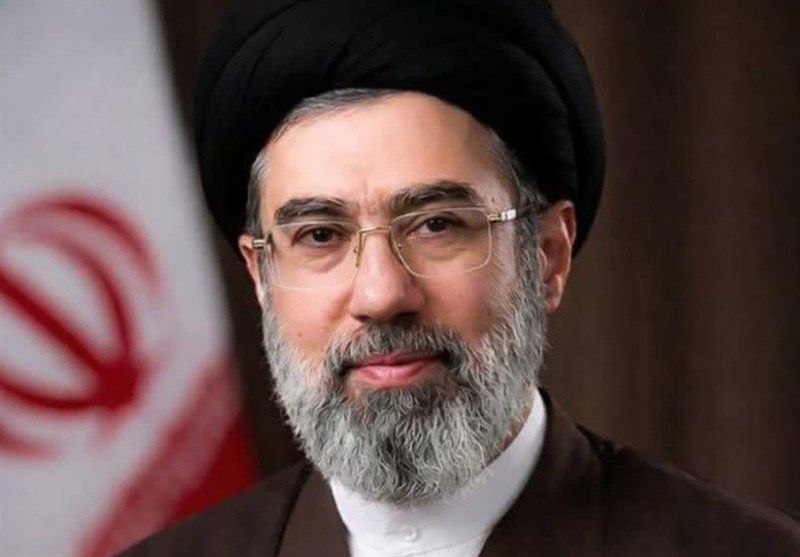
Iran has officially announced that the country’s new Supreme Leader is Mojtaba Khamenei, the second son of Ali Khamenei.
The choice has strategic and military-political reasons
According to Iran expert Vardan Voskanyan, the election of Ayatollah Mojtaba Khamenei as Supreme Leader sends several signals to the outside world. First, it demonstrates the continuity of Iran’s political system.
“Second, the new Supreme Leader is one of the most influential figures within Iran’s deep state. He participated in the Iran-Iraq war and maintains close ties with the Islamic Revolutionary Guard Corps. In wartime conditions, this choice therefore has not only religious but also clear military-political justification,” he said.
Finally, the analyst stressed that the decision also sends a message that even a powerful superpower like the United States cannot impose a leader on Iran or influence the selection of that leader as long as the country exists as an independent state.
Ali Khamenei was reportedly opposed
Iran expert Zhanna Vardanyan notes that there is widespread discussion suggesting Mojtaba Khamenei may have been selected under pressure from the Islamic Revolutionary Guard Corps.
“If this information is correct, Mojtaba Khamenei will most likely continue his father’s political line and may even adopt a tougher stance, considering his past activities, his ties with the IRGC, and the new conditions Iran is facing,” she said.
Vardanyan emphasized that one of the key and sensitive issues remains the reaction of Iranian society, given the attitude of certain segments of the public toward his candidacy.
“His leadership ambitions have been discussed since the 2000s. At that time, reformist circles believed he had managed to secure the necessary agreement with the IRGC to become the next leader. During the presidential elections of 2005 and 2009, Mojtaba supported Mahmoud Ahmadinejad. He has also been accused of helping falsify the results of the 2009 election in Ahmadinejad’s favor.
It is notable that during protests after the election, demonstrators chanted: ‘Mojtaba, may you die before becoming leader,’” the expert said.
Moreover, there are claims that Ali Khamenei himself opposed the idea of his son becoming the next Supreme Leader or even having his candidacy considered.
“For him, the hereditary transfer of power was problematic because it contradicts the values of the Islamic Revolution. Instead, Ali Khamenei reportedly preferred Ebrahim Raisi as a successor. From the mid-2010s onward, Raisi’s name was widely discussed as the most likely candidate for Supreme Leader. There were many indicators that the system was preparing for his leadership,” she added.