
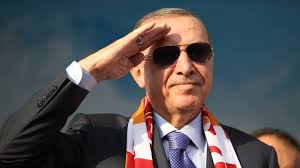
Recently, Turkish President Recep Tayyip Erdoğan signed a decree stating that citizens of several countries — Azerbaijan, Turkmenistan, Kazakhstan, Kyrgyzstan, and Uzbekistan — are no longer considered foreigners in Turkey. Simultaneously, he is accelerating the process of creating a unified Turkic alphabet. Together, these two steps provide a revealing insight into how Turkey’s new political and cultural concept is developing, and what significance it holds for the realization of the “Great Turan” idea.
According to Turkologist Tiran Lokmagyozyan, the process of implementing the idea of Turan is no longer just theoretical — it is becoming increasingly apparent and is developing step by step.
“Turan is already taking shape, step by step, and unfortunately, we Armenians are also unwittingly participating in this process,” he noted.
Lokmagyozyan recalled that a few months ago, the Prime Minister of Armenia, speaking in Istanbul before the Armenian community, stated: “We are opening the road to Turan.” According to the expert, this very phrase shows that Armenia — albeit unintentionally — is participating in a process aimed at strengthening the Pan-Turanist union.
He pointed out that while Armenian officials openly speak about the “road to Turan,” the Turkish side is acting much more cautiously. “The Turks hardly ever use this name at the official level. They try to hide their true goals, but these are clearly visible in the media. A few years ago, when they announced the creation of a gendarmerie cooperation structure, it was officially stated that it was not aimed against any third country. Yet all Turkish newspapers came out with the same headline: ‘The Turan Army Has Been Created.’ And if everyone uses the same headline, it means the directive came from above,” he explained.
According to Lokmagyozyan, this is a classic example of Turkish diplomacy — “officially not saying it, but unofficially announcing it.” He believes that Ankara is skillfully forming an ideological platform, aimed not only at political or military integration, but also at cultural and linguistic unification.
“Look, now they want to create a unified alphabet. Our neighbors — the Azerbaijanis — have already changed their script three times. The Turks once switched to the Latin alphabet, which, by the way, was created by an Armenian — philologist Hagop Martayan. Now they are trying to spread this alphabet to other countries that still use different scripts. This is state-building in action,” the expert emphasized.
Lokmagyozyan is convinced that the idea of Turan is not an abstract union, but a comprehensive strategy that encompasses economic, linguistic, and political spheres. “Once these states fully unite, the world will be faced with a giant country with a population of hundreds of millions. And they understand this. Many already view Turkey as a powerful and influential European nation with a developed economy. Erdoğan’s Turkey presents itself as one of the world’s superpowers — and that image is appealing to many,” he concluded.