
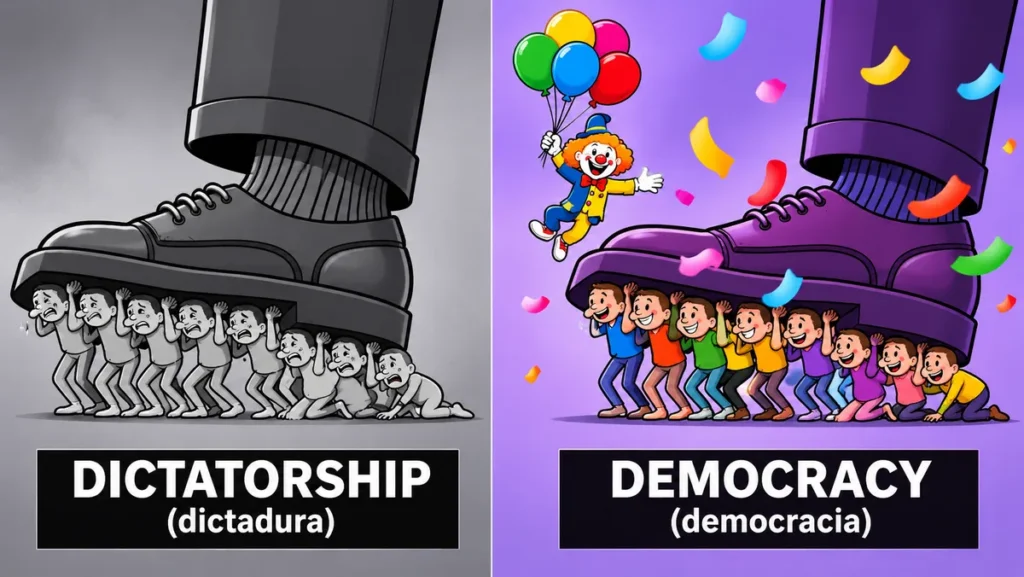
Armenia’s proposed constitution would allow a political force with a parliamentary majority to take full control of the legislative, executive and judicial branches, said legal scholar Arsen Tavadyan, who holds a doctorate-level Candidate of Legal Sciences degree.
“One political force, one person, would be able to concentrate all branches of government in their hands,” Tavadyan said.
Safeguards for judicial independence would disappear
Tavadyan said the proposed method of selecting the Supreme Judicial Council would give the political authorities greater control over the judiciary.
Under the current Constitution, the National Assembly elects five members of the council who are not judges, with at least three-fifths of all lawmakers voting in favor. The General Assembly of Judges elects the other five. The draft would give parliament the power to elect all council members.
Tavadyan was also concerned about the proposed process for reassessing judges. He said that if the draft were adopted, all judges would serve in an acting capacity. A five-member council elected by the parliamentary majority would assess their work.
Tavadyan said roughly 70–80% of the judiciary had already turned over in the past eight years. In his view, the proposed process would make judges even more dependent on whichever political force is in power.
“I’m far from saying that we have, or have ever had, an independent judiciary. But there were glimpses of independence. There were judges who made independent decisions. This would take away even those glimpses, and that is very dangerous,” he said.
Tavadyan welcomed the introduction of juries, calling them an established way for citizens to take part in the administration of justice. In his view, however, the draft’s other shortcomings cancel out the benefit of that change.
Appointments to independent bodies and the opposition’s rights on paper
Tavadyan also drew attention to what he described as an effective reduction in the voting threshold for electing Constitutional Court judges, the prosecutor general and the Human Rights Defender.
Under the current Constitution, their election requires the support of at least three-fifths of all lawmakers. The draft would retain that threshold for the first round only. An absolute majority would suffice in the next round.
In Tavadyan’s view, this would give the ruling party little incentive to reach agreement with the opposition. “If there is an opportunity for abuse and there are no adverse consequences, there will be abuse,” he said.
The draft would also curtail the president’s powers, which are already largely ceremonial. In particular, the president would lose the authority to appoint an acting prosecutor general or an acting Human Rights Defender.
Tavadyan said the proposed safeguards for expanding opposition rights would mostly exist on paper. The draft would allow the opposition to set up a parliamentary inquiry committee without relying on the majority to approve its membership. But he considers another proposed right, the ability to nominate candidates to independent bodies with multiple members, largely symbolic.
There would be no guarantee that the opposition’s nominee would be elected. The outcome would still depend on the parliamentary majority. Even if elected, the nominee would be in the minority on a body of seven or ten members.
“It’s a very simple legal device. It lets you say, ‘Look, you have rights,’ but those rights exist only on paper,” Tavadyan said.
Taking a new constitution to a referendum would be easier; amending it later would be much harder
Tavadyan also discussed the proposed changes to the constitutional referendum process.
Under the current Constitution, submitting a new draft constitution to a referendum requires at least two-thirds of all lawmakers to vote in favor. The proposed draft would lower that threshold to three-fifths.
Tavadyan said the change would make it easier for the authorities to proceed. In his view, adopting a constitution should rest on broad political agreement.
At the same time, the draft would raise the minimum number of yes votes needed to adopt the Constitution in a referendum from one-quarter to one-third of all eligible voters.
Tavadyan sees a contradiction between the two provisions. In his assessment, the proposed rules could make the Constitution extremely difficult to amend later.
Revoking citizenship could conflict with international obligations
Tavadyan also discussed the proposal to allow the revocation of Armenian citizenship under the new Constitution. He noted that the current Constitution prohibits depriving people of their citizenship.
He said the proposed wording does not make clear whether the provision would apply to dual nationals, to people who acquired Armenian citizenship later in life, or also to citizens by birth.
Tavadyan pointed out that Armenia has obligations under international law to prevent statelessness. In his view, the draft does not take those obligations into account. He also questioned the need for a mechanism to revoke citizenship when the conduct in question already carries criminal liability. “If an act already carries criminal liability, enforce the criminal law,” he said.
Tavadyan did not rule out that the proposed constitutional provisions on church–state relations could eventually be used to restrict the political activity of clergy. He noted that current law allows representatives of religious organizations to engage in political activity.
Overall, Tavadyan described the document as still being a “draft of a draft.” In his assessment, it contains many passages that need further work and could lead to disagreement or conflicting interpretations. He also sees no justification for departing from the Constitution’s traditional structure by grouping several fundamental rights in a single article instead of giving each its own article.
👉Law