
The rules that have defined global security for decades are rapidly becoming obsolete. Drones, long-range weapons, artificial intelligence, and social engineering are reshaping the very understanding of what it means to “be secure.” Today, threats come not only from the air or land but also from the digital realm, where the decisions of the majority can be manipulated by algorithms.
As emphasized by Kristine Grigoryan, head of Armenia’s Foreign Intelligence Service, an increasing number of countries are tying their security to processes beyond their borders. “Armenia is no exception,” she says. According to her, the old “rules of the game” no longer apply, and new threats are emerging rapidly, largely driven by technological advancements.
“Whereas long-range weapons were once the exclusive domain of superpowers and served as a deterrent, they are now becoming accessible to a growing number of countries, gradually eroding their preventive role. Identification systems have transformed approaches to border crossing and the very concept of borders. Social engineering tools powered by artificial intelligence have become a powerful means of influencing public opinion and political decisions. This is both astonishing and dangerous because, essentially, a state is the result of the majority’s decisions,” Grigoryan notes.
These trends are vividly illustrated by global experiences, where digital technologies are increasingly becoming not only tools of control but also weapons of resistance.
The Story of One Rebellion
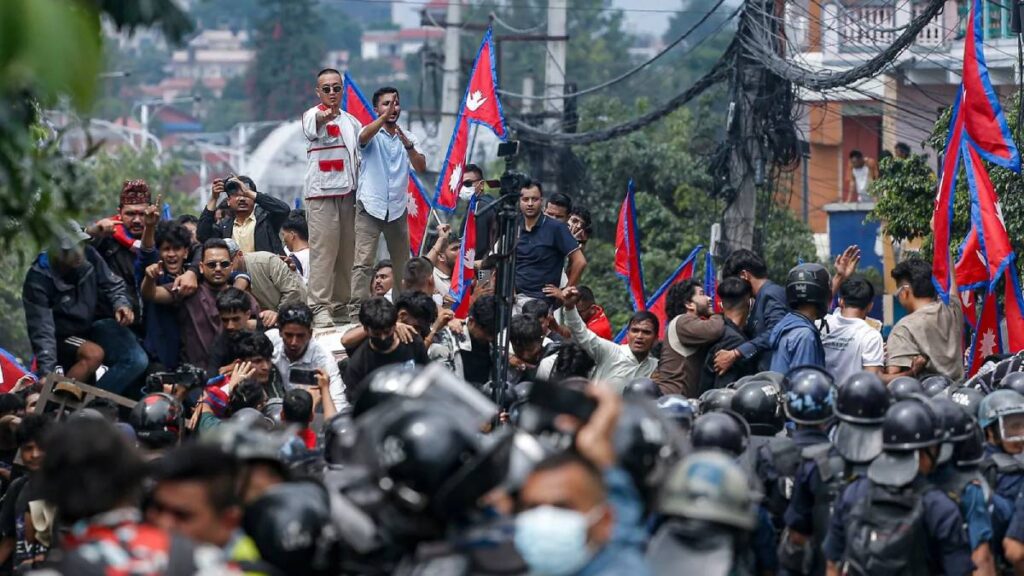
A striking example is Nepal, where young protesters turned to the decentralized messenger BitChat to bypass government censorship during massive and deadly demonstrations that led to the resignation of Prime Minister K.P. Sharma Oli.
BitChat, a Bluetooth-based messenger created by Twitter co-founder Jack Dorsey, fundamentally differs from traditional platforms: it requires no phone number or email, offers end-to-end encryption, and operates on self-organizing networks resistant to centralized shutdowns. It even includes a “panic mode”—a triple tap that instantly deletes all data.
Originally designed as a tool for emergencies and areas with limited connectivity, by the fall of 2025, BitChat has unexpectedly become a symbol of political resistance. Nepal’s experience is just part of a broader global trend.
The case of BitChat supports Kristine Grigoryan’s argument: security in the modern world is determined not only by weapons or territory but also by technologies that can serve as both tools of control and instruments of freedom. For states, this means the need to develop new strategies that encompass not only military but also informational, social, and technological domains.