
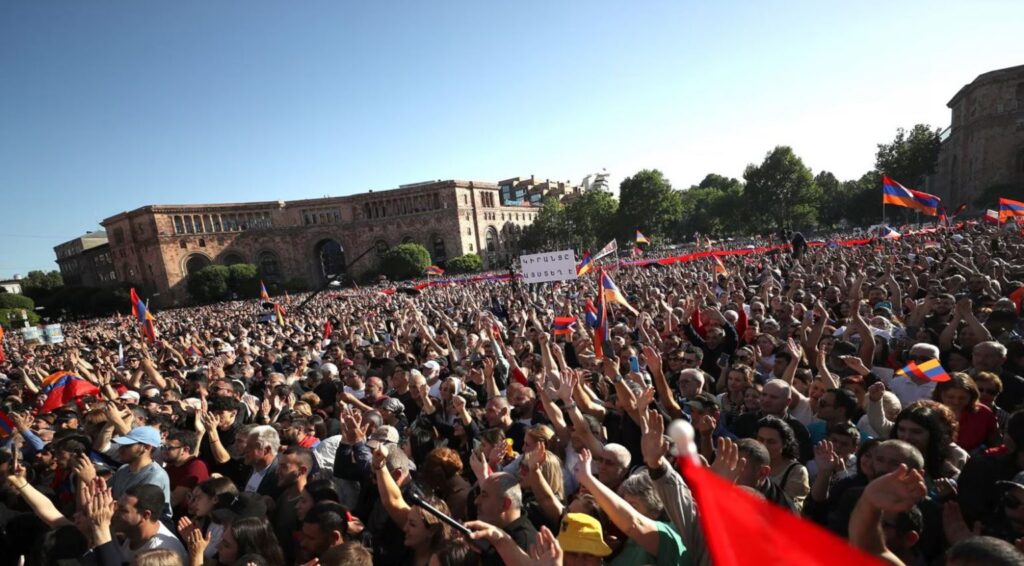
Political tensions may decrease somewhat after the upcoming parliamentary elections, but polarization within Armenia’s political system is expected to remain. According to political analyst Tigran Grigoryan, this will continue to pose a serious challenge to the country’s democratic development.
The Next Parliament Could Be Even Worse
Grigoryan argues that meaningful political and democratic dialogue becomes impossible when major political actors view one another as threats to the state.
In his assessment, the future parliament could become even more polarized than the current one, creating additional conditions for deeper political confrontation.
The Government May Benefit the Most
According to the analyst, the ruling authorities could become the primary beneficiaries of this situation.
Previously, political debates focused on the so-called former elites. Now, a new opposition force may emerge that becomes associated with Russia in public perception.
As a result, any criticism coming from such a force, even legitimate criticism, could be dismissed as representing the interests of a foreign state.
The Opposition Will Use Similar Narratives
Grigoryan believes the opposition will continue employing comparable rhetoric.
He expects ongoing narratives regarding the possible return of “300,000 Azerbaijanis” as well as accusations that the current authorities are influenced by Azerbaijan and Turkey.
Democratic Development Faces a Dead End
“This could push Armenia’s democratic development into a dead end,” the political analyst warned.
In his view, the most positive realistic outcome would be the entry into parliament of at least one small political force that is not connected to the current authorities, former ruling elites, or external political actors.
Without such representation, meaningful democratic progress will be difficult to achieve.
Positive Outcomes Are Limited Regardless of the Winner
Referring to recent polling data, Grigoryan noted that the ruling team appears likely to secure reelection.
However, he argues that even this scenario offers little optimism for democratic development.
According to him, if violations of democratic norms, constitutional principles, and political rules continue for an extended period and are then followed by renewed electoral legitimacy, this may be interpreted as public acceptance of such practices.
Institutional Checks Are Weak
The analyst also expressed concern about institutional safeguards.
He believes that most independent bodies are effectively influenced by the executive branch, while civil society remains divided between actors perceived as loyal to the authorities and those attempting to maintain independence.
As a result, effective checks and balances are largely absent.
Preparation for Negative Scenarios Should Begin Now
Grigoryan argues that those concerned about Armenia’s democratic future should already be considering ways to prevent the most pessimistic outcomes.
He notes that similar democratic backsliding has occurred in several Eastern European countries and in neighboring Georgia.
According to the analyst, democratic decline often follows a recognizable pattern, while institutions that should respond frequently fail to act in time.
Geopolitical Polarization Increases Risks
Grigoryan concludes that the growing geopolitical framing of elections and the intensifying exchange of accusations between political forces represent a significant threat to Armenia’s democratic development.
In the long term, he believes this environment may weaken political competition and undermine the healthy functioning of the country’s democratic system.