
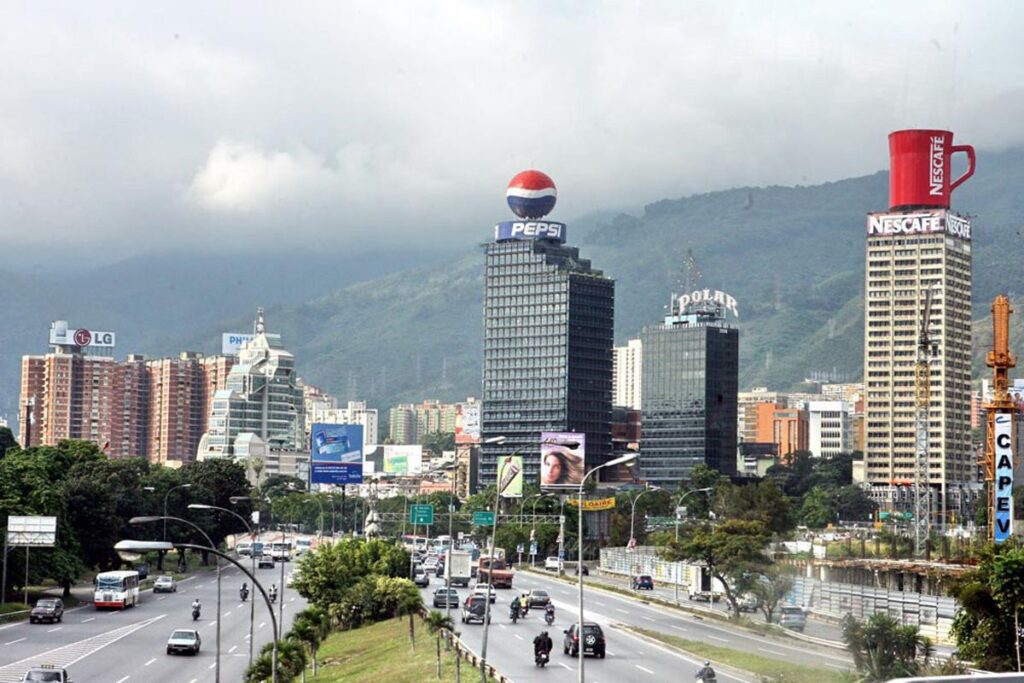
The events surrounding Venezuela once again confirmed the persistent logic underlying U.S. foreign policy. Behind the grand declarations about defending democracy, freedom, and human rights lies a pragmatic and cynical calculation. Its core objective is control over resources and the restoration of political regimes that have slipped beyond external influence.
The position formed in Western capitals is straightforward. Venezuela’s current government is labeled illegitimate, authoritarian, and corrupt. Its removal is framed as an act of historical justice. Critical analysis is replaced by moralistic rhetoric. Distorted appeals to “values” displace discussions about international law and the inadmissibility of interference in the internal affairs of sovereign states.
Beyond Law and Elections
The de facto removal of the head of state occurred outside any electoral mechanism. It was carried out without authorization from international institutions and in violation of international law. This was not a change of power through a political process. It was a forceful “decapitation” of leadership while preserving the existing state structures.
Such actions fully align with the principle that “might makes right,” where legal norms become secondary to geopolitical expediency.
It is particularly revealing that the incident is presented as a “law enforcement operation.” The substitution of concepts is a common tactic. Military intervention is rebranded as the arrest of a “fugitive dictator,” and the violation of sovereignty is framed as the restoration of justice. This rhetoric allows the legality of the action to be ignored and shifts the debate into a more convenient domain.
Irresponsible Efficiency: Resources Over Rights
The paradox is that violent regime change is often considered “successful,” but only from the perspective of its initiators. Control over resources, the strategic weakening of rivals, and the demonstration of power are achieved quickly.
The resulting political instability, rising violence, and social collapse in affected countries are of little concern to external actors. These consequences are not treated as priorities.
This is precisely why such actions continue. Even if some operations fail, from a cold calculation standpoint, a few successful outcomes justify the rest as an acceptable risk.
In this context, discussions about democracy and human rights serve as a distraction from the core issue. The history of international relations clearly shows that repression, restrictions on freedoms, and even crimes against civilians do not hinder cooperation with regimes that ensure access to strategic resources and operate within a desired economic framework.
A Historical Pattern: What Awaits Iran
The Venezuelan case fits a well-known historical pattern. For over a century, the United States has consistently removed undesirable regimes, from Latin America to the Middle East and Asia.
Washington’s ideal scenario is a “controlled transition.” A temporary government. Managed reforms. Electoral system restructuring. Ultimately, the establishment of a loyal regime. If this path is unavailable, coercive tools are used. These range from pressure on security forces to direct military intervention.
In both cases, the ultimate goal remains unchanged. The creation of a manageable political entity integrated into existing systems of economic and strategic dependence.
The Venezuelan scenario inevitably increases pressure on Iran, which Washington has long considered an “uncontrollable” actor. Historical memory plays a crucial role here. The nationalization of Iran’s oil industry in the 1950s and the subsequent external intervention became a foundational lesson for Iran’s political elite about the cost of sovereign economic policy.
Nevertheless, despite the demonstrative nature of the Venezuelan case, direct military intervention against Iran at this stage remains unlikely. Iran is a regional power with a developed deterrence system, a network of allies, and experience in surviving prolonged pressure.
However, this does not reduce the likelihood of indirect forms of military pressure. These include intensified sanctions, cyberattacks, and targeted strikes against Iran’s allies. In this sense, Venezuela is not a model but a signal. It does not indicate an imminent strike but expands the permissible space for action and lowers political taboos, increasing the risk of gradual escalation.