
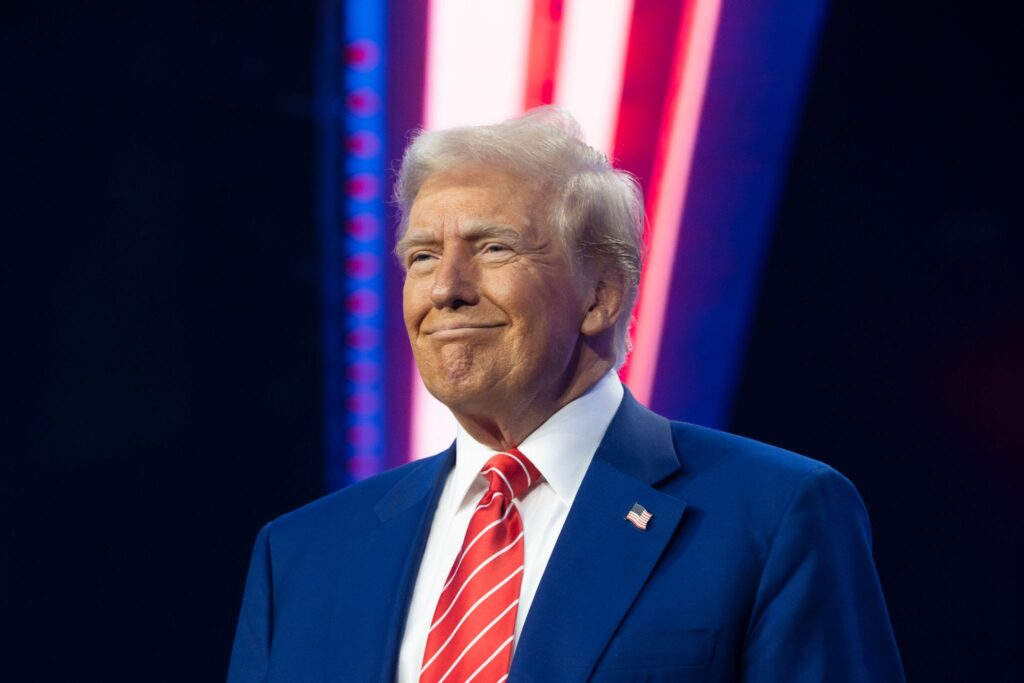
At the recently concluded World Economic Forum in Davos, the Charter of the Peace Council, initiated by Donald Trump, was signed. A number of countries joined the initiative, including Armenia and Azerbaijan. However, a natural question arises: can Armenia’s participation in this platform — and its overall involvement in the initiative — bring any real benefits, or is it primarily a political gesture?
Formal Membership Instead of an Effective Mechanism
According to political analyst Tigran Grigoryan, Armenia’s participation in the Peace Council can be compared to the country’s membership in the CSTO before the 2020 war and the 2022 escalation. As he notes, it was clear to everyone that this organization, as such, would not perform any serious functions.
In the case of the CSTO, for example, it was obvious that the principle of collective defense was unlikely to ever be activated, since the organization never had any intention of launching military action between post-Soviet states or applying real mechanisms in such scenarios. Nevertheless, until 2020, Armenia used its CSTO membership as an additional platform for building and developing relations with Russia, gaining certain dividends — such as the opportunity to purchase weapons at preferential prices.
In Grigoryan’s view, we are dealing with a similar process in this case as well.
A Tool for Maintaining Relations with the U.S. Administration
The political scientist believes that, overall, it is difficult to expect any specific practical advantages from Armenia’s membership in this organization. However, this step can be seen as an attempt to preserve, build, and develop relations with the current U.S. administration.
According to Grigoryan, there is also an important domestic political PR component here. The analyst points out the enthusiasm with which pro-government media have been spreading the photographs published from Davos showing Nikol Pashinyan and Donald Trump sitting across from each other and discussing something.
“These connections may later prove useful for resolving specific issues,” he notes. It is precisely in this logic, according to Grigoryan, that Armenia’s accession to the initiative should be viewed.
The Future of the Initiative Remains Highly Uncertain
At the same time, Grigoryan expresses serious doubts about the future of this initiative. In his assessment, the organization’s viability is very much in question.
“I am almost certain that if the administration in the United States changes and Democrats come to power, this organization will simply not survive,” he says.
Grigoryan also draws attention to the composition of the initiative’s participants. It mainly involves either states whose leaders have very good personal relations with Donald Trump — such as the leaders of Turkey and Hungary — or countries for which Trump claims he helped stop conflicts: Armenia, Azerbaijan, Pakistan.
He notes that Belarus was also invited to join the initiative — a country under heavy sanctions and largely isolated on the international stage since the start of the war in Ukraine. Thanks to this initiative, Belarus also gains an opportunity for partial re-engagement in international processes.
Absence of Major Players and Russia’s Position
According to Grigoryan, most major powers have nevertheless refrained from participating.
Key Western European countries did not join the initiative. Russia was also invited, but its reaction was quite diplomatic and ambiguous. According to Grigoryan, the Russian side effectively declined the proposal, stating its readiness to pay one billion dollars from frozen Russian assets.
As the expert notes, Russia positions itself as one of the three global superpowers alongside the United States and China, and prefers to conduct dialogue with Washington at the presidential level — in a bilateral format.
Effectiveness in Doubt
However, the key circumstance remains that the leading Western players did not accept the invitation and are not participating in the process. This casts serious doubt on the initiative’s effectiveness.
“If we are talking about creating some new global organization with the participation mainly of secondary states, which is supposed to solve world problems, then at this stage it does not make a serious impression,” Grigoryan concludes.
In his opinion, the initiative more closely resembles a platform for Donald Trump’s personal political PR than a mechanism capable of addressing real global problems.