
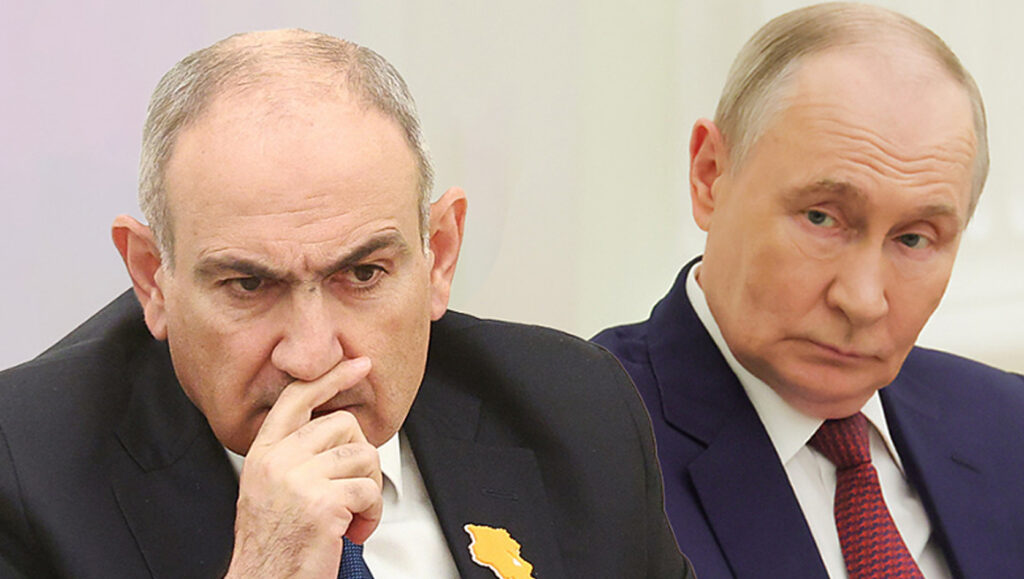
Armenia and Russia are currently engaged in two parallel monologues rather than a genuine dialogue, according to political scientist Benjamin Poghosyan. In his assessment, both sides are presenting their positions, but there is no process aimed at finding common solutions based on each other’s proposals and expectations.
Poghosyan believes Russia’s position is relatively clear. If the strategic goal of Armenia’s current government, even in the long term, is membership in the European Union, Russia does not want Armenia to continue benefiting from preferential economic relations with Moscow throughout that process.
Russia’s Economic Leverage
According to Poghosyan, Armenia is not rushing to clarify its position because it is currently trying to avoid tougher economic restrictions from Russia.
He argues that the economic measures used so far have been relatively limited in their impact, while Russia has more powerful instruments at its disposal.
These could include closing the Russian labor market to Armenian workers, restricting financial transfers, suspending direct flights between Armenia and Russia, raising gas prices, or restricting or halting gas supplies.
Poghosyan noted that bank transfers from Russia to Armenia totaled approximately $3.9 billion last year alone. At the same time, Russian citizens account for around 40–41% of tourists visiting Armenia. Suspending direct flights could therefore deal a serious blow to Armenia’s tourism industry.
An increase in gas prices or a suspension of supplies could also have a cascading effect, he said, driving up the cost of electricity, transportation, and goods and services more broadly.
December 2026 as a Possible Deadline
Poghosyan believes Moscow may view December 2026 as a potential deadline for Armenia.
In his assessment, Russia may expect Armenia by then either to abandon the law related to its EU membership process or, at minimum, clarify how that process will proceed.
According to Poghosyan, if Armenia does not repeal the relevant law adopted in 2025 or set a date for an EU membership referendum by December 2026, Moscow may interpret this as a signal that Armenia has decided to leave the EAEU in the longer term.
In that case, he believes Russia could begin imposing tougher economic restrictions as early as the beginning of 2027.
Russia Holds the Advantage in an Escalation
Poghosyan said Russia is not concerned that it could permanently lose its position in Armenia because Moscow believes it has an “escalation advantage.”
“In politics, there is a concept known as the ‘escalation ladder.’ It refers to the ability to respond to the other side’s actions with countermeasures. For example, if gas prices are increased, Armenia could take measures regarding Russian gas assets. If air connections are restricted, Armenia could respond by raising the issue of the presence of Russian border guards or the Russian military base. But there may come a point when the Armenian side runs out of options for further countermeasures,” Poghosyan said.
According to him, the substantial difference in the capabilities of the two countries means that Russia has greater options at each successive stage of escalation.
“The escalation advantage is always on Russia’s side, given the enormous difference in the capabilities of the two states. And this is very well understood in Moscow,” Poghosyan concluded.