
The other day, U.S. President Donald Trump stated that the U.S. Secretary of State plans to visit Armenia and Azerbaijan. According to Trump, the agenda of the visits is focused on advancing peace, but at the same time quite specific directions were outlined: strengthening strategic partnership with Azerbaijan, selling U.S.-made defense products to Baku, as well as signing a “beautiful agreement” on cooperation with Armenia in the field of nuclear energy.
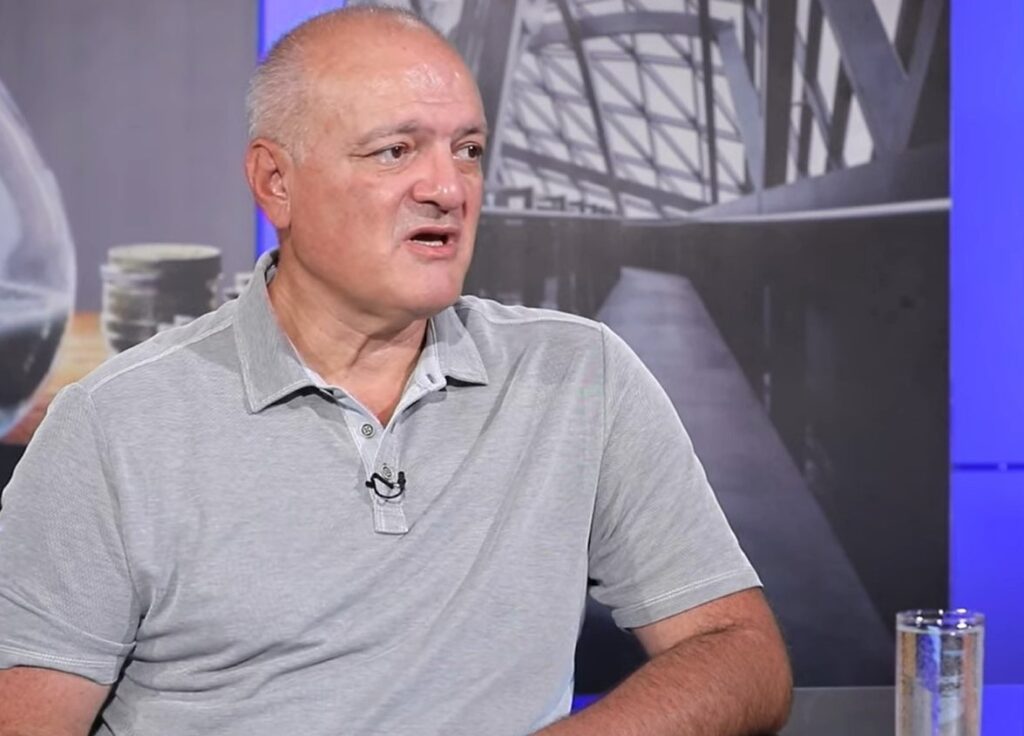
According to political technologist and analyst Vigen Hakobyan, this statement should be viewed within a broader logic that touches not only political but also business interests. Just a month ago, information was circulating that a visit by the U.S. Vice President or a high-ranking representative was planned only to Armenia. This caused surprise, since such visits usually have a regional format. However, according to the analyst, a certain agreement was likely later reached with Azerbaijan as well.
Trump’s Business Approach and Cooperation with Azerbaijan
“The fact is that the decision to send an American representative to Azerbaijan was essentially made after the meeting between Trump and Aliyev. In other words, a specific agenda has formed around a number of issues,” Hakobyan notes. According to him, while certain plans for Armenia were already visible in Trump’s approach, in the case of Azerbaijan the matter clearly involves far more obvious business interests.
Hakobyan recalls that Trump is a businessman, and in politics he is also guided by business thinking. He invests time and resources in meetings or in the work of his representatives only when there is a clear and measurable interest — most often expressed in dollars. It is precisely in this logic, the analyst believes, that the emerging U.S.–Azerbaijan agenda should be understood.
“In this case, we see that the discussion is about the sale of weapons and armaments. Exactly which types remain not fully clear, but obviously business objectives are being addressed here,” he emphasizes.
Business Cannot Exist Outside of Politics
At the same time, Hakobyan points out that business in the arms trade cannot be devoid of political and geopolitical components.
In his opinion, it is difficult to claim that Azerbaijan is arming itself exclusively for a war with Armenia. Rather, this has regional significance and may also be connected with possible scenarios involving Iran. “Any military cooperation primarily contains political, geopolitical, and economic components — and in Trump’s case this is especially obvious,” the analyst says.
The Armenian Agenda: Technology and Investments
As for Armenia, according to Hakobyan, the agenda here is of a different nature. Although certain nuances related to the TRIPP program may be discussed, Trump has outlined the directions of cooperation quite specifically. The focus is on technological agreements — primarily in the field of artificial intelligence, projects related to NVIDIA, and the creation of AI data centers.
Hakobyan recalled that discussions around this program have been going on for a long time, and the volume of expected investments is estimated at roughly half a billion dollars. In addition, Trump also announced cooperation in the development of nuclear technologies — that is, in the field of nuclear energy.
Modular Nuclear Power Plants Connected to NVIDIA Projects in Armenia
Hakobyan suggests that this most likely does not refer to the operating Armenian Nuclear Power Plant. Rather, the discussion concerns small modular reactors (SMRs), which have been actively discussed at the international level in recent times. In his view, there is a high probability that these modular stations are directly linked to NVIDIA’s data-center projects.
“AI data centers require colossal amounts of energy. Therefore, it is logical to assume that the placement of modular nuclear power plants in Armenia may be aimed precisely at serving these projects,” he notes. According to the analyst, at least at the current stage it can be assumed that the main goal of this cooperation is to provide energy support for technological projects.
Hakobyan emphasized that U.S. regional policy, as a rule, is based on the principle of parity — a characteristic feature of superpowers. In this logic, Washington has found specific topics of interest both in Armenia and in Azerbaijan — thereby linking together political, economic, and geopolitical interests.