
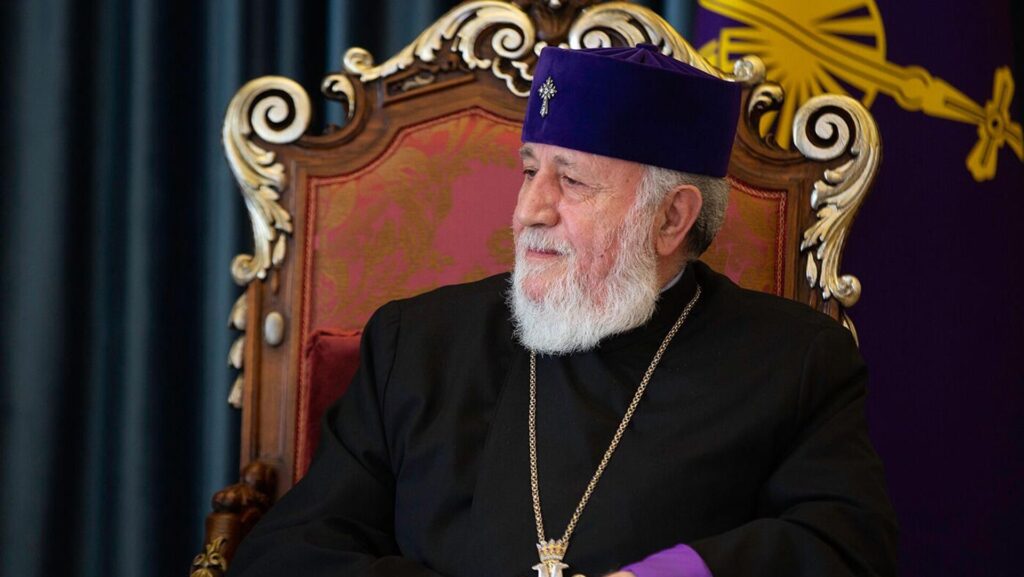
One of the highest collegial bodies of the Armenian Apostolic Church — the Assembly of Bishops — will convene outside the Republic of Armenia in the near future. At the invitation of the Catholicos of All Armenians, the assembly is scheduled to take place in the Austrian city of St. Pölten from February 16 to 19.
According to political analyst Armen Ayvazyan, holding the Assembly of Bishops outside Armenia is not a technical or organizational decision, but a direct reflection of a sad historical and political reality. He states that today the Armenian Church in the Republic of Armenia is effectively deprived of the ability to operate freely.
Ayvazyan emphasizes that the Church is not only unprotected but is also subjected to overt pressure and persecution. He recalls that there are already arrested archbishops, while various sectarian groups operate under the protection of police forces.
According to the analyst, the pressure is not limited to physical or administrative interference. He notes that internal ecclesiastical and doctrinal canonical changes are being imposed on the Church, while insults, threats, verbal abuse, and blackmail are voiced almost daily from the highest levels of state authority.
“This is the environment in which the Armenian Church is simply forced to survive today,” Ayvazyan stresses, describing the situation as a manifestation of systematic and targeted pressure.
Although, as he notes, he has not had the opportunity for quite some time to meet with senior clergy and discuss the situation directly, he can nevertheless roughly understand the motives behind relocating the Assembly of Bishops to distant Austria.
In Ayvazyan’s assessment, the current Pashinyan-led authorities in Armenia could have disrupted the work of the Assembly through various means, resorting to the lowest forms of provocation.
He points out that if the Assembly were held in Armenia, a number of real risks would have existed, linked to pressure from the authorities. According to him, officials could have interfered with the work of the participants using crude provocations. For example, incidents could have been staged at the airport against bishops loyal to Garegin II, with prohibited items planted in their pockets or bags, similar to what occurred during the arrest of Archbishop Arshak.
Similar blackmail tools could also have been applied through wiretapping, with personal conversations falsified and made public, as in the case involving Archbishop Bagrat. During the days of the Assembly, Ayvazyan notes, the Mother See could once again have been flooded by sectarians and ruling party activists organizing noisy demonstrations, while demonstrative police blockades and displays of force could have been used to influence the decisions of the participants. In addition, power outages or other actions aimed at creating an oppressive environment and disrupting the Church’s normal functioning could not be ruled out.
In this context, Ayvazyan concludes, relocating the Assembly of Bishops even to distant Austria was not only logical but necessary in order to ensure the normal and secure conduct of Church activities amid existing threats and pressure.