
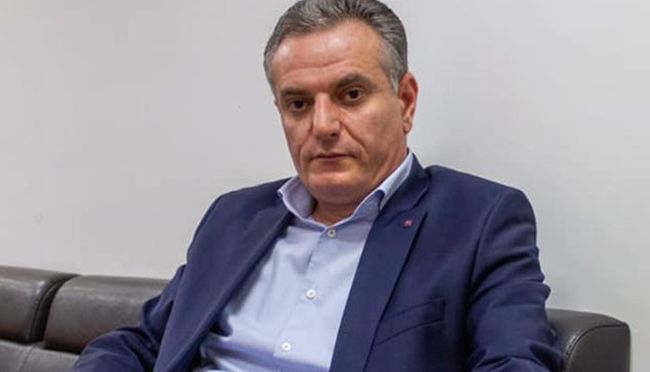
The Armenian authorities have “taken care” to make it difficult for the next ruling team to say “no.” This was stated by former Deputy Minister of Defense Artak Zakaryan.
According to him, the so-called “peace document” was pre-signed without broad public discussion, and its content raises serious concerns from the perspective of state sovereignty. Zakaryan notes that upon reading the document, it becomes evident that the Armenian people or the Republic of Armenia would, in effect, need to obtain permission from Azerbaijan in order to formulate and implement their own vital national interests. This includes the creation of certain commissions that could declare a particular issue to be “problematic,” propose that it not be discussed in parliament, or recommend refraining from adopting specific laws. In his view, this constitutes direct external interference in both domestic and foreign policy.
International Guarantees, but Not at the Expense of Sovereignty
Zakaryan does not rule out that certain processes could be acceptable for Armenia, but only under clearly defined conditions. In particular, if they are implemented within the framework of international guarantee mechanisms, accompanied by well-founded and reasoned explanations. For example, ensuring the right of return for the people of Artsakh or the simultaneous and multi-directional activation of regional communications could be viewed as positive options.
“The same TRIPP, after certain refinements, could become a good option for Armenia. I am highly skeptical of these ‘front-office and back-office’ formulations and mechanisms, which could bind Armenia’s hands in terms of sovereignty,” he said. According to Zakaryan, Armenia needs strong state institutions so that the “back office” determines decision-making and does not succumb to manipulation by third parties or to decisions based on misleading information, which over time could generate new threats.
Communications, Control, and Societal Sovereignty
At the same time, the former deputy minister emphasizes the importance of other communication routes as well, particularly the North–South axis, which he says is of no less strategic significance. Armenia should fully utilize its opportunities in terms of connections with its northern and southern partners, as well as access to maritime routes. Equally important is the connection with Georgia, since problems may arise in the future if all trade is conducted exclusively through corridors favorable to and controlled by Turkey, while Georgia is left out of these processes.
He stresses that sovereignty is not merely a concept of the government, but the sovereignty of society itself. Every citizen living in Syunik must feel that no process can take place without their consent. “If we say, ‘what can we do, everything has already been decided,’ then we are renouncing our own state,” Zakaryan notes, adding that the complex global situation cannot serve as a justification for inaction when security threats and challenges are only increasing.