
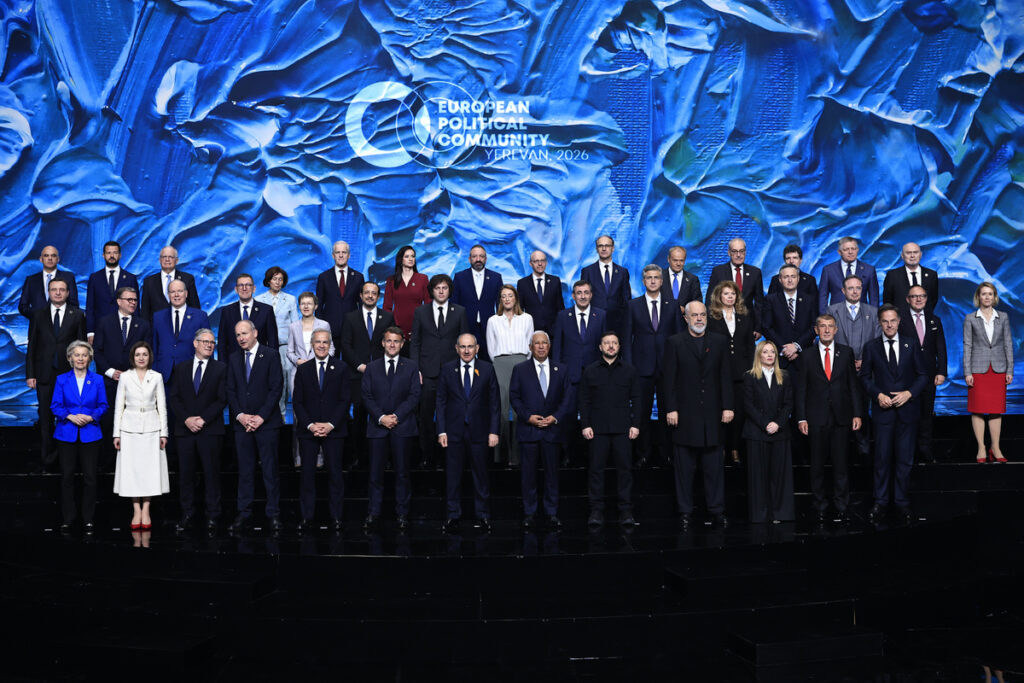
According to expert Vazgen Petrosyan, Armenian Prime Minister Nikol Pashinyan is deliberately intensifying internal tensions through arrests, controversial legal proceedings, and political pressure.
He argues that Pashinyan is aware that securing reelection may involve electoral manipulation, which could trigger unpredictable post-election developments. As a result, he is seeking pathways for a controlled and secure political exit.
Petrosyan suggests that the current strategy is aimed at identifying opposition forces with whom negotiations could ensure a safe transition for both himself and certain members of the ruling party.
Interests of external actors
The expert does not rule out that external actors may be pursuing similar objectives.
In his view, both European countries and the United States recognize the limited long-term prospects of the current leadership and may be exploring alternative partners capable of maintaining stability.
At the same time, the priority for these actors is not specific individuals but the predictability of regional processes.
A region shaped by broader negotiations
Petrosyan believes that the South Caucasus may become part of a larger geopolitical bargaining process.
He links potential developments to the evolving dynamics of the US–Iran confrontation, suggesting that significant changes could occur in the near future.
If the current balance persists, the West may reduce its regional involvement, reflecting patterns seen in earlier historical periods.
Stability as a strategic priority
In such a scenario, the region could become part of broader arrangements involving major powers such as Iran, Russia, and China.
Despite this, maintaining stability remains essential. Preventing internal disruption, including within Armenia, is seen as a key condition for enabling wider geopolitical strategies.