
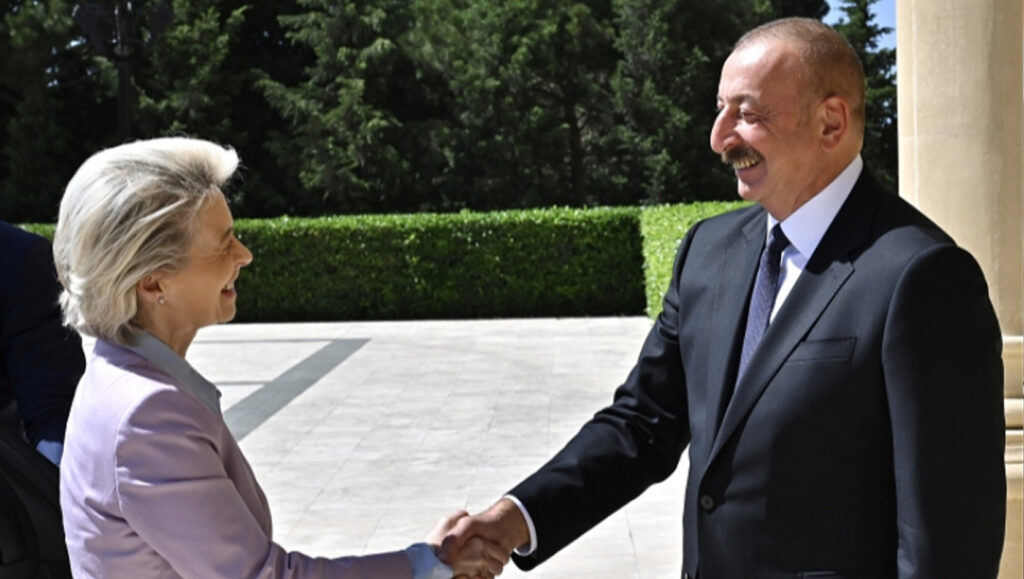
Azerbaijani President Ilham Aliyev has said that Baku is seriously considering not merely suspending or freezing its participation in the Council of Europe, but withdrawing from the organization entirely. Political commentator Artyom Yerkanyan argues that the statement was not accidental. It came amid several important international developments and appears intended to strengthen Azerbaijan’s negotiating position.
How Relations Reached This Point
Yerkanyan recalls that tensions escalated after Azerbaijan carried out ethnic cleansing in Artsakh and Azerbaijani forces entered Armenia’s sovereign territory. Following those developments, the Council of Europe submitted a number of questions and demands to the Azerbaijani authorities.
After Baku failed to respond, the Parliamentary Assembly of the Council of Europe declined to ratify the credentials of the Azerbaijani delegation, depriving it of voting rights for one session.
Azerbaijan responded by refusing to participate in PACE proceedings and later failed to send a delegation to subsequent sessions.
According to the commentator, further steps followed. Baku declared that it would not recognize rulings of the European Court of Human Rights and later severed relations with the European Parliament after it adopted another critical resolution on Azerbaijan.
Aliyev’s Ultimatum to European Institutions
Yerkanyan believes the situation has now reached the point where Aliyev is issuing a direct ultimatum to European institutions.
The Azerbaijani president is demanding the unconditional restoration of his country’s delegation’s credentials. Otherwise, Baku says it is prepared to withdraw completely from the Council of Europe.
According to Yerkanyan, Aliyev has framed the demand in the harshest possible terms: European institutions must first acknowledge that they acted wrongly, and only then will Azerbaijan consider resuming cooperation.
The commentator also highlights Aliyev’s claim that Council of Europe Secretary General Alain Berset personally called him after learning of Baku’s position and asked him not to rush into a withdrawal, requesting time to resolve the dispute.
If that account is accurate, Yerkanyan says, it may indicate that some officials in Strasbourg are trying to prevent Azerbaijan’s final departure from the organization.
Aliyev, however, now says the matter was not resolved within the promised period and has therefore returned to the language of ultimatums.
Why the Statement Came Now
Yerkanyan argues that the timing was carefully chosen.
Shortly beforehand, European Commission President Ursula von der Leyen, European Council President António Costa, and EU foreign policy chief Kaja Kallas visited Baku.
In the commentator’s assessment, unlike European parliamentary bodies that have criticized the Azerbaijani government, these senior European officials effectively offered political support to Baku.
He notes that von der Leyen described Azerbaijan as a “reliable partner” of the European Union and emphasized its role in Europe’s energy security. She also presented Aliyev as a leader contributing to regional peace and cooperation.
Yerkanyan believes such statements strengthened Aliyev politically and made him more confident in his dealings with European institutions.
The Ruben Vardanyan Case
The commentator also identifies another important factor.
Only two days before Aliyev’s statement, it became known that the European Court of Human Rights would examine a complaint concerning Ruben Vardanyan’s case.
Yerkanyan does not rule out the possibility that this development also contributed to Aliyev’s tougher rhetoric.
In his view, the Azerbaijani president is trying to reinforce Baku’s negotiating position in advance and create additional pressure mechanisms against European institutions.
Harsh Rhetoric Toward France and the United States
In his remarks in Shushi, Aliyev did not limit his criticism to the Council of Europe.
He also sharply attacked France, accusing it of neocolonialism. The Azerbaijani president claimed that residents of French overseas territories suffer because of Paris’s policies and referred to nuclear tests in French Polynesia, effectively encouraging local populations to resist the French authorities.
At the same time, Aliyev criticized the United States, arguing that Washington had failed to fulfill its promise to repeal the so-called Section 907, which limits the US administration’s ability to develop military cooperation with Azerbaijan.
According to Yerkanyan, Aliyev is using the same demanding rhetoric in this case as well, insisting that Washington acknowledge its mistake and revise its policy.
Ultimatums Have Become a Tool of Baku’s Foreign Policy
Yerkanyan says Aliyev’s latest statements show that he is increasingly using the language of ultimatums with international partners.
The commentator believes this approach has become possible because international actors have failed to respond firmly enough to Baku’s conduct.
As a result, the Azerbaijani leadership now feels increasingly free to issue demands and ultimatums not only to the Council of Europe, but also to France and the United States.