
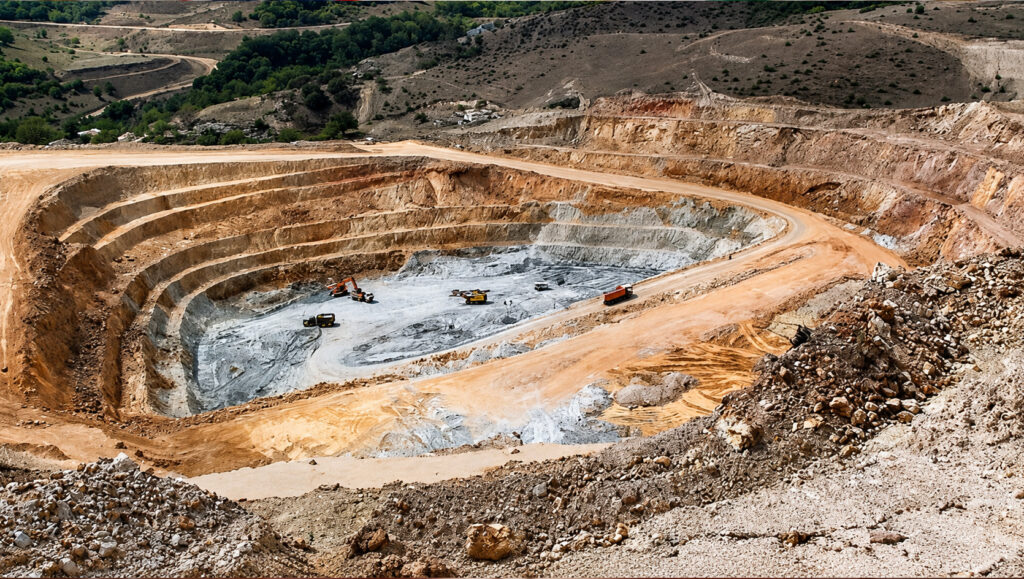
Several notable developments have taken place in Armenia in recent weeks. The Teghut copper and molybdenum mine was sold to an American company whose executive, Konstantin Sokolov, was appointed almost simultaneously to head the TRIPP+ fund. At the same time, the United States is promoting new geo-economic projects designed to bypass the Strait of Hormuz and potentially reshape the region’s logistics map.
Are these simply commercial transactions, or are they different elements of the same global strategy? What does the ownership change at Armenia’s second-largest copper mine mean, and how could it be connected to the new economic and political processes emerging across the region?
A South Caucasus Expression of the Changing World Order
Political analyst Abraham Gasparyan argues that the sale of the Teghut mine, Konstantin Sokolov’s appointment as head of TRIPP+ and other regional developments cannot be viewed separately.
In his assessment, they represent different expressions of one broad geopolitical process presented externally as business and infrastructure projects.
Gasparyan says the world entered a period of global transformation following the revolutions and political changes that took place across Eurasia and the Middle East particularly after 2014–2015.
The process, he argues, is not simply about redistributing the influence of individual states but about restructuring the entire economic system.
“New economic, energy and transport routes are being built, while old routes are being reconsidered and revalued. We are now in that phase,” he said.
According to Gasparyan, the Russia-Ukraine war, developments in Central Asia and tensions along the Afghanistan-Pakistan border are different episodes of a larger struggle by major powers to control global networks.
From Hidden Networks to the Redistribution of Resources
In this context, Gasparyan points to developments revealed during the Iran-Israel war.
He argues that Israeli intelligence services had spent years penetrating Iran’s state, intelligence and security systems, with the results becoming visible during the conflict.
“That network remained quiet for a long time, like a volcano, and then erupted. We saw how Israeli services had operated inside Iran for years and what consequences that produced,” he said.
Gasparyan believes a similar logic is now operating in the South Caucasus, where figures acceptable to several competing centers of power are being selected.
For this reason, he says, attention should not be focused entirely on Konstantin Sokolov as an individual.
“It could be Sokolov, Poghos or Petros. The individual is not important. What matters is the process and the decisions these people are selected to implement,” Gasparyan said.
Mineral Deposits Are Becoming Central Resources of the New Order
Gasparyan argues that developments surrounding Artsakh must also be viewed within this framework.
He recalls the situation around the Kashen mine and the blockade carried out by so-called Azerbaijani environmental activists.
“From the very first day, the purpose of the entire process was clear: what lies underground must be redistributed. We are talking about molybdenum, copper and other mineral resources,” he said.
According to the analyst, growing demand for industrial resources is forcing major powers to search for new mineral reserves. Both China and the United States are acting within this logic.
Gasparyan notes that mineral resources were among the central issues in US-China negotiations. He also argues that responsibility for resolving the Ukraine conflict was largely assigned to Europe, while Donald Trump openly discussed establishing control over a significant share of the mineral resources in territories west of Donbas.
In his view, the same redistribution process is now extending to the South Caucasus.
“What is taking place today is the same redistribution. The important question is not who carries it out, but whether the selected individual is trusted by several global decision-making centers,” he said.
US Interests Extend Beyond the South Caucasus
Gasparyan rejects the interpretation that the sale of Teghut to an American company simply represents Russia surrendering its position in the South Caucasus to the United States.
The process is more complex, he says, because Washington’s priorities concern not only the South Caucasus but the broader Middle East.
“We cannot say Russia is simply giving its place to the United States through this sale. The issue is much deeper. America’s vital interests are connected not only to the South Caucasus but to the transformation of its policy across the Greater Middle East, particularly toward Iran,” he said.
In his assessment, the South Caucasus is not Washington’s principal priority.
Since reviving the logic of the Monroe Doctrine, the United States has increasingly focused on the Western Hemisphere while demanding that European allies assume greater responsibility for their own security.
Washington Is Reducing Its Financial Burden
Gasparyan recalls that the NATO secretary general recently presented figures at the White House showing the rise in European defense spending.
The analyst sees this as evidence that Washington is attempting to reduce its own financial burden by shifting more security costs onto European states.
“Armenia, and even the entire South Caucasus, is the tenth or twelfth issue in this context. Much larger processes are unfolding in the Middle East, where more than 40–45% of the world’s oil and gas reserves are concentrated,” he said.
At the same time, metal deposits remain strategically important, particularly for defense production and high-technology industries.
However, Gasparyan argues that the central struggle continues to concern oil, the dollar and the structure of the global economy.
This, he says, is how the transformation of the global order should be understood: as a struggle over economics, technology, the role of hegemonic states and control of land-based transport and logistics routes.
The Artsakh War Fits the Same Geopolitical Logic
Gasparyan believes the Artsakh war should also be placed within the broader struggle over transport corridors, communications, energy routes and natural resources.
He notes that Europe has begun meeting Donald Trump’s demands for higher defense spending.
According to the analyst, earlier suggestions that the United States might leave NATO were primarily a means of pressuring European states.
“Once the Europeans began paying more, American rhetoric also changed,” he said.
Washington does not therefore intend to abandon NATO, but it does seek to redistribute financial and political responsibilities within the alliance.
Turkey Is Being Assigned the Role of Regional Security Manager
Gasparyan argues that within this emerging system, the United States is transferring primary responsibility for security in the South Caucasus to Turkey.
“To understand who Sokolov is, what value TRIPP+ has and how vulnerable it may be during a war, we must first understand the general logic of US foreign policy,” he said.
In his assessment, Washington assigns one role to European allies and another to Turkey.
Gasparyan argues that Donald Trump increased Recep Tayyip Erdoğan’s political weight, after which the Turkish president intensified pressure on the domestic opposition and began reshaping the country’s political environment.
Although Erdoğan had previously said he would not seek another presidential term, Gasparyan says constitutional changes are now being prepared to allow him to remain in office.
The analyst acknowledges that Turkey contains many influential political groups and external sponsors, but argues that the principal rules of the game are still defined in Washington.
“Trump is assigning Turkey the mission of regional policeman. He is giving Ankara the green light and effectively allowing it to act. Since the United States does not intend to bear these security costs itself, they are largely being transferred to Turkey and Azerbaijan,” Abraham Gasparyan concluded.