
Armenia’s capital market is still far from its “golden age,” but in recent years it has entered a stage of development that could mark the beginning of a long-term transformation of the market.
Economic stability, government policy, an influx of new professionals and regional geopolitical changes have simultaneously altered the opportunities available in Armenia’s financial market and the level of external interest in it.
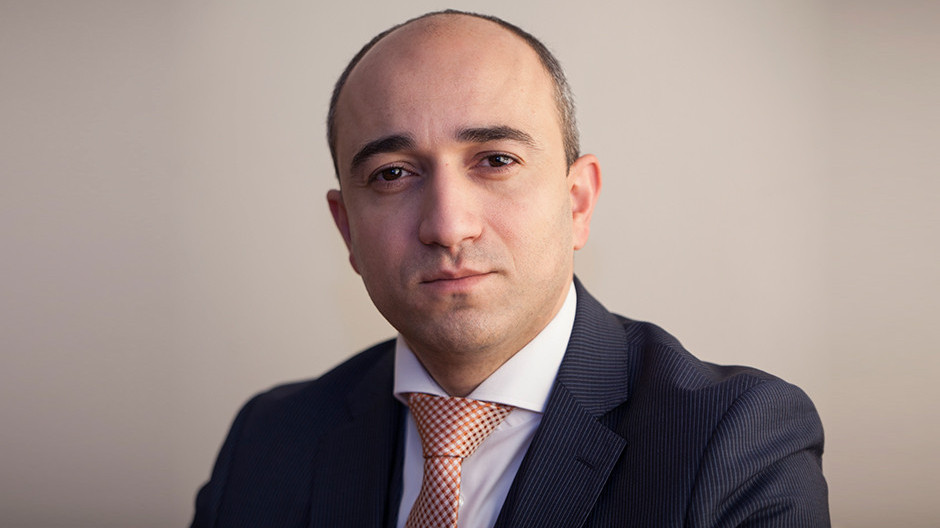
According to Karen Zakaryan, CEO of the Financial Market Members Association (FINARM), Armenia’s macroeconomic fundamentals are currently fairly strong: the budget deficit is under control, economic growth is positive, inflation is manageable, and the policies of the Central Bank and Ministry of Finance are generally aligned.
However, these indicators alone cannot describe the current state of the capital market.
Interest in Armenia Is Also Coming From Unexpected Places
Geopolitical changes taking place in the region and around the world are also changing the direction of investment flows.
Zakaryan points to the United Arab Emirates as the most striking example.
“If someone had told me five years ago that investors from Dubai, or investors accustomed to keeping their capital in Dubai real estate, would look for other safe places outside our region and that Armenia would be one of those safe places, I would have said: are you crazy?” he said.
Today, according to him, the situation has changed.
There is interest in Armenia from the Middle East, particularly in the real estate sector. According to Zakaryan, this demonstrates how geopolitical changes can alter international investors’ perceptions of even small markets.
At the same time, the growth of Armenia’s financial market is not driven solely by external factors.
In recent years, the number of specialized professionals and investment companies operating in the market has increased.
The Russia-Ukraine conflict has also influenced this process, leading some financial-sector professionals in the region to relocate to Armenia.
As a result, Zakaryan says, Armenia’s financial market today is no longer the same as it was five years ago.
Its potential has grown, while some investment companies are on the path toward transitioning into banking activities.
Bonds Have Brought New Players Into the Market
Domestic factors are also contributing to the market’s development.
Zakaryan points to the favorable tax regime currently applied to bonds, as well as a government program that enables companies to enter the capital market.
In his assessment, the combination of these factors has brought Armenia’s capital market to an important stage of development.
“I would not say this is the golden period of Armenia’s capital market, but it is one of them. And I am confident that we are at the beginning of this uncomfortable moment,” he said.
In recent years, companies that previously did not envision financing themselves through the capital market have also entered the market.
Bond issuance is gradually becoming a genuine financing instrument not only for large businesses but also for smaller companies.
This is also changing the role of financial intermediaries.
Investment companies and banks are being required to do more work to identify potential investors, present securities and conduct research on them.
The Next Stage Could Be Deeper
According to Zakaryan, the current stage of development of Armenia’s market should be viewed in a broader context.
Whereas discussions of the capital market previously focused mainly on individual issuances, a more comprehensive financial ecosystem is now taking shape, with specialized professionals, investment companies, new financial instruments and growing interest from foreign investors.
According to him, global capital markets are also returning to the assessment of core fundamental factors.
Under these conditions, it is important for Armenia to maintain macroeconomic stability and continue the infrastructural and institutional work that could transform the market’s current growth into long-term development.
In this sense, the next challenge for Armenia’s financial market is not simply to attract more investors.
The challenge is to turn the emerging interest into real and sustainable capital for Armenia’s economy.