
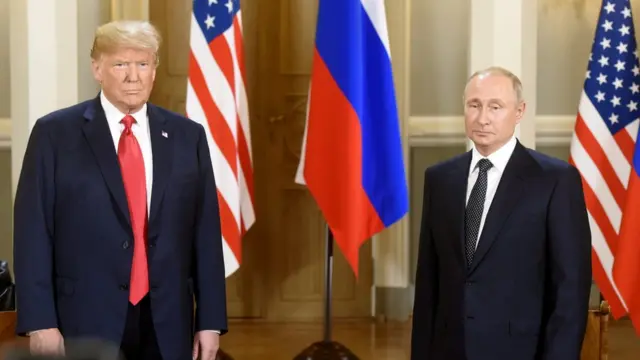
Current geopolitical processes are part of a hybrid confrontation between Russia and the West, and unfortunately Armenia has today become a platform for this clash of interests. This was stated by political analyst Armen Baghdasaryan.
According to him, much is currently being said about Russian pressure on Armenia, while pressure is also being exerted by the West. “In reality, Russia and the West are waging a hybrid war against each other over Armenia, and unfortunately this is happening directly on Armenian territory,” he said.
Baghdasaryan noted that one of the key elements of this confrontation is the West’s desire to push Russia out of the region while simultaneously isolating Iran from the northern direction. “Ultimately, what they want from us is the following: for the Russians to leave here, and for Iran to be blocked also from Armenian territory,” the political analyst stated.
The South Caucasus Remains a Zone of Competing Interests
Baghdasaryan emphasized that the South Caucasus has long been a zone where Russian and American interests collide. According to him, such geopolitical clashes always create extremely serious threats for small states.
As an example, he referred to the events in Georgia in 2008. “In Georgia’s case, that threat became reality. The West did not help Georgia at that time. When the five-day war took place, the West did not intervene,” he said.
In this context, Baghdasaryan considers the key question to be whether the West is truly ready to help Armenia in the event of a new conflict. “It is important for us to understand: if a new war starts against Armenia for one reason or another, will the West help us or not?” the political analyst noted.
Decisive Steps Require Guarantees
Baghdasaryan also addressed the issue of Armenia’s possible withdrawal from the EAEU and CSTO, again raising the question of whether the West is ready to compensate for the economic and security consequences of such a decision.
“If Armenia leaves the EAEU, or is pushed out of it, will the West be able to compensate us for the 3 billion dollars that the country will need over seven or eight years in order to pass through this transition period without serious shocks?” he said.
According to the political analyst, Western calls for “more decisive steps” must be accompanied by concrete guarantees. “When they tell us to be bolder and act more decisively, we must answer that such decisiveness has a price. It is one thing when an individual takes a risk, and quite another when a state takes such a risk without real guarantees,” Baghdasaryan emphasized.
Armenia Is Being Forced to Choose
Speaking about Armenia’s current relations with different centers of power, the political analyst said that the question of choice has effectively already been placed before Yerevan. According to him, Armenia has long been made to understand that “it is impossible to sit on two chairs.”
At the same time, Baghdasaryan expressed doubt that Armenia could be formally removed from the EAEU. He noted that there may be countries inside the organization that would oppose such a scenario.
“This is first of all Kazakhstan, which is interested in developing the so-called Middle Corridor and gaining access to Western markets while bypassing Russia,” he believes.
Moscow Still Has Economic Levers
According to Baghdasaryan, even without formal removal from the EAEU, Moscow has a serious set of economic tools for putting pressure on Armenia.
He listed possible measures Russia could use in bilateral relations, ranging from restrictions on energy supplies to creating difficulties in logistics.
“The gas pipeline can be ‘repaired’ even every week. Lars can be closed under the pretext of repairs every two weeks. Difficulties can be created for the import of Armenian agricultural products,” the political analyst noted.
According to him, Moscow has many such instruments, and it would be preferable if the pressure were limited exclusively to the economic sphere.
Security Risks Also Remain
At the same time, Baghdasaryan stressed that Russia also retains levers of influence in the security sphere.
The political analyst considers a direct military scenario unlikely because Russia and Armenia do not share a common border. “If we had a common border, such scenarios would be possible. But I still consider the likelihood of such developments to be low,” he said.
He also referred to the Russian law that allows the use of Russian armed forces abroad to protect Russian citizens. However, in Baghdasaryan’s assessment, Armenia is unlikely to be the main target of such mechanisms.
He believes that Kazakhstan should be more concerned about such mechanisms. Nevertheless, Baghdasaryan does not rule out the possibility of force-based scenarios against Armenia, though not directly by Russia, but “through third countries.”
Small States Should Avoid Sudden Moves
The political analyst is convinced that under current global turbulence Armenia should avoid sharp foreign policy moves.
According to him, as long as the outcome of the Russian-Ukrainian war remains uncertain, and the situation around Iran is also unresolved, any decision, even one calculated in detail, may turn out to be wrong.
“Small states should not make sudden moves during periods of turbulence. They must try to buy as much time as possible,” Baghdasaryan emphasized.