
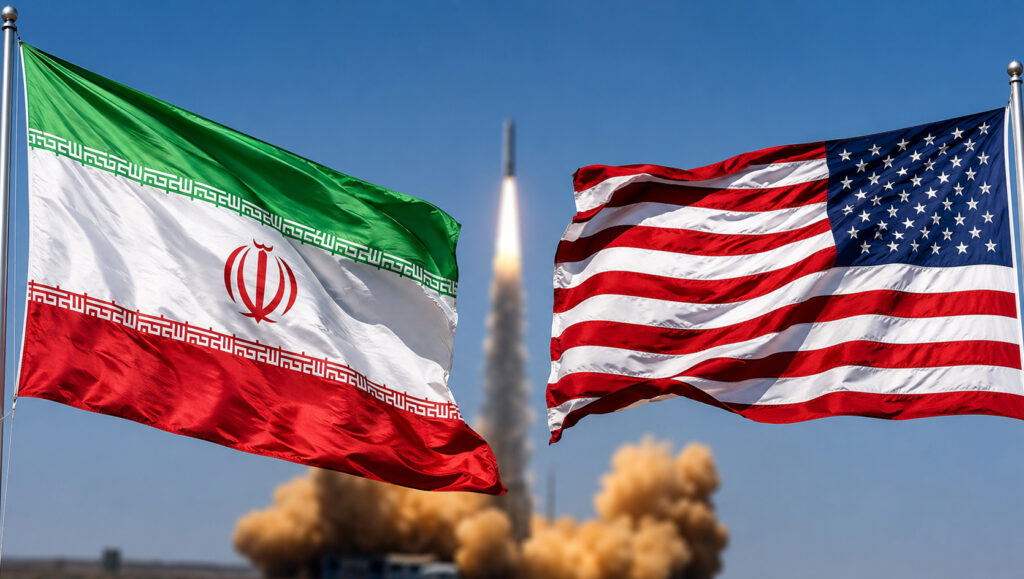
A new geopolitical reality is taking shape in the Middle East. It could significantly change the security environment not only there but also in the South Caucasus, according to Iran expert Aram Shahnazaryan.
In his view, statements by Iran’s political and military leadership and a review of its military readiness point to Tehran’s shift away from its previous approach to deterrence toward a tougher strategy. Under these conditions, new risks arise for the United States and Israel, the Arab states of the Persian Gulf, Turkey, Azerbaijan and Armenia.
Shahnazaryan believes Iran is effectively moving from a model of passive or proportionate deterrence to a doctrine of “maximum deterrence” and readiness for preemptive action. He points to a meeting of Iran’s top armed forces commanders with the leader of the Islamic Revolution, Ayatollah Seyyed Mojtaba Khamenei, and the instructions issued afterward.
The expert argues that Tehran’s statement promising an “immediate and effective response without geographic limitations” to potential threats is more than political rhetoric. In his reading, Iran is revising its previous rules for conducting conflicts. It no longer intends merely to respond to strikes already carried out against it or to keep its counteraction confined to one area.
According to Shahnazaryan, Tehran is reserving the right to decide for itself the conditions and timing for ending a potential military or terrorist escalation. He believes this signals an unprecedented increase in the risk of a large-scale war in the Middle East.
The expert also says Iran has, in effect, begun practical preparations for a possible escalation. In his assessment, raising the combat readiness of the armed forces and the Islamic Revolutionary Guard Corps, updating its database of targets and developing its military intelligence system show that Tehran is preparing for a possible large-scale confrontation.
Iran’s new doctrine poses risks beyond the Middle East
Shahnazaryan says Iran’s approach of declaring all tangible and intangible assets of US and Israeli forces potential targets changes the Western coalition’s strategic calculations.
According to the expert, the principle of responding “without geographic limitations” means that a potential conflict could extend beyond the Middle East. US and allied strategic infrastructure in Europe, NATO logistics hubs and communications centers could then become vulnerable.
In Shahnazaryan’s view, Tehran is thus trying to counter the Western strategy of confining a conflict to the Middle East and fighting a war far from Western territory. It is confronting Washington and European countries with the prospect of a global crisis.
The expert says Iran’s tougher position is also seen in Moscow as part of a struggle against Western global dominance. For Russia, Tehran’s new approach creates an opportunity to challenge what it sees as the West’s monopoly on the use of force and strengthen the idea of a multipolar world order.
At the same time, Shahnazaryan believes its strategic partnership with Iran requires Moscow to act cautiously. Uncontrolled escalation in the Middle East could also damage Russia’s regional and geoeconomic interests. The Kremlin must therefore balance its relationship with Tehran against the need to contain military confrontation.
Persian Gulf states between Iran and the United States
According to the expert, Iran’s new military strategy presents the Arab states of the Persian Gulf with a difficult security dilemma. Under the new doctrine, US military bases and oil and gas infrastructure on their territory could become targets of potential strikes.
Shahnazaryan believes the Arab monarchies understand that their territories could be among the first to come under attack in a military conflict involving Iran. This forces them to reconsider the real cost of their security alliances with Washington and to be cautious about supporting anti-Iranian military coalitions or Israeli initiatives.
In the expert’s view, the Gulf states therefore prefer to maintain diplomatic ties with Tehran and ease regional tensions. Their economic security depends heavily on avoiding direct confrontation with Iran, rather than relying solely on Western security guarantees.
Pakistan faces a separate challenge. Shahnazaryan says Islamabad must balance its relations with Washington, the Arab monarchies and Tehran. Iran’s new strategy could also destabilize Pakistan’s western border. Even indirect support for Western military action against Iran could make Pakistani territory a target of an Iranian response.
The expert believes this encourages Pakistan to take a more active role in regional mediation and the development of multilateral security mechanisms. The aim would be to prevent an escalation that forces Islamabad to choose between opposing centers of power.
Risks for Turkey and Azerbaijan
Shahnazaryan says Iran’s tougher stance also complicates Turkey’s strategic calculations. Ankara is both a key NATO member and a regional actor with ambitions to expand its influence in the Middle East and South Caucasus.
Iran’s declared principle of targeting US assets without geographic limitations creates direct security risks for Turkey, the expert says, given the allied military and intelligence infrastructure on its territory.
In his view, Turkish leaders will have to maneuver carefully. On one hand, they will seek to prevent Iran from becoming too powerful and setting the region’s rules on its own. On the other, they will try to avoid joining Western military operations against Iran directly, since doing so could destabilize security along Turkey’s southern and eastern borders.
The Azerbaijani factor also deserves particular attention, Shahnazaryan says. In his assessment, Baku faces a serious strategic contradiction. Azerbaijan needs to maintain stability on its border and avoid direct confrontation with Iran, while also maintaining deep strategic and intelligence cooperation with Israel.
Under the new Iranian doctrine as described by the expert, an adversary’s tangible and intangible assets may be treated as targets. In this context, Shahnazaryan says, Tehran could view any overt or covert Israeli presence, intelligence station or logistics hub on Azerbaijani territory as a potential target.
He believes the principle of acting “without geographic limitations” substantially raises the cost to Baku of allowing its territory to become a platform for operations against Iran, limiting Azerbaijan’s room for maneuver.
TRIPP and Armenia’s security dilemma
The expert also considers the potential impact of Iran’s new military strategy on the South Caucasus through the lens of Armenia’s security. In his assessment, the strategic agreement on TRIPP ratified by Yerevan shows signs of structural incompatibility with Iran’s new doctrinal approach.
Shahnazaryan believes that, under the new strategy, Tehran could view a long-term Western logistical and infrastructure presence on routes through Syunik or elsewhere in Armenia as more than an exercise of Armenia’s sovereign rights. It could regard that presence as a US security asset directed against Iran.
According to the expert, this means such infrastructure in Armenia could be among the potential targets of an Iranian response if the military situation in the Middle East escalates sharply.
In his assessment, expectations of external security guarantees might prove unfounded in that situation. Furthermore, while trying to diversify its security relationships, Armenia could find that its border infrastructure is no longer seen solely as a set of regional transport links but is incorporated into the planning of a global military confrontation.
Shahnazaryan believes that rushing toward the West under these conditions might not provide additional protection. Instead, it could turn Armenia’s sovereign territory into a possible front line in a clash between major powers and put its good-neighborly relations with Iran at risk.
In conclusion, the expert says emerging geopolitical conditions require small states to assess their regional environment realistically and take their neighbors’ vital interests into account.
In his view, becoming a platform for the interests of external powers cannot provide a lasting security guarantee under a new balance of power. On the contrary, ignoring the strategic red lines of immediate neighbors could become an existential threat to statehood.
Shahnazaryan believes Armenia’s security policy should rest on a clear-headed assessment of regional realities, because small states pay the highest price when they find themselves at the center of global power struggles.
👉 Regional