
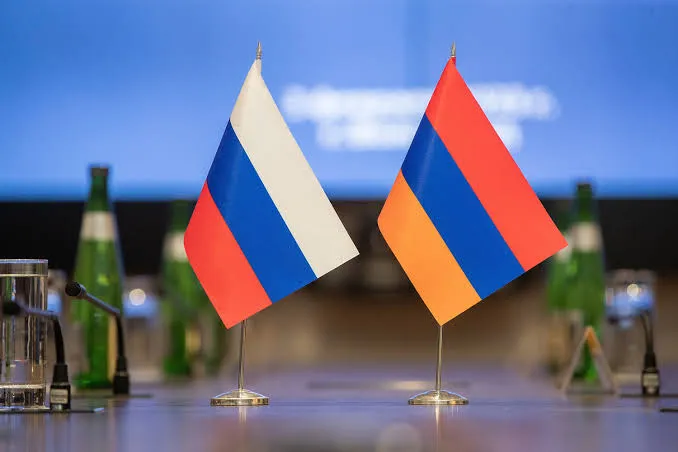
Armenian Prime Minister Nikol Pashinyan’s tactic of playing a double game in relations with Russia — making promises and then backing away from them — will no longer work. Moscow has, in effect, presented Armenia with a full set of conditions, and Yerevan will have to make a choice. If those conditions are not met, Russia may adopt a policy of pushing Armenia out of the Eurasian Economic Union, with serious economic and social consequences. This is the assessment of media expert Tigran Kocharyan.
In the current geopolitical situation, he says, conformism, two-faced policies and attempts to please all sides in dealings with major powers no longer produce results. Major powers do not forgive such games, and rebuilding lost trust will not be easy.
Kocharyan recalls how Pashinyan previously tried to build relations with Moscow through mutual promises. For example, he proposed opening four Russian schools in Armenia and establishing a Russian consulate general in Syunik. Moscow responded positively to these proposals, while Russian officials said they were working with Pashinyan and saw no need to meet with the opposition.
After the 2021 elections, however, when the Russian side tried to return to those agreements, it became clear that Yerevan was not ready to implement them. Obstacles arose over opening foreign schools in Armenia, and the issue of opening a Russian consulate general in Kapan remained unresolved.
“They are already tired,” Kocharyan says, referring to Moscow’s attitude toward Pashinyan’s approach. He believes Russia is no longer prepared to accept another round of promises. This time, he says, the issue is a complete package rather than agreements on individual matters. Even if Armenia agrees to Russia’s proposal concerning the nuclear power plant, for example, that does not mean the other issues are settled. The package’s remaining demands must also be met.
In Kocharyan’s assessment, Pashinyan’s attempts to make concessions on some issues, avoid commitments on others and continue maneuvering in this way will no longer work. He describes Moscow’s position as clear: either Yerevan accepts the entire package of conditions or Russia toughens its policy, potentially including sanctions and efforts to push Armenia out of the EAEU.
The media expert warns that the consequences of such developments would be much more severe than the authorities suggest. He criticizes claims that higher prices for Russian gas or weaker economic ties would have little effect on Armenia.
According to Kocharyan, the impact of higher gas prices would extend beyond increased household utility bills. It would affect almost every area of production, from breadmaking to electricity costs and the prices of other goods. If gas becomes more expensive, a chain of price increases for goods and services will follow. He emphasizes that even a relatively small decline in economic indicators would create serious problems for Armenia, which is already facing difficulties in agriculture.
In the media expert’s view, the authorities are trying to convince the public that any economic shocks can be managed, but he believes the reality is different. He notes that people are already worried, particularly with winter approaching.
Kocharyan argues that the problem goes beyond higher prices for gas and other goods. A breakdown in economic ties with Russia could also deprive Armenian citizens of an important destination for labor migration. He recalls that many people who left Armenia because of economic difficulties were able to find work in Russia and send money home to their families.
If Armenia loses the benefits associated with EAEU membership, the situation will change. Kocharyan says Armenian citizens in Russia could begin to be treated as ordinary migrant workers, creating serious administrative obstacles. Some occupations would become unavailable to migrants, while paperwork for employment and residence would become more complicated.
At the same time, citizens returning from Russia would find it difficult to identify alternative destinations for work. Kocharyan says Ukraine is not a practical option in this respect and European countries are not prepared to take in 200,000–300,000 Armenian citizens. Limited language skills and restricted access to labor markets would make the problem even harder.
👉 Politics