
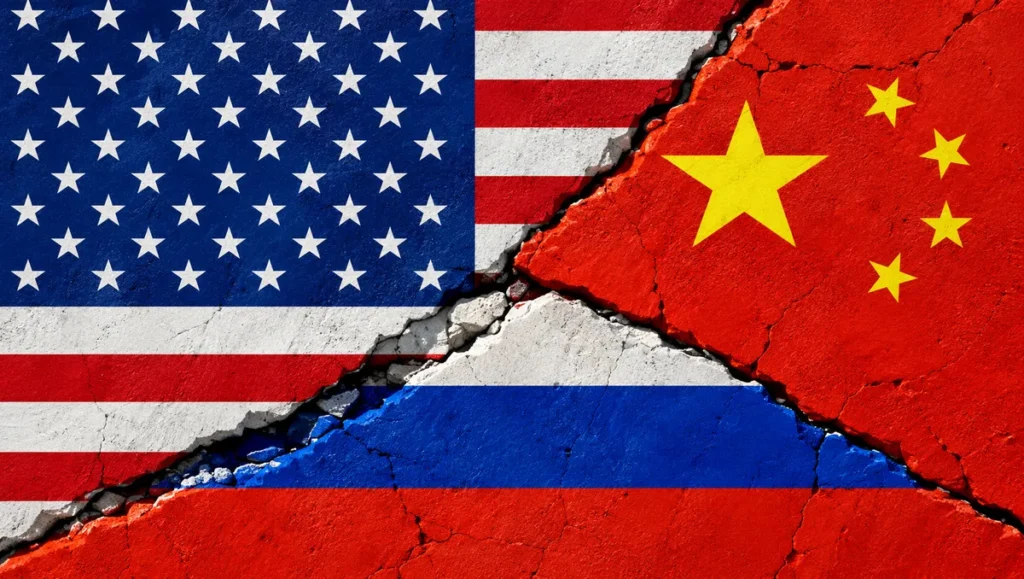
A possible meeting of the Russian, Chinese and US leaders in China will not become “Yalta 2,” because geopolitical developments have not yet reached the stage at which a new balance of power and agreements on dividing the world can be definitively established. Political analyst Manvel Sargsyan offered this assessment while discussing the prospects for possible agreements among the major powers.
According to him, the current changes and conflicts are still unfolding, making it premature to speak of a fully established new world order and agreements underpinning it.
“We can no longer be guided by Cold War thinking. When you try to assess events since the 1990s through that mindset, you lead to catastrophes. That is the tragedy of Armenia’s authorities,” Sargsyan said.
The analyst said many people assessing international relations describe ongoing changes as violations of existing international norms, overlooking the fact that new realities have already emerged. In Sargsyan’s assessment, those capable of creating new realities gain an advantage, while those clinging to the old order lose.
“It is impossible to assess today’s situation using norms that took shape 40 years ago, after World War II. If you try to do so, you will lose,” he said.
Turning to historical agreements, Sargsyan emphasized that they acquire lasting significance when wars have ended and a new balance of power has emerged. Only then can treaties formalize the situation that has developed.
“Decisions that remain in place for a hundred years were adopted when the entire process and the wars had ended and a new balance of power had emerged. But now the changes are only beginning; the fighting is only beginning,” the analyst said.
According to Sargsyan, possible agreements among the major powers must be considered within this unfolding process. It is therefore too early to assume that the world has reached a stage at which new realities can be definitively formalized and leaders can simply agree to divide spheres of influence.
Political analyst Alen Ghevondyan agrees that the world currently stands on the brink of new wars rather than the consolidation of new agreements.
He predicts that chaos and anarchy will prevail in the near future. During this period, he believes, all states will seek to pursue their interests through force, taking advantage of emerging opportunities. “Whoever overpowers another with the sword will pursue their interests,” he said.
Under such conditions, Azerbaijani President Ilham Aliyev has no interest in signing a peace treaty with Armenia, because such a document would restrict Baku’s freedom of action. In Ghevondyan’s assessment, Azerbaijan will seek to extract as much as possible from Armenia and, if a suitable opportunity arises, could attempt to take what it wants by force. He predicts that Azerbaijan’s next targets could be Syunik and Sevan. According to the analyst, the Azerbaijani side knows clearly what objectives it is pursuing.