
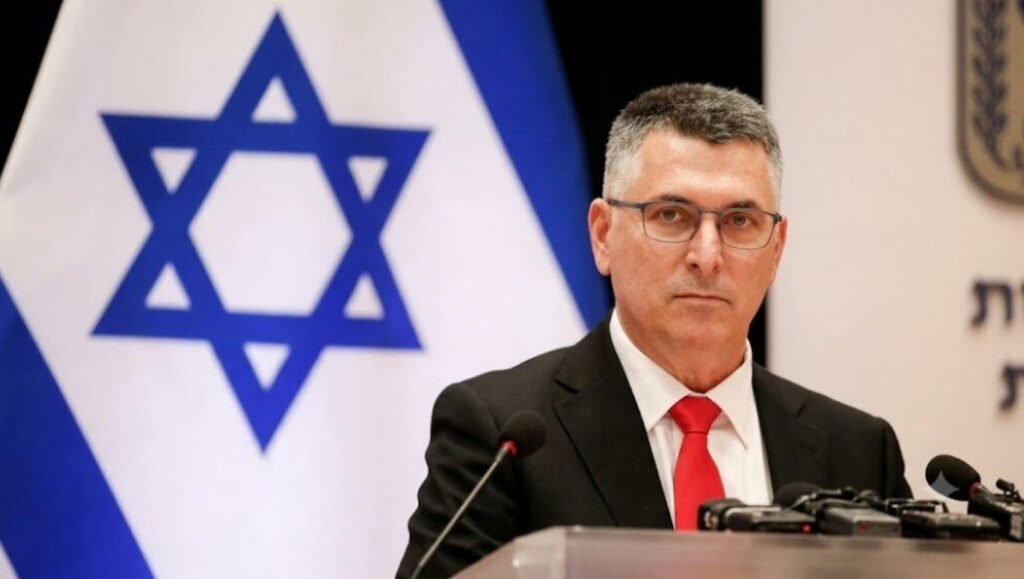
The latest activation of the process of Armenian Genocide recognition by Israel is driven neither by a revision of Israel’s policy toward Armenia nor by moral considerations, but exclusively by tensions in Israeli-Turkish relations. This view is shared by regional affairs expert Armen Petrosyan, who argues that this pattern has been observed repeatedly over the years.
The Armenian Genocide Issue in Israel Has Always Been Linked to Turkey
“If we look at the entire history of discussions surrounding Armenian Genocide recognition in Israel, we can see that every wave of renewed interest has coincided with periods of tension in Israeli-Turkish relations. The same situation exists today. Israel is attempting to use all available political instruments to respond to the increasingly harsh and frequent criticism coming from Turkey regarding Israel’s policies in the Gaza Strip,” Petrosyan says.
The expert recalls that the current phase of tensions intensified significantly after Israel launched military operations in Gaza in 2023. Although a ceasefire agreement was reached in the autumn of 2025 through US mediation, Israel has continued periodic military operations.
“According to various estimates, approximately 72,000 Palestinians have been killed as a result of these operations, while hundreds of thousands have become refugees. Moreover, Israeli officials no longer conceal that their ultimate objective is the complete occupation of the Gaza Strip,” Petrosyan argues.
Armenian Genocide Recognition Has Become Another Political Instrument
According to Petrosyan, negotiations between the United States and Iran continue simultaneously, while Israel, including through its actions in Lebanon, seeks to obstruct potential agreements and preserve regional tensions.
In both of these issues, Turkey has consistently criticized Israeli policies and leadership, while the issue of Armenian Genocide recognition has become another instrument through which Israel responds to Turkish criticism.
The expert also highlights another important factor. According to him, reports have recently intensified suggesting that the United States may agree to sell F-35 fighter jets or related technologies to Turkey.
The F-35 Issue Remains Highly Sensitive for Israel
“This is an extremely sensitive issue for Israel. In order to preserve its security and regional ambitions, Israel seeks to maintain air superiority. If Turkey acquires F-35 aircraft, that balance could be seriously disrupted. It is possible that the Armenian Genocide recognition issue is also being used to influence this process,” Petrosyan says.
Armenia Is Practically Absent From This Process
Petrosyan is convinced that Armenia itself is largely absent from the current process.
“If we analyze the real causes behind these developments, there are no Armenian-Israeli relations involved here. The entire process is unfolding exclusively within the logic of Israeli-Turkish relations,” the expert emphasizes.
According to him, as an Armenian citizen and as an Armenian, he cannot view positively a situation in which a national tragedy is used as a tool of political bargaining and strategic calculation.
“When our national tragedy becomes an instrument of political trade or political calculations, that is at the very least unpleasant and unacceptable. If we saw that Israel was taking this step based on moral, historical, or legal convictions, our attitude would naturally be entirely different. In that case, even I as an expert would call on the Armenian government to respond appropriately. But today I do not see such motivation,” he says.
There Is Still No Final Recognition
At the same time, Petrosyan notes that the current process differs from previous attempts because the issue has been raised at the highest state level. However, he argues that this does not yet constitute final recognition of the Armenian Genocide.
“Israel is a parliamentary state. For recognition to become complete, the issue must be discussed and approved by the Knesset in a plenary session. This has not yet happened,” he stresses.
He also points out that the initiative was introduced shortly before the Knesset’s parliamentary recess.
“This gives reason to assume that the process may once again remain incomplete. Everything will depend on political developments in the coming days. If there is a political decision to recognize the Armenian Genocide, the process may proceed quickly. If not, procedural mechanisms such as insufficient votes, committee referrals, or other parliamentary procedures can always be used to keep the issue on the agenda without bringing it to a final vote,” Petrosyan says.
At present, he believes there is no guarantee that the process will ultimately result in recognition.
“And even if it does, the renewed attention to this issue will still be connected exclusively to Israeli-Turkish relations and will have nothing to do either with Armenian-Israeli relations or with the activities of the Armenian community in Israel,” he adds.
Israel Has Not Changed Its Attitude Toward Armenia
Petrosyan also rejects the view that Israel has recently changed its approach toward Armenia and now sees Yerevan as an important strategic partner in the South Caucasus.
According to him, if such assumptions were accurate, increased political contacts between Armenia and Israel would accompany the recognition initiative.
“No such dialogue exists. Neither has the Israeli foreign minister contacted the Armenian side, nor has Armenia initiated any diplomatic engagement. At the same time, it is known that a telephone conversation took place between the foreign ministers of Israel and Azerbaijan before the initiative became public. This clearly demonstrates that Israel’s primary concern was Azerbaijan’s position and that they sought to address that issue in advance,” he says.
For this reason, Petrosyan does not expect any significant changes in Armenian-Israeli relations even if recognition ultimately takes place.
Israeli Recognition Would Still Be an Important Instrument
Nevertheless, the expert emphasizes that possible recognition by Israel would still carry significant importance.
“I cannot diminish the importance of recognition by Israel. After all, we are speaking about the state of a people that also experienced genocide — the Holocaust. At least from a moral perspective, Israel should have been among the first countries to recognize and share the suffering of the Armenian people,” he says.
In addition, Petrosyan argues that if the Knesset adopts the relevant legislation, it could become an important instrument in the broader international recognition process.
“Israel and Jewish organizations throughout the world possess influential lobbying networks. If recognition becomes final, these structures will be able to refer to Israeli legislation and promote Armenian Genocide recognition more actively in various countries. This may not immediately benefit the Republic of Armenia directly, but it could significantly facilitate the work of the Armenian diaspora and organizations that have spent decades pursuing international recognition of the Armenian Genocide,” the expert concludes.