
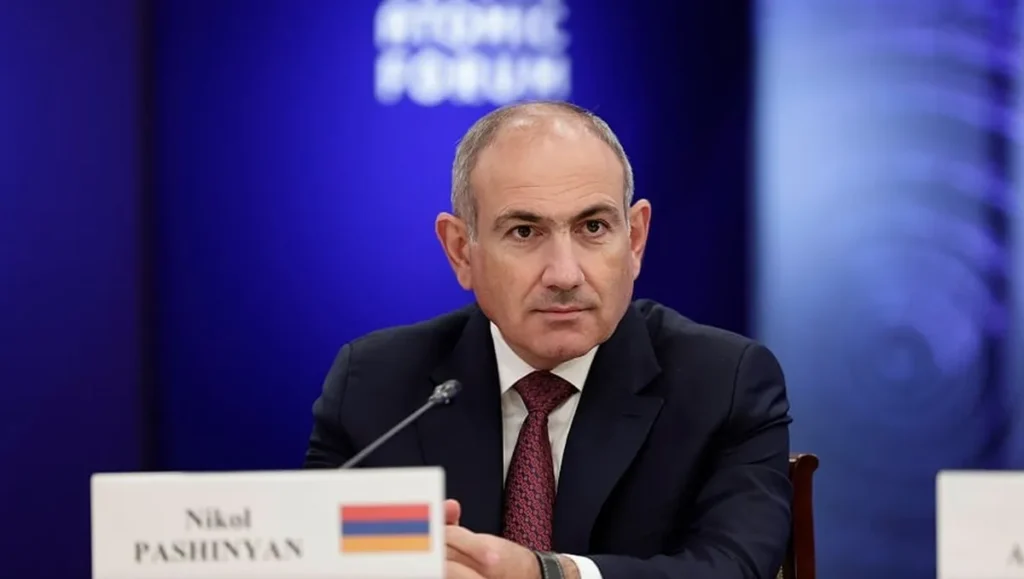
Armenian Prime Minister Nikol Pashinyan has long run his course as a political project and political force. Yet he continues to appear viable because a coherent alternative political project has not emerged in Armenia, political analyst Hakob Badalyan said.
According to Badalyan, a change of government alone will bring no substantial change unless it is preceded by a shift in the social environment and in the entire logic of how the state is governed.
“If change has not begun within society, then, especially given the legacy Pashinyan is leaving, a change of government in the formal legal sense will, by and large, achieve nothing. The legacy is so difficult, and the hole already dug so deep, that changing the government alone will achieve nothing unless the overall relationship between the state and society changes from below,” Badalyan said.
Pashinyan appears viable because there is no alternative
The main problem, according to the analyst, is that no new social and political reality is taking shape alongside Pashinyan’s political project. Such a reality could, over time, become a governing force in practice even before formally coming to power.
In Badalyan’s view, Armenia needs a public and political environment that outside actors will have to take into account. If another force replaces Pashinyan while the social environment and the entire architecture of the state remain the same, the new government will face serious problems. It could also fall into another political trap by blaming its failures and difficulties on its predecessor’s legacy.
The analyst recalled that Armenian governments have often followed this pattern, making previous leaders responsible for every problem. After Robert Kocharyan’s presidency, Levon Ter-Petrosyan was assigned that role. During Serzh Sargsyan’s presidency, blame was placed on Kocharyan, though his responsibility was presented in milder terms. According to Badalyan, the practice reached its peak after 2018.
There is an opportunity to build an alternative
Badalyan said Armenia has an opportunity to develop an alternative political project and needs to work toward it. In his view, irrational public expectations must be turned into a rational political process.
Until a coherent alternative political environment takes shape, Pashinyan will continue to be seen, both inside Armenia and by outside actors, as the only complete political project. That will remain the case, Badalyan argued, even though the prospects for his political role have been exhausted.
Badalyan stressed that outside actors want to know who could become their political partner in Armenia after Pashinyan. An alliance of opposition forces should answer that question by showing what alternative political partner it can offer them.
From this perspective, he welcomed the fact that the current opposition alliance has not treated a change of government as an end in itself or as a merely mechanical task.
“If you change the situation, a change of government will inevitably follow. So we need to understand what these forces are offering the Armenian public and the world as new substance, as a new political project,” the analyst said.
Armenia’s capacity for influence must be built at home
Discussing Armenia’s ability to influence regional and geopolitical developments, Badalyan said the country currently has little capacity to do so.
For that reason, he said, outside powers pay close attention to who forms and maintains the government in Armenia. The next government, however, must be able to offer them new substance and an alternative opportunity for cooperation.
“Under these conditions, [Armenia can influence] nothing. That is why this capacity must be built, and it cannot be built anywhere other than at home, within society itself,” he said.
The analyst believes this process must take account of the Armenian public’s differing views and approaches. He also highlighted the opposition alliance’s statement that its members would retain their differences of opinion.
According to Badalyan, disagreements should not be treated as obstacles that must be set aside for the sake of unity. Political forces should instead be able to work toward shared goals while holding different views.
“There is no need to fear disagreements or to say, ‘We have set our disagreements aside.’ If you cannot work together while disagreeing, and you try to win over society by promising to abandon those differences, then you will not be able to do anything else either,” he said.
One of Armenia’s problems, the analyst argued, is that society has not learned to turn its differing views and approaches into a source of strength. Otherwise, outside actors can use those differences for their own purposes.
Badalyan said the opposition alliance should begin by addressing this problem. It should avoid familiar political traps and refrain from trying to become the leading opposition force at its partners’ expense later on. “If they are genuinely ready to work together now, that is welcome. This is an opportunity that should be used,” he concluded.