
Against the backdrop of a prolonged deadlock in the issue of unblocking communications in the South Caucasus, an alternative approach is increasingly being discussed — the so-called “American scenario” of unblocking. Its essence lies in transferring the road through Syunik under the management of a private American company. On the eve of the upcoming meeting between the leaders of Armenia and Azerbaijan in Washington, discussions of such schemes are gaining particular relevance.
“Trump Bridge”: Has Yerevan Given Its Consent?
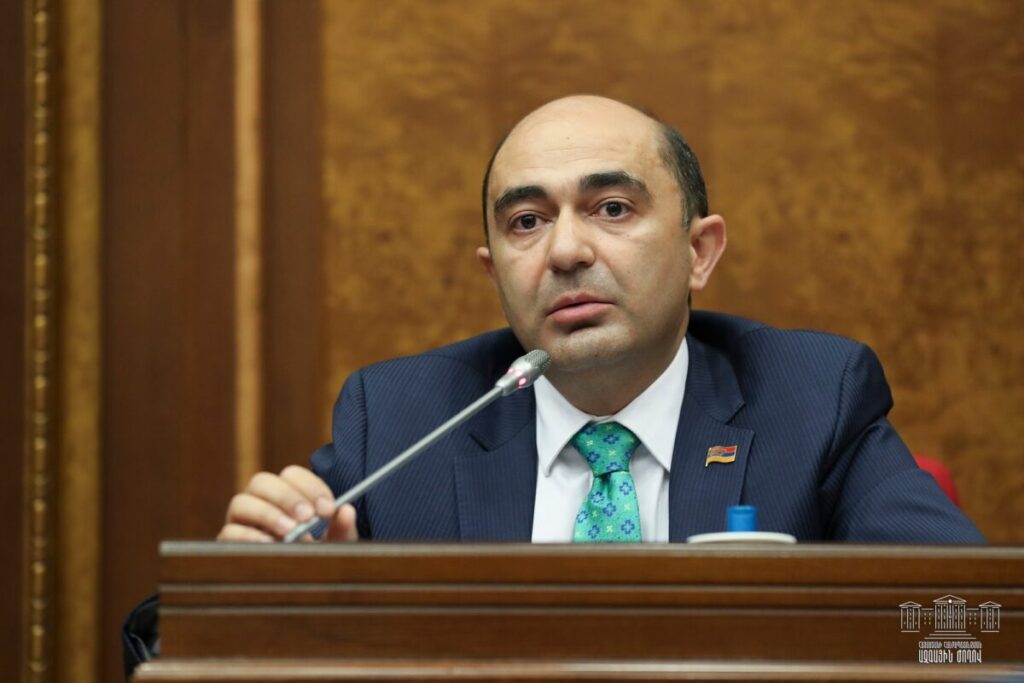
Former Ambassador-at-Large Edmon Marukyan does not rule out that clarity may be brought to the issue of unblocking communications during the upcoming meeting.
“A memorandum of understanding is expected to be signed in the U.S., but it is also possible that during the meeting, issues related to the so-called ‘Trump Bridge’ — or the so-called ‘Zangezur Corridor’ — will be clarified. As is known, the idea of outsourcing the road through Syunik to an American company has already been discussed, and it is not excluded that it may take concrete shape and implementation specifically in Washington,” he stated.
According to him, based on available information, the “Trump Bridge” project entails the following: a 42-kilometer stretch is transferred to the management of a private American company. Around 1,000 security personnel will be stationed there to ensure control and fulfill necessary functions.
“According to the proposed revenue distribution model for the provided services, 40% of the profit will go to the managing company to cover expenses, 30% to Azerbaijan, 30% to Armenia, and another 10% to regional development programs,” Marukyan noted, adding that this information is currently being circulated, but whether the Armenian side has agreed to this format may become clear during the upcoming meeting.
What Can Armenia Expect?

Former Polish Ambassador to Armenia, Piotr Skwieciński, noted in a conversation with VECTORS.am that this unblocking initiative has only one advantage:
“The idea of transferring control over Azerbaijani transit through Syunik to a private company, in my opinion, has only one — but perhaps a significant — advantage: it may align with Donald Trump’s worldview, who believes in the beneficial role of private capital in resolving global conflicts. Moreover, if it were an American company, Americans would profit from it (possibly people close to Trump?). This prospect could likely motivate the current U.S. administration to engage in efforts to resolve the issue,” Skwieciński said.
Iran is the most opposed to the presence of Americans in the region. At the same time, there has been a growing number of comments suggesting that the U.S. seeks to bring Azerbaijan into the “Abraham Accords” as a way to contain Iran. According to the diplomat, “the interpretation that Azerbaijan’s accession to the Abraham Accords is meant to weaken Iran seems entirely plausible.”
“More active U.S. involvement in the comprehensive settlement of Armenian-Azerbaijani relations could also contribute to this [i.e., the weakening of Iran – ed.], for example, by pressuring Yerevan to loosen ties with Tehran in exchange for a reduction in threats from Azerbaijan, mediated by the U.S. In any case, these are the kinds of steps the Armenian government could be counting on,” said Piotr Skwieciński.