
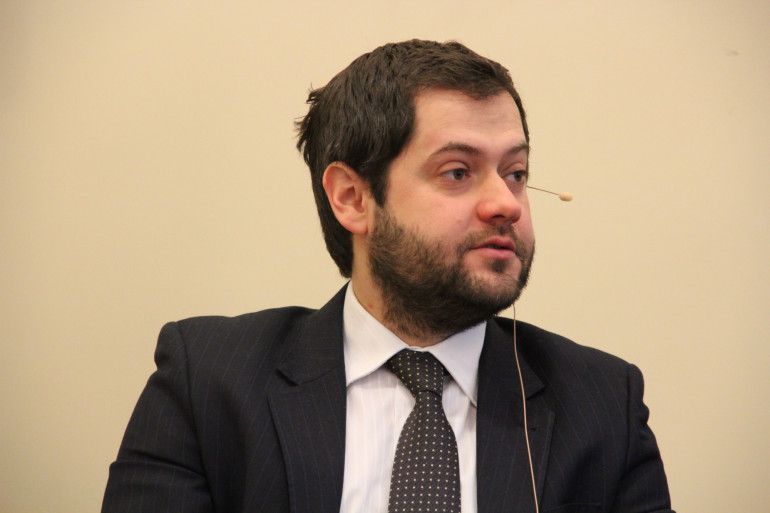
The upcoming meeting between the leaders of Armenia and Azerbaijan in Washington will be significant, just like the recent one in Abu Dhabi, as it involves a direct dialogue between the heads of the conflicting countries, said Polish political analyst, Caucasus expert, and Doctor of Oriental Studies at the University of Warsaw, Konrad Zasztowt, in an interview with VECTORS.am.
Another Element Demonstrating Independence from Moscow
However, the outcome of this meeting will not be a final peace agreement but rather a document reflecting progress in negotiations—possibly just a joint declaration of goodwill by both parties, he believes. For U.S. President Donald Trump, as the analyst notes, the PR aspect is what really matters in this case.
“On the other hand, the peace process is already taking place in a bilateral format. The location of the negotiations—whether in the UAE or the U.S.—matters, but neither Moscow nor Washington is, or will be, a patron or ‘midwife’ of the peace agreement. If it is eventually reached, it will be the achievement of the two Caucasian states. For Baku, as well as for Yerevan, the fact that the meeting is taking place in the U.S. is likely important as another demonstration of their independence from Moscow,” he said.
“The South Caucasus No Longer Holds the Same Importance for Washington as in Past Decades…”
The expert recalled that even during Barack Obama’s presidency, the United States had begun signaling a “pivot” in its foreign policy toward the Pacific region.
“Today, the South Caucasus no longer holds the same importance for U.S. policy as it did in past decades. That said, it still plays a certain role—as a region close to Russia, which remains a problem for the U.S. due to its aggression against Ukraine, and also as a region bordering the Middle East, which continues to challenge American foreign policy. For example, Azerbaijan—as a country in an informal alliance with Israel—is relevant to U.S. policy toward Iran. Armenia, in turn, maintains good relations with Tehran but has a far more complicated relationship with Israel. Nevertheless, it also plays a certain role in Middle Eastern policy,” he noted.
Not the “Abraham Accords,” But Their Analogue?
Commenting on expert discussions about the possibility of Azerbaijan joining the Abraham Accords as part of a strategy to contain Iran, the political analyst stated:
“It’s hard for me to imagine how Baku or Yerevan could participate in the Abraham Accords, since those agreements dealt with a completely different conflict—the Arab-Israeli relationship. From Washington’s point of view, however, an agreement between Armenia and Azerbaijan could be, to some extent, modeled after the dialogue between Israel and Arab countries during Trump’s first presidency. A common feature would be the involvement of the United States as a mediator whose actions led to peace in the region.”
Baku Rejects Any Regional Interference—Neither from Russia Nor the West
Speaking about the feasibility of transferring the management of the so-called “Zangezur Corridor” to a private company, the expert emphasized that “the idea of involving an American company to provide customs services in a conflict zone already has a precedent.”
“In the first decade of the century, after Russia joined the WTO, a similar American company was supposed to take over customs functions on the border between Russia and the separatist region of Georgia—Abkhazia. That plan, however, was never implemented. Today, we cannot rule out the possibility that it might be,” he said.
On the other hand, Zasztowt noted that Iran will oppose this idea, and Azerbaijan also shows no enthusiasm for it. At present, the authorities in Baku want no interference in the region—neither from Russia nor from Western countries—because, being in alliance with Turkey, Azerbaijan remains the dominant force and is capable of exerting pressure on Yerevan, he argued.
“Even the presence of a private American company would create certain opportunities for U.S. influence and would limit Baku’s pressure on the Armenian side. For now, the so-called Zangezur Corridor remains one of the last unresolved contentious issues between Baku and Yerevan,” he emphasized.
The interview was conducted by Marina Brutyan