
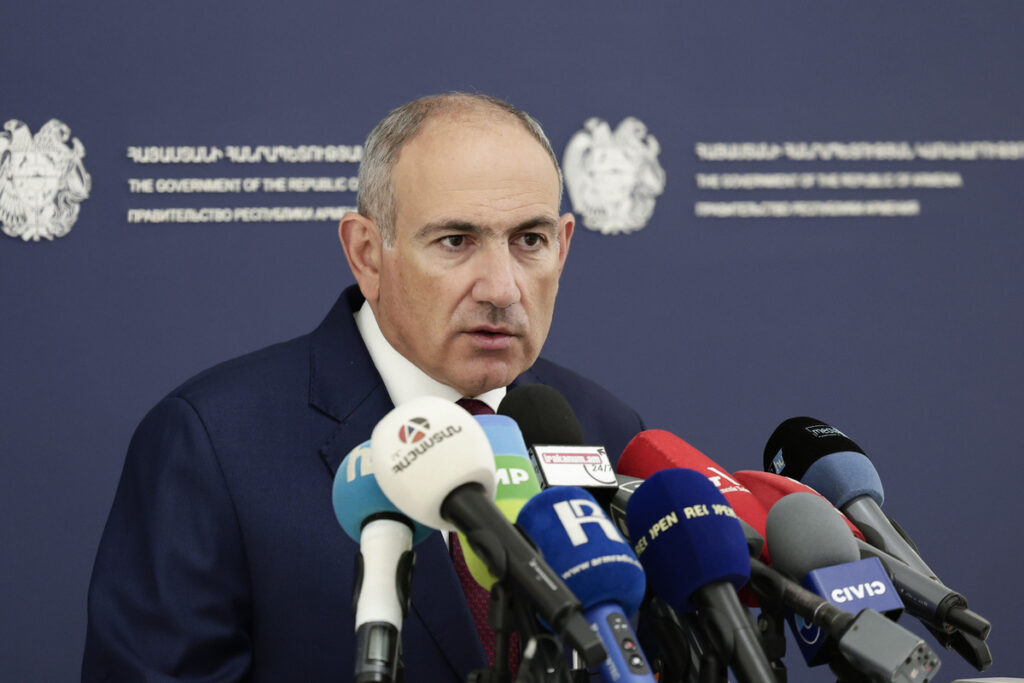
Armenia plans to modernize and simplify border control procedures at all its borders, making crossings faster and more technologically advanced. These changes will affect not only the Armenian-Azerbaijani border, including the TRIPP project, but also all other checkpoints in the country. This was stated by Prime Minister Nikol Pashinyan in response to a question from journalists about whether Armenian authorities would carry out control at the crossings along the “Trump route.”
The Prime Minister explained that the Washington-signed Trilateral Declaration clearly outlines the core principles on which the border openings will be based: respect for territorial integrity, sovereignty, jurisdiction, inviolability of borders, and mutuality.
“Within the framework of these principles, we can move toward simplifying procedures. When I presented the ‘Crossroads of Peace’ project, I said that we are ready to proceed with simplifying procedures. This means that the changes will affect not only the Armenian-Azerbaijani border, but all other Armenian checkpoints as well,” Pashinyan said.
According to him, the principles enshrined in the declaration will remain inviolable, but the form of control will be adapted to modern realities. Contactless control will be implemented using biometric passports and digital technologies. Traditional “contact-based” procedures, Pashinyan believes, will no longer be in effect in 5–10 years, not only in Armenia but worldwide. Therefore, this is not just a local initiative but part of a global trend toward digitalizing borders. Such an approach, the Prime Minister promises, will have a positive impact on the economy: facilitating exports, imports, and transit, creating a more favorable business environment.
This is not the first time the Prime Minister has spoken about contactless control along this route. However, the wording in the Declaration he refers to is more vague: it mentions unhindered transit and mutual benefits, but this does not formally guarantee a special status for this particular road. In other words, Pashinyan interprets the declaration optimistically to show the public: “We maintain sovereignty and control.” In reality, the specific status of the TRIPP route and the form of control will depend on the practical implementation of the agreement. Effectively, the route could have a special regime, while the “mutual benefits” may turn out to be nominal, because, as experience shows, current Armenian negotiators are increasingly inclined to make concessions, justifying them with uncertain prospects for establishing peace in the region.