
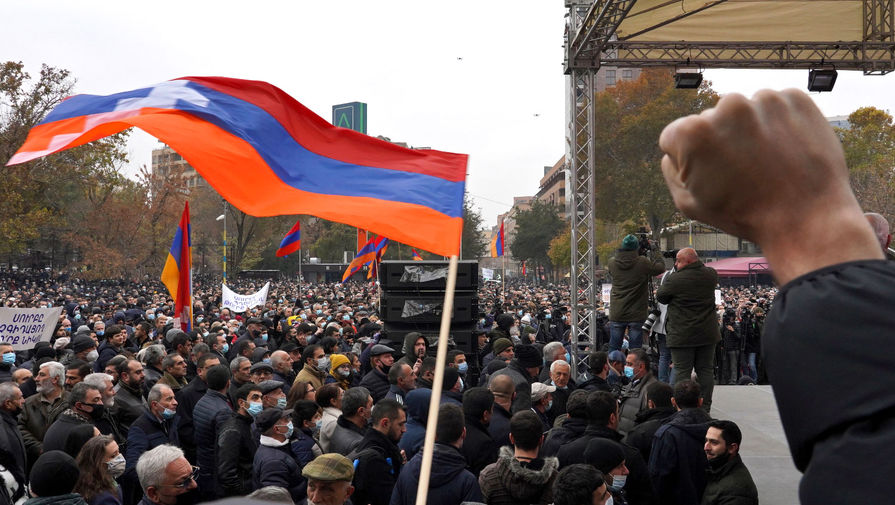
Armenia’s political system has still not fully formed and remains in a stage of development, although certain crystallization processes are already visible. This was stated by Ashot Melikyan, chairman of the Committee to Protect Freedom of Speech.
Political fragmentation and unhealthy competition
According to him, the positions of political forces are gradually becoming clearer, while the reduction in the number of parties participating in elections can be viewed as a sign of a healthier political process.
Melikyan recalled that 25 parties and alliances participated in the previous elections, while the number has now dropped to 19.
He noted that for a small country like Armenia, excessive political fragmentation can create an unhealthy competitive environment.
The “leader-centered party” phenomenon remains relevant
According to Melikyan, another sign that the political system has not fully matured is the dominant role played by party leaders within political forces.
In his assessment, almost all political parties today are strongly associated with their leaders. If those leading figures disappear from politics, serious questions could arise regarding the electoral viability of those parties and even their willingness to continue participating in political processes.
He also emphasized that intra-party democracy remains underdeveloped within Armenia’s political system.
According to him, parties are not forming second- or third-level leadership structures capable of independently advancing and ensuring institutional stability.
Without guaranteed freedoms, a political system cannot develop
Arthur Sakunts, head of the Vanadzor office of the Helsinki Citizens’ Assembly, stated that Armenia lacked the conditions for genuine democracy for many years, which hindered the formation of a healthy political system.
The human rights defender recalled that opposition activity in the past was often accompanied by pressure and the risk of persecution.
As an example, he referred to the situation following the March 1, 2008 events, when even organizing public discussions became difficult because hotels refused to provide venues for opposition events.
“Without guarantees of freedoms, a political system cannot develop in accordance with the principles of a democratic state,” Sakunts stressed.
One step forward
Sakunts also spoke about amendments to the law on political parties, describing them as steps aimed at strengthening intra-party democracy.
He noted that the first 30 candidates on party electoral lists must now be approved by a party congress, while every third candidate must be a woman.
According to him, another important reform is the introduction of a state financing mechanism. Under this system, political forces that pass a certain electoral threshold receive funding from the state budget to support their institutional activities.
At the same time, Sakunts stated that insufficient attention is still being paid to separating business interests from politics in Armenia.
According to him, it is especially important to establish a clear boundary between large businesses and political parties because political parties cannot function according to business management logic.
He also pointed out that issues related to transparency in party financing remain unresolved, particularly regarding donation sources and the integrity of donors.