
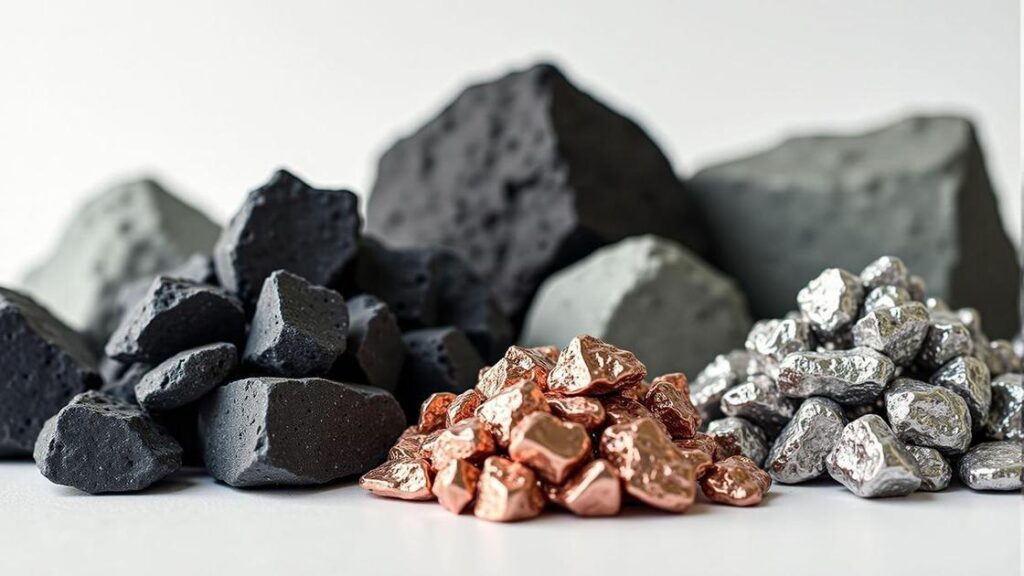
During U.S. Secretary of State Marco Rubio’s visit to Yerevan, three important documents were signed, outlining prospects for deepening bilateral relations. Among them, the “Framework Memorandum between the Republic of Armenia and the United States of America on Security of Supply in the Field of Extraction and Processing of Critical Minerals and Rare Mineral Resources” deserves particular attention.
From a substantive point of view, the document contains elements that move discussions about diversification from the level of “empty talk” into the field of “dry diplomacy.” However, the key question remains open: should this document be seen as a real step toward diversification, or does it mainly create new risks for Armenia?
A Signal Without Obligations
When analyzing the memorandum, it is important to avoid euphoria. Point 5 of Section II directly states that the document “does not create or confirm any rights or obligations under domestic or international law, does not give rise to any legal proceedings, and does not create any legally binding or enforceable obligation, express or implied.”
In essence, this is a classic instrument of American “soft power” — a bilateral political manifesto aimed at two centers at once: Beijing and Moscow.
For Washington, this document demonstrates U.S. readiness to aggressively expand the geography of supplies in order to overcome resource shortages in the technological war. In this logic, Armenia becomes another piece in the broader puzzle of alternative supply chains.
For Yerevan, which has recently faced pressure from Moscow and “warnings” about catastrophic economic consequences, the memorandum is an attempt to show that Armenia has a resource with which to respond to Russian economic blackmail.
Put simply, Washington and Yerevan at this stage are merely sending a signal that the United States views Armenia as a potential alternative element in the global supply chain.
Opportunities: Technological Leap and Financial Mobilization
Nevertheless, if the provisions of the memorandum begin to be implemented through contracts and concrete steps, Armenia could receive strong incentives for economic modernization. These incentives are закреплены in four key provisions of the document.
Thus, subparagraph “a” of point 2 of Section I clearly states that priority will be given to projects that create capabilities for “separation, processing, and value addition” within Armenia itself. For the country, this is an opportunity to move away from the export model of unprocessed copper or molybdenum concentrate and shift toward the production of refined metals.
In addition, the document establishes a clear deadline. Within six months of signing, the parties promise to examine financing mechanisms, including state guarantees, loans, and equity participation. This is provided for in subparagraphs “b” and “c” of point 2 of Section I.
For Armenian projects, this opens a path toward the opportunities of the U.S. International Development Finance Corporation, or DFC.
Perhaps the most fundamental provision is subparagraph “a” of point 8 of Section I. The United States promises to launch a technical partnership to create a modern geological service in Armenia, including the transfer of advanced assessment methods and the modernization of data collection standards.
This would allow Armenia to digitize information about its mineral resources and bring it into line with global standards.
Point 9 of Section I provides for exchange programs to train Armenian engineers, metallurgists, and environmental management specialists. This is intended to address the shortage of qualified personnel needed for high-tech extraction.
Risks: Monopoly and Regulatory Pressure
The memorandum also has another side, which requires maximum caution from Armenia. It contains provisions that could restrict the country’s room for maneuver.
Thus, point 5 of Section I states the parties’ intention to develop diplomatic tools to “review, prevent, or permit” the sale of critical mineral and rare mineral assets on national security grounds.
Translated from diplomatic language, this could mean that Yerevan will be expected to coordinate with Washington the granting of rights to develop its deposits to third countries, first of all China or Russia.
According to subparagraph “d” of point 2 of Section I, American companies expect to receive a “priority opportunity to invest” in Armenia’s critical mineral assets. This already resembles not diversification, but the granting of a monopolistic position in the sector to American capital.
Point 3 of Section I declares an intention to “accelerate, simplify, or modernize” timelines for issuing extraction and processing permits. Given the weakness of Armenia’s environmental institutions, accelerated fulfillment of U.S. industrial demand could lead to serious environmental crises.
Although subparagraph “b” of point 8 of Section I reserves respect for national security, the provision on geological data exchange would require Armenia to transfer sensitive information about its subsoil. This always remains a high-risk area.
The American Interest: Why Armenia?
The logic of Washington was explained quite clearly by Vinay Chalwa, director of the Office of the U.S. Special Envoy for Peace Missions, during Yerevan Dialogue 2026. His statements reveal three key factors that make Armenia attractive: institutional convenience, technological background, and U.S. involvement in infrastructure geopolitics.
Chalwa particularly emphasized Armenia’s unique legislative advantage for the region — the possibility of 100% foreign ownership of companies. This minimizes concerns for American investors.
He also directly linked raw material extraction with semiconductor production, recalling the long-standing success of IT giants such as Synopsys in Armenia and the launch of the Firebird project. Armenian engineers, according to him, are viewed as a ready-made link in a high-tech chain.
Finally, Chalwa connected cooperation in mineral extraction with the TRIPP project, or “Trump’s Route for International Peace and Prosperity.” In Chalwa’s view, without Armenian minerals TRIPP could become an “ineffective asset,” while without TRIPP Armenian minerals would remain an “unclaimed resource.”
The Russian Factor: An Inevitable Conflict in Mining
The main challenge for the practical implementation of the memorandum is the significant presence of Russian capital in Armenia’s mining industry. Today, the country’s main extractive assets are either directly linked to Russian companies or seriously dependent on them.
Judging by everything, Washington is not aiming to obtain large volumes of ordinary ore from Armenia. In the global strategy of supply diversification, Armenia is viewed rather as one element of a broader mosaic.
American technology giants are primarily interested in associated rare elements such as rhenium, gallium, indium, selenium, tellurium, and bismuth.
This is precisely where the interests of the parties may come into conflict. These valuable elements are physically located in deposits where Russian capital is already present.
For Russian companies, and especially the GeoProMining group, the expansion of American presence in the field of critical minerals could create additional complications. Russian players do not possess the full package of modern deep-processing technologies.
Traditionally, such raw materials were sent for processing to EU countries or China. If Western technological chains become less accessible, Russian enterprises risk remaining at the concentrate production stage and losing a significant share of added value.
In addition, Yerevan’s closer cooperation with the United States, including possible geological data exchange or audits at deposits involving Russian participation, could place Russian holdings in a difficult position from the perspective of secondary sanctions.
The American side will likely expect supply chains to be “cleaned” of individuals and organizations subject to restrictions.
The transition of the memorandum into practical implementation could provoke resistance. In particular, the application of provisions on protection from non-market practices, under point 4 of Section I, or mechanisms related to the sale of assets under subparagraph “d” of point 2 of Section I, may be perceived in Moscow as interference in established economic interests.
In response, Russian companies may freeze new investments, review operating conditions, or take other steps that would place additional pressure on Armenia’s economy.
The key nuance is that the Kremlin’s full range of tough response measures may be triggered long before the actual launch of agreements with the United States. In effect, Yerevan has already made a major political statement that irritates Moscow.
At the same time, the Armenian side still has no documentary basis implying real steps or ironclad guarantees from Washington, while the implementation of American projects remains highly uncertain.
This means Armenia could face tangible economic blows from Russia because of a document that currently exists only at the declarative level.
Between Declaration and Reality: Should Washington Be Trusted?
The main question is whether this document will turn into real contracts or remain a “piece of paper not binding for implementation.” Assessing the reliability of the current U.S. administration requires a clear distinction between White House political rhetoric and hard pragmatism.
In American diplomatic practice, a memorandum of understanding is an instrument for recording intentions. It is intentionally drafted in such a way that, if circumstances change, all preliminary arrangements can be canceled without difficulty.
Moreover, the link with the TRIPP initiative shows that the United States approaches the issue as part of an integrated business project. If the costs exceed the benefits, Washington will very quickly lose interest.
It should also not be forgotten that the U.S. government does not mine deposits itself. It only provides guarantees. The real money must come from private capital, which is extremely sensitive to security risks.
And our region, at least as of today, can hardly be considered stable from a security perspective.