
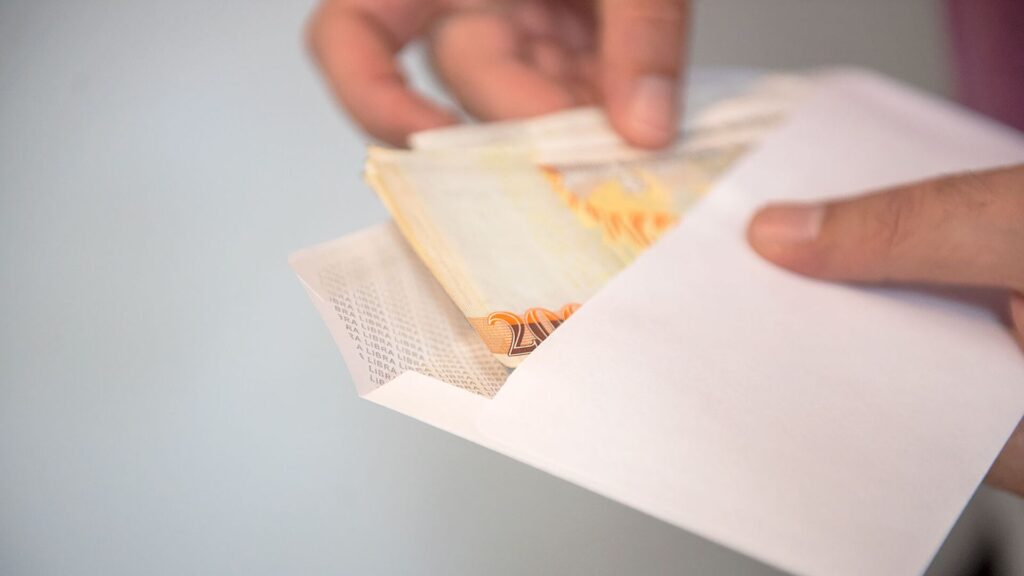
In the upcoming elections, the share of voters influenced by vote buying may reach up to 10%. This opinion was expressed by Daniel Ioannisyan, coordinator of the Union of Informed Citizens organization.
At the same time, the expert continues to describe the situation surrounding vote buying as alarming. According to him, the distribution of money still operates at multiple levels.
The System Continues to Function
According to Ioannisyan, there are several indicators that can be used to assess the scale of vote buying. One of the key indicators is field information gathered during monitoring.
He stated that almost every residential building has a coordinator responsible for receiving and distributing money. According to the expert, people involved in the system perform different roles and operate under different titles such as “activist,” “organizer,” and others. Each category reportedly receives different levels of payment.
Ioannisyan noted that, based on available field data, the electorate influenced by vote buying may account for up to 10%.
According to him, this is significantly lower than the figures recorded in 2017, when vote buying may have affected nearly half of all voters. Nevertheless, he stressed that the current figure still cannot be considered insignificant.
Rising Refusal Rates Raise Questions
As another important indicator, Ioannisyan pointed to the growing number of people refusing to answer sociological surveys.
According to him, when a citizen refuses to disclose which political force they intend to support, this may indicate fear or distrust, but could also suggest that the person has received vote buying incentives or related promises.
The expert emphasized that individual cases should not automatically be treated as proof of violations. However, he believes that the overall statistical picture raises serious concerns.
The Number of Refusals Nearly Doubled
Ioannisyan stated that from early April to early May, the number of people refusing to answer survey questions nearly doubled and reached approximately 12%.
“Our foreign partners, who have experience studying electoral processes in other countries, tend to believe that a significant share of these people may have received vote buying incentives,” the expert said.
According to his assessment, these trends also correspond with the information the organization receives through long-term observation and continuous monitoring of the situation.
Ioannisyan concluded that the current situation continues to pose a serious problem for electoral processes.