
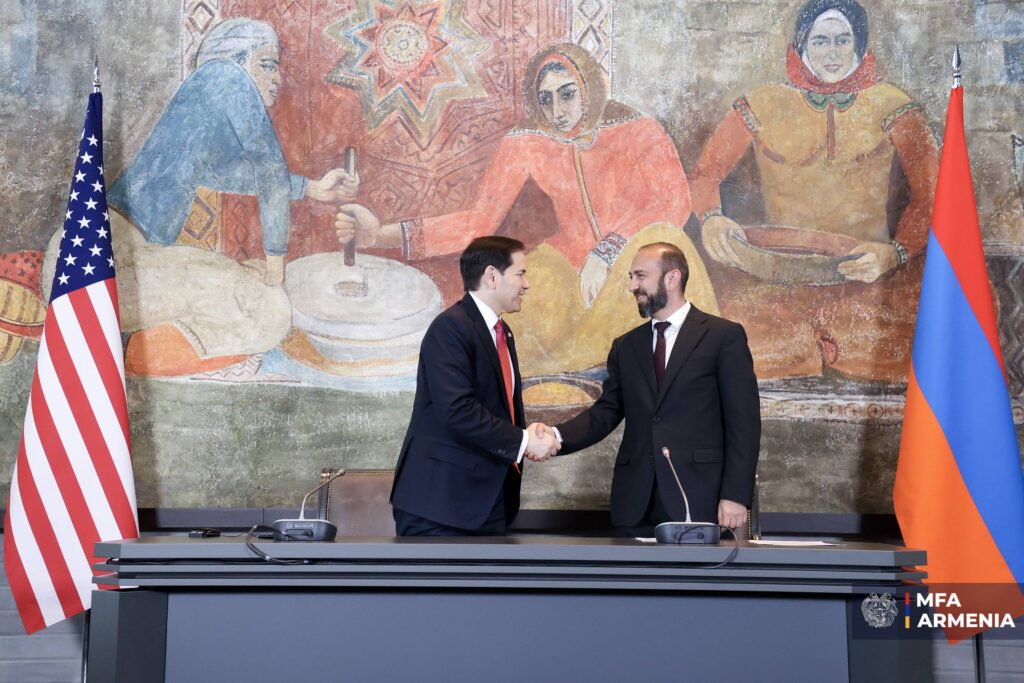
The unexpected and short visit of U.S. Secretary of State Marco Rubio to Yerevan continues to attract attention in political circles. According to political analyst Hrant Melik-Shahnazaryan, the visit is difficult to view solely within the framework of diplomatic agenda, since it was most likely directly connected to Armenia’s internal political developments and upcoming elections.
According to the analyst, there was initially an impression that the Armenian authorities would try to turn the visit into a domestic political resource aimed at obtaining as much political support, promises, or public backing from the American side as possible.
However, the visit itself demonstrated that Washington was not prepared for such a scenario. “We saw that the State Department was not particularly inclined to solve such tasks. They arrived very quickly, the meeting lasted only one hour, and then they left,” he noted.
Washington Wanted to Secure Agreements Quickly
According to Melik-Shahnazaryan, the speed and format of the visit may indicate that the United States was trying to formalize agreements with Armenia as quickly as possible before potential changes in the country’s domestic political situation.
The political analyst does not rule out the possibility that Washington saw risks related to the prospects of the current authorities remaining in power.
According to him, this is precisely why the American side rushed to sign several documents that are important for U.S. regional strategy.
“It is possible that they saw risks that after the elections Pashinyan’s government might no longer remain in power, and they wanted to use the moment quickly while there was still a force capable of giving those agreements an official form,” he said.
Closed Polling Data May Have Looked Different
In the analyst’s opinion, the American side’s urgency may also have been connected to the real picture reflected in recent sociological studies.
Although published polling data showed Prime Minister Nikol Pashinyan’s positions as relatively strong, Melik-Shahnazaryan believes that confidential data may have sent entirely different signals to Washington.
“If they conducted research, then they saw the real picture, and perhaps that is exactly when the red light turned on,” he stated.
According to the political analyst, this may explain why Marco Rubio made an unplanned stop in Yerevan while returning from India — in order to quickly formalize agreements important for the United States before continuing his trip.
The Agreements May Become Tools of Influence
Melik-Shahnazaryan believes that everything possible was done to ensure that even if the current authorities are not re-elected, the signed documents would still become instruments of influence for Washington over Armenia’s future leadership.
He does not rule out that the purpose of the agreements was to limit the maneuvering space of future Armenian authorities and make it more difficult to abandon those commitments.