
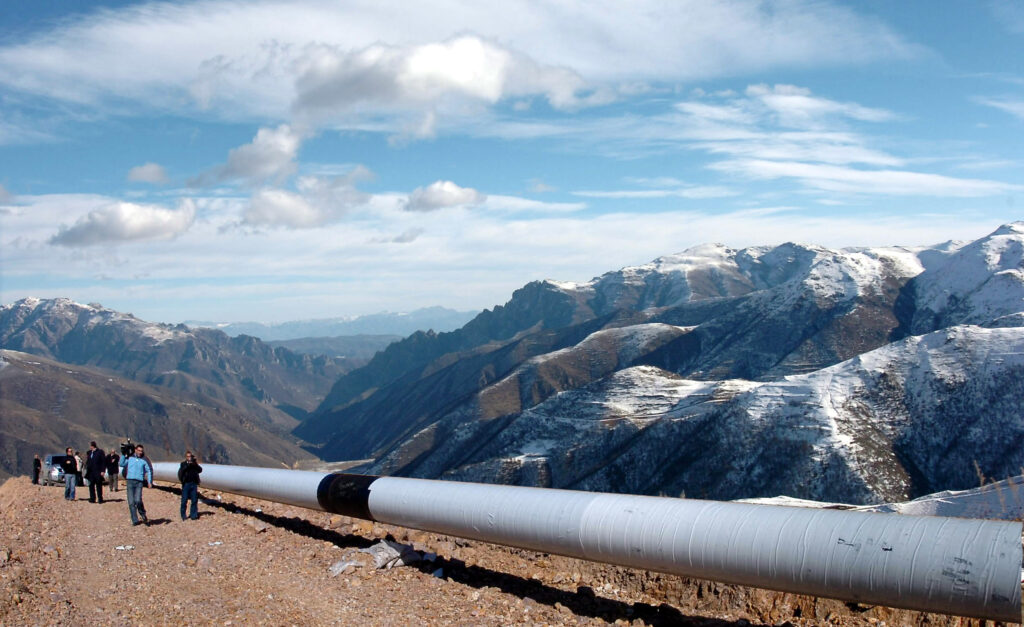
Discussions about alternative sources of natural gas for Armenia often focus on Iran, yet in practice this option faces numerous limitations. This was stated by economist Vardan Aramyan while discussing Armenia’s energy security and potential alternatives to its current gas supply system.
According to him, existing infrastructure does not allow Armenia to import enough gas from Iran to fully satisfy domestic demand.
“People sometimes say that Armenia could completely switch to Iranian gas, but we simply do not have a pipeline with sufficient capacity. Under current conditions, such a scenario is not realistic,” the economist noted.
Infrastructure Remains the Main Constraint
Aramyan illustrated the issue with a simple comparison between pipelines of different diameters.
“Imagine a pipe with a diameter of half a centimeter and another pipe that is ten times larger. No matter how much pressure you add or how many pumps you install, the smaller pipe will never be able to transport the same volume as the larger one,” he explained.
In his view, these technical limitations remain the primary obstacle to significantly expanding gas imports from Iran.
Cheaper Gas Is Not Guaranteed
The economist also questioned the assumption that Iran could supply Armenia with gas at prices substantially below current market levels.
According to Aramyan, Iran has existing agreements with Turkey that limit its ability to sell gas to third countries at significantly lower prices.
He emphasized that in international economic relations, preferential pricing is usually accompanied by reciprocal obligations.
“Even if Iran theoretically agreed to sell gas below market rates, it is obvious that certain conditions would be attached. It is difficult to predict exactly what those conditions would be, but it is important to understand that nothing comes for free,” he said.
Significant Investments Would Be Required
Aramyan argued that even if Armenia decided to increase imports from Iran, substantial investments would be needed to build new infrastructure and modernize existing systems.
“We need to understand who would finance such investments—Armenia or Iran. If Iran becomes the investor, it will naturally seek certain ownership rights or control over the infrastructure involved,” he stated.
According to the economist, the scale of investment required would be considerable.
The Process Would Take Years
Aramyan stressed that the challenge is not purely financial.
Large-scale infrastructure projects require extensive planning, engineering work, construction, and technical implementation.
“It is impossible to create such infrastructure within one or two months. Even under the most favorable conditions, we are talking about a process that would take years,” he noted.
In conclusion, Aramyan stated that diversifying Armenia’s gas supplies remains an important strategic objective. However, he argued that the issue should be assessed through the lens of real technical, financial, and time-related constraints rather than political rhetoric.