
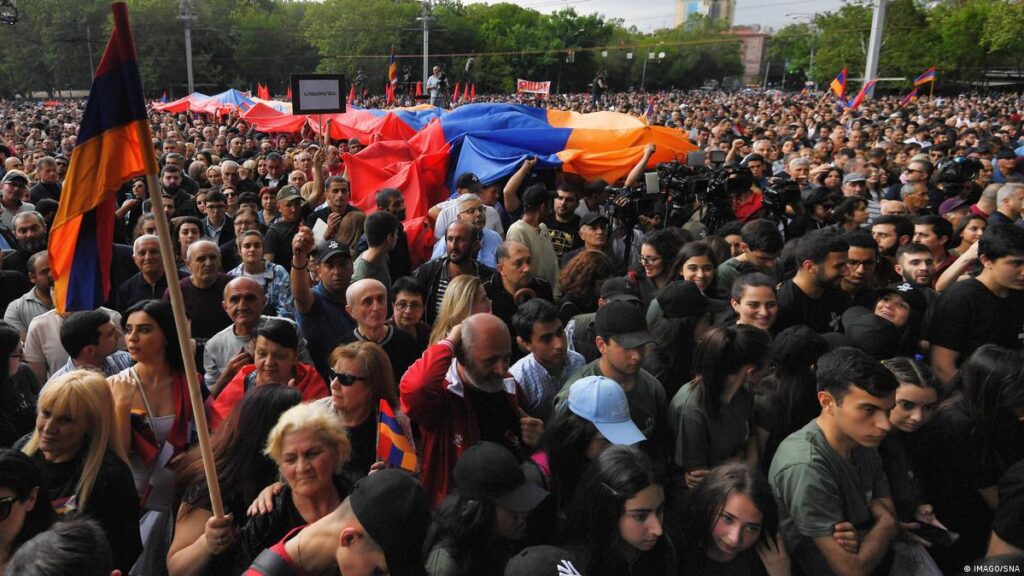
The opposition’s lack of clear and decisive action after the elections has led to growing public disappointment. This view was expressed by political analyst Hrant Melik-Shahnazaryan.
According to him, the longer the opposition delays its response and fails to present a clear position on ongoing developments, the more public trust it loses.
Melik-Shahnazaryan argues that the opposition managed to gather significant support during the final weeks of the campaign, but quickly squandered those gains. In his view, Prime Minister Nikol Pashinyan’s declaration of victory, made when only a small share of votes had been counted, should have been met with an immediate response.
He believes the opposition should have launched street protests and gathered outside the Central Electoral Commission to prevent the authorities from gaining time. Instead, opposition forces adopted a wait-and-see approach and chose to await the commission’s official decision.
“Every hour in which the opposition fails to take clear action increases public disappointment,” he says. According to the analyst, there is a contradiction in the opposition’s behavior: it accuses the authorities of wrongdoing while simultaneously waiting for decisions from institutions it considers politically dependent.
Public Expectations Have Turned Into Frustration
Melik-Shahnazaryan notes that before the elections many citizens expected significant political changes after June 8. Thousands spent hours in line to vote, believing their participation could influence the outcome.
Today, however, those expectations have largely been replaced by silence and disappointment.
At the same time, he warns that public silence should not be mistaken for indifference.
“Both the government and the opposition should fear the silence of the people, because public silence never remains just silence,” he emphasizes.
According to the analyst, dissatisfaction is building up toward both the authorities and the opposition. If opposition forces fail to organize and lead their supporters, that frustration could eventually evolve into serious social and political developments.
The Opposition Faces a Difficult Choice
Discussing the opposition’s next steps, Melik-Shahnazaryan argues that opposition parties have found themselves in a difficult position.
In his assessment, they are unwilling to give up their parliamentary mandates and are increasingly focused on strengthening their influence within the National Assembly rather than pursuing extra-parliamentary political struggle.
He believes opposition leaders are already discussing a strategy centered on parliamentary activity, hoping to gradually expand their political influence.
According to Melik-Shahnazaryan, current opposition behavior points precisely in that direction, which could further deepen public disappointment with the country’s political system.