
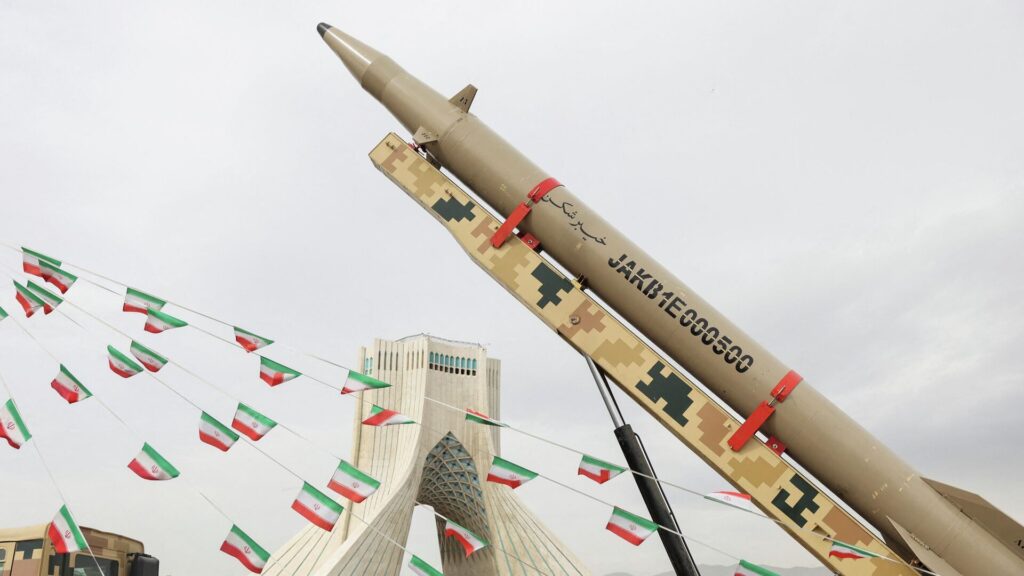
The conflict between Iran and the United States was never truly resolved; it was merely frozen for a period of time. Recent developments suggest that tensions have escalated again, with the main confrontation now unfolding directly between Tehran and Washington. This assessment was offered by political analyst Armen Ayvazyan.
According to him, recent events indicate a significant shift in Iran’s regional strategy. Ayvazyan noted that Iran recently launched strikes against Israel, highlighting what he considers a crucial development.
A New Phase in Iran’s Strategy
“This is the first time Iran has struck Israel or another country without first being attacked itself. It was not an act of self-defense or retaliation, but the implementation of a previously announced warning,” he said.
Ayvazyan recalled that Tehran had warned Israel against targeting Hezbollah positions in Lebanon, particularly in southern Beirut. When those warnings were ignored, Iran responded almost immediately.
In his view, this demonstrates a major strategic shift.
“Iran is signaling that it is prepared to act not only to defend its own interests but also to protect its allies. This marks an important turning point in its policy,” he explained.
Raising the Cost of Conflict for Washington
The analyst believes Tehran is simultaneously trying to increase the costs and risks of military action for the United States.
According to Ayvazyan, Iran aims to expand the geographical scope of the confrontation and create additional pressure points across the region. He cited disruptions in the Bab el-Mandeb Strait by Iran-aligned Houthis as one example of this strategy.
At the same time, he questions whether the United States can sustain the current intensity of military operations for an extended period.
Much of the American campaign relies on cruise missiles, including Tomahawk missiles, whose stockpiles are not unlimited.
“If strikes continue at the same pace, the United States could face resource constraints within days or weeks,” he argued.
Could Azerbaijan Become Involved?
Discussing Azerbaijan, Ayvazyan referred to earlier CNN reports suggesting that Azerbaijani territory may have been used in operations directed against Iran.
Although Baku has denied such claims, the analyst believes few observers in Iran or elsewhere doubt the existence of Israeli intelligence infrastructure inside Azerbaijan.
“Virtually nobody questions the presence of Israeli intelligence assets, special units, and supporting infrastructure there,” he said.
Ayvazyan considers it possible that Azerbaijan could eventually become a target if the conflict intensifies further.
“If Tehran concludes that hostile activities against Iran continue from Azerbaijani territory, strikes could become unavoidable,” he stated.
Factors Still Restraining Tehran
Nevertheless, Ayvazyan believes Iran is currently exercising restraint.
One reason is Azerbaijan’s close relationship with Turkey and Pakistan. Russia also continues to maintain important ties with Baku.
“Iran understands that striking Azerbaijan could create additional complications in relations with Turkey, Pakistan, and to some extent Russia. That is likely why such a step has not yet been taken,” he explained.
However, he warns that these restraining factors may lose significance if the confrontation escalates further.
The Energy Dimension
According to Ayvazyan, Azerbaijan also plays an important role as an energy supplier to Israel.
He noted that a significant share of Israel’s oil imports comes from Azerbaijan through the Baku–Tbilisi–Ceyhan pipeline.
“If the conflict expands, Iran will certainly take into account that Azerbaijan is not only a potential platform for activities against Tehran but also one of Israel’s important energy partners,” Ayvazyan concluded.