
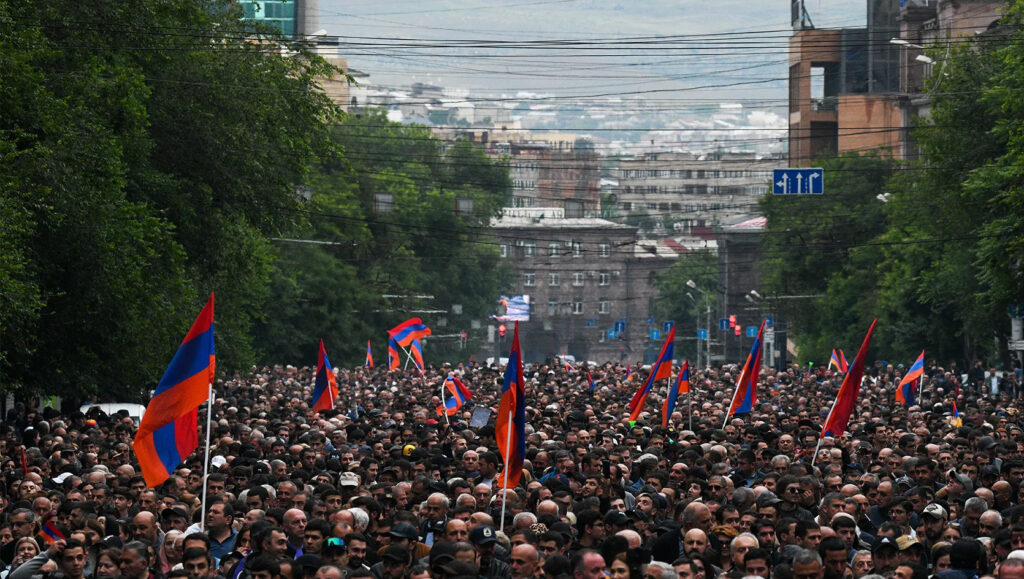
Armenia’s continuing domestic political developments — high-profile detentions and arrests, initiatives to nationalize private property and government claims that these measures serve the public interest by “returning what was stolen” — remain the subject of intense debate.
Gagik Minasyan, a member of the executive body of the Republican Party of Armenia, offered his assessment of the motives behind these actions and the political objectives they may pursue.
According to him, the current domestic situation reflects a system of personalized rule in which state institutions no longer perform their constitutionally assigned functions.
Minasyan argues that the recent detentions and arrests should not be viewed as isolated cases. In his assessment, they are all components of the same political process.
“Such abuses occur continuously in many countries. But during the past thirty years, our society has not been accustomed to this kind of situation. When a woman is arrested and prevented from communicating with her three-year-old child, that is a horrifying development,” Minasyan said.
Dozens of Political Figures Have Been Arrested
The Republican Party representative stressed that the issue extends far beyond one individual case.
According to him, dozens of political figures have been detained, including parliamentary candidates and people who had already been elected as members of parliament.
Minasyan believes that during the election process these actions were specifically intended to neutralize political actors who could have monitored the conduct of the vote.
“Before the elections, the key representatives of a political force who were supposed to oversee the proper conduct of the process and prevent possible violations were arrested. Once the elections ended, they were released. This was not accidental,” he said.
In his view, the sequence of events indicates a deliberate political calculation rather than purely legal considerations.
State Institutions Have Been Removed From Decision-Making
Minasyan argues that all instruments of power in Armenia have been concentrated in the hands of one individual, while constitutional institutions have effectively been excluded from decision-making.
“We have entered a situation in which the Constitution, the courts, the prosecutor’s office, investigative bodies and other state institutions have been pushed aside, while the wishes of a single person are implemented,” he said.
According to Minasyan, such a system is based not on institutional rules but on personalized decisions.
Under these conditions, he argues, state institutions cease to function as independent checks and balances and instead become mechanisms for implementing the political will of the country’s leadership.
The Current System Cannot Remain Stable
Minasyan believes this model of governance cannot endure over the long term and will inevitably lead to political upheaval.
He says both the government and the opposition are dissatisfied with the current situation.
The ruling force, in his assessment, failed to implement all of its political objectives, including securing the parliamentary majority required for constitutional amendments.
The opposition, meanwhile, believes it was deprived of votes that rightfully belonged to it and did not receive representation corresponding to the actual will of the electorate.
Minasyan argues that dissatisfaction on both sides is intensifying instability and making the continuation of the current balance increasingly unlikely.
External Actors Also Failed to Achieve Their Expected Results
The Republican Party representative also claims that the major external actors surrounding Armenia are dissatisfied with the current situation.
He named Azerbaijan, Turkey, Russia and Iran, arguing that each of them, for different reasons, failed to obtain the outcomes they expected from Armenia’s political developments.
According to Minasyan, the interests of these countries differ, but all of them sought to influence Armenia’s future direction and expected a political result more favorable to their own priorities.
The fact that the expectations of both domestic and foreign actors were not fulfilled makes the current situation even more unstable, he believes.
The “Unstable Equilibrium” Will Not Last
Concluding his assessment, Minasyan said the existing “unstable equilibrium” cannot be maintained for long.
In his view, the current uncertainty must eventually produce a political resolution, although it is not yet possible to predict when this will happen or which side will initiate it.
“We are facing extremely serious upheaval. This uncertain situation must be resolved. I cannot say when it will happen or who will initiate it — the government or the opposition — but it is clear that the present situation cannot continue for long,” Gagik Minasyan concluded.