
Military and political developments in the Middle East indicate that the conflict has entered a new, significantly more dangerous and decisive phase. According to Iranian political analyst Pouya Hosseini, the United States continues to attempt to impose its will and implement its own plans at every stage, while Iran is responding with increasingly firm resistance.
Negotiations as a Tool to Gain Time and Regroup Forces
The analyst recalled that Iran demonstrated its military strength and resilience against the United States and Israel during the 40-day war.
“The ceasefire announced at that time came at the request and insistence of the United States and Israel, not at Iran’s initiative. Afterward, Washington tried to achieve through negotiations the objectives it had failed to accomplish through military force, attacks and direct pressure. Although the negotiations took place under explicit threats, Iran continued to resist both on the battlefield and at the negotiating table,” Hosseini said.
According to the analyst, although the sides eventually concluded a compromise agreement, the United States once again demonstrated that it was not a reliable negotiating partner and later resumed attacks against Iran.
Hosseini believes Washington uses diplomacy exclusively for tactical purposes.
“The United States uses negotiations as an instrument to gain time, improve its position and allow its military forces to recover and prepare for new attacks,” he said.
In his assessment, Washington’s actions have repeatedly undermined the diplomatic alternative to war.
As a result, the conflict may continue for a prolonged period and consume enormous resources on both sides.
Iran’s Military Doctrine Is Shifting From Defense to Offense
Under the current conditions, Tehran is moving toward more radical measures.
Hosseini says Iran is now changing its military doctrine. During the 40-day war, the country largely followed a defensive approach, maintained certain limitations and took the interests of neighboring states into consideration. That approach, he argues, is now being abandoned.
“At this stage, Iran is moving toward deterrence measures that will no longer allow the United States even to consider attacking the country. As Iran’s military command has stated, the country will not only defend itself but will also launch offensive operations designed to inflict such painful damage on the United States that Washington will be forced to honor every agreement,” the analyst explained.
According to him, Iran is moving from a limited retaliatory strategy toward a broader doctrine of active deterrence.
That doctrine would target not only the forces directly attacking Iran but also the wider infrastructure enabling military operations against the country.
Ground Operations and the Removal of Restraints Toward Neighboring States
Hosseini emphasized that if the United States continues the war, Iran will no longer restrict the scope of its actions.
This also applies to regional states that have made their territory and military bases available to American forces for attacks against Iran.
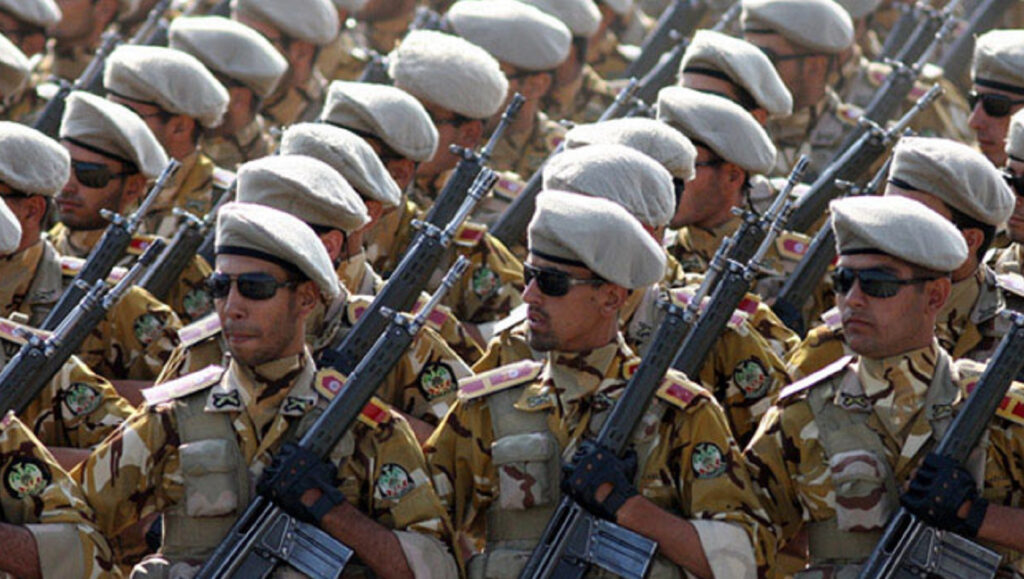
“If events develop in this direction, Iran may conduct a ground operation aimed at completely destroying American military bases located throughout the region,” Hosseini said.
According to him, such actions could be directed not only against individual facilities used for attacks but also against the entire regional infrastructure supporting the US military presence.
Asked whether such a scenario could have severe consequences for Iran because of its economic relationships in the Middle East, the analyst argued that Tehran views the confrontation as an existential war.
When the United States attempts to destroy Iran’s vital and strategic infrastructure, he said, Tehran will consider itself free to use any proportionate or asymmetric response.
Within this logic, economic losses and worsening relations with certain neighboring countries may be seen by Iranian leaders as secondary risks compared with threats to national security and the survival of the state.
US Bases Could Become Direct Targets
Hosseini argues that countries hosting American bases can no longer assume that the conflict will remain confined to Iranian territory.
If infrastructure on their soil is used for strikes, intelligence operations, logistical support or the deployment of American forces, Tehran may treat those states as effective participants in the war.
According to the analyst, this logic explains Iranian statements about possible ground operations.
The issue is not limited to retaliatory missile strikes. It involves the potential physical destruction of the regional infrastructure through which the United States maintains its military presence and conducts operations against Iran.
Such a scenario could dramatically expand the geographical scope of the conflict and draw in countries that have so far attempted to balance cooperation with Washington against maintaining relations with Tehran.
Inevitable Revenge and the Message of Iran’s New Supreme Leader
Addressing the killing of Iran’s Supreme Leader and the developments that followed, Hosseini said the public calls and official statements made during Ali Khamenei’s funeral were unprecedentedly severe.
“Never before has such a hardline position been expressed across Iran’s public and political sphere. The country’s new Supreme Leader also declared that revenge is mandatory. Those who committed such crimes against Iran should not die a natural death. They will face the same fate,” the analyst said.
In his assessment, this is not merely an emotional public response but the formation of a new state policy in which retaliation is considered essential for restoring deterrence.
Hosseini argues that failure to respond could be perceived inside Iran as weakness and create additional risks for the country’s political and military leadership.
Washington Is Facing a Different Iran
According to the analyst, the United States must understand that it is now dealing with a fundamentally different Iran.
Tehran, he believes, is no longer willing to limit itself to defensive actions, diplomatic statements or isolated retaliatory strikes.
If the escalation continues, Iran may begin operations aimed at destroying US military infrastructure throughout the region, including possible ground offensives.
“No matter how long Washington attempts to continue its previous policy, it will encounter powerful Iranian resistance and will ultimately be forced to take that reality into account,” Pouya Hosseini concluded.
In his assessment, the future course of the conflict will depend on whether the United States accepts the new conditions of confrontation or continues using negotiations as a temporary pause before another stage of military action.