
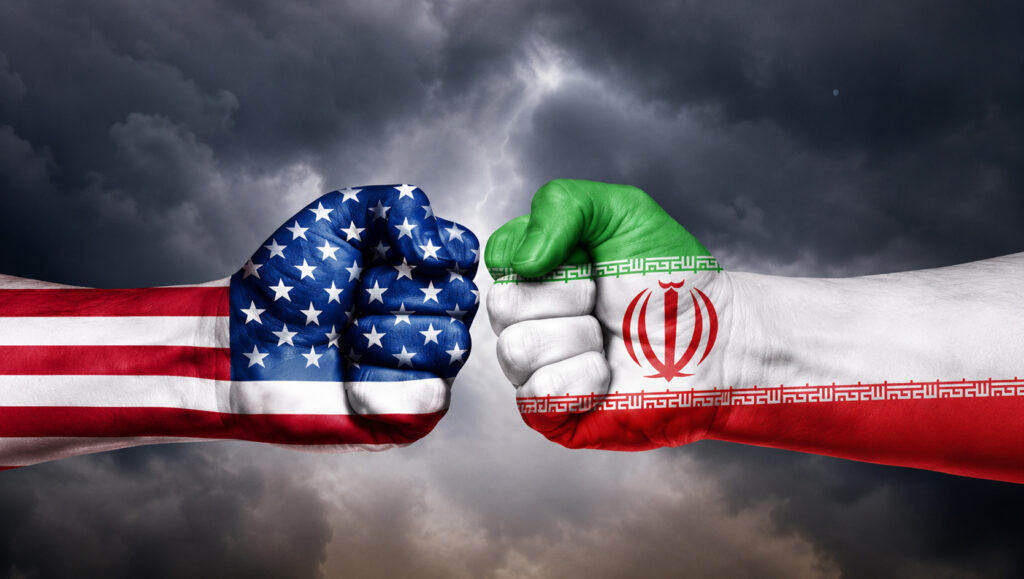
The United States has no clear strategy toward Iran, according to political analyst Arman Grigoryan. He argues that decisions in Washington are often driven not by long-term strategic calculations but by pressure from particular groups and efforts to satisfy their demands.
At the same time, he believes speculation about a large-scale US war against Iran does not correspond to the actual military and political situation. Washington is neither prepared to mobilize the necessary forces nor capable of achieving a decisive victory over Tehran.
A Large-Scale Ground War Is “the Stuff of Fairy Tales”
Grigoryan considers current scenarios involving a major US ground operation against Iran largely unrealistic.
Such a war would make military sense only if the United States mobilized several hundred thousand troops and aimed to capture Tehran.
Any other scenario, including establishing positions near the Strait of Hormuz or taking control of individual islands, would have little strategic value.
Those positions would remain permanently exposed to Iranian missile and long-range artillery attacks, while supplying and defending them would be practically impossible.
The analyst stresses that there are currently no signs that the United States is preparing to mobilize forces on such a scale or launch an operation to capture Tehran. Such a decision would also be politically unrealistic and strategically futile.
Iran Is Not Iraq or Afghanistan
According to Grigoryan, a possible war against Iran cannot be compared with the US campaigns in Iraq, Libya or even Afghanistan.
Even if Tehran could theoretically be captured, the cost to the United States would be exceptionally high.
In Iraq and Afghanistan, US forces initially conducted successful conventional military operations but later failed to establish lasting control and suffered defeat under conditions of insurgency.
In Iran, even the initial conventional phase would be fundamentally different.
Grigoryan notes that military experts are already discussing the possibility of tens of thousands of casualties. Iran’s geography gives the defending side major advantages and would make the war extremely difficult and dangerous for the United States.
Washington May Resort to Infrastructure Strikes
The analyst says he has repeatedly argued that the United States lacks an effective military solution.
If Washington intensifies pressure, it may be forced to strike civilian infrastructure. Iran’s retaliation, however, could inflict far more painful consequences on US allies.
Grigoryan considers desalination plants particularly vulnerable.
Saudi Arabia obtains around 70% of its drinking water from desalination systems, while dependence is even greater in Kuwait, the United Arab Emirates, Qatar and Oman.
According to the analyst, Iran has already struck a desalination facility in Kuwait. He says this was followed by serious discussions between Gulf states and Donald Trump over the need to stop attacking similar facilities in Iran.
Grigoryan warns that destroying these plants could make several Gulf states effectively uninhabitable.
Iran Retains Multiple Escalation Options
Iran continues to possess numerous additional instruments of retaliation, Grigoryan says.
One long-discussed scenario is the closure of the Bab el-Mandeb Strait by the Houthis.
If Bab el-Mandeb were closed together with the Strait of Hormuz, the global oil market could face a severe crisis because a significant share of Persian Gulf oil exports moves through that route.
Iran has also threatened to strike the port of Fujairah, another important component of the oil export system.
Oil prices have not yet increased dramatically because the Strait of Hormuz has not been completely closed, Bab el-Mandeb remains operational and the United States has relied heavily on its strategic petroleum reserves.
Grigoryan argues that those reserves are insufficient. If Iran carries out its threats, oil prices could rise sharply.
The Risks Could Spread to Iraq
The analyst also warns that Iran’s allies may become active not only in Yemen but also in Iraq.
Iraq’s current authorities effectively maintain allied relations with Tehran, he says, raising the possibility that the American presence there could become the target of new attacks.
Grigoryan also addressed reports that Kurdish forces could be used in possible ground operations against Iran.
He believes that scenario would face serious obstacles because Kurdish forces could encounter resistance from the Iraqi government itself.
In his assessment, Washington therefore lacks a realistic ground-war scenario, while Iran retains a broad range of options for expanding the conflict and imposing heavy costs on US allies.