
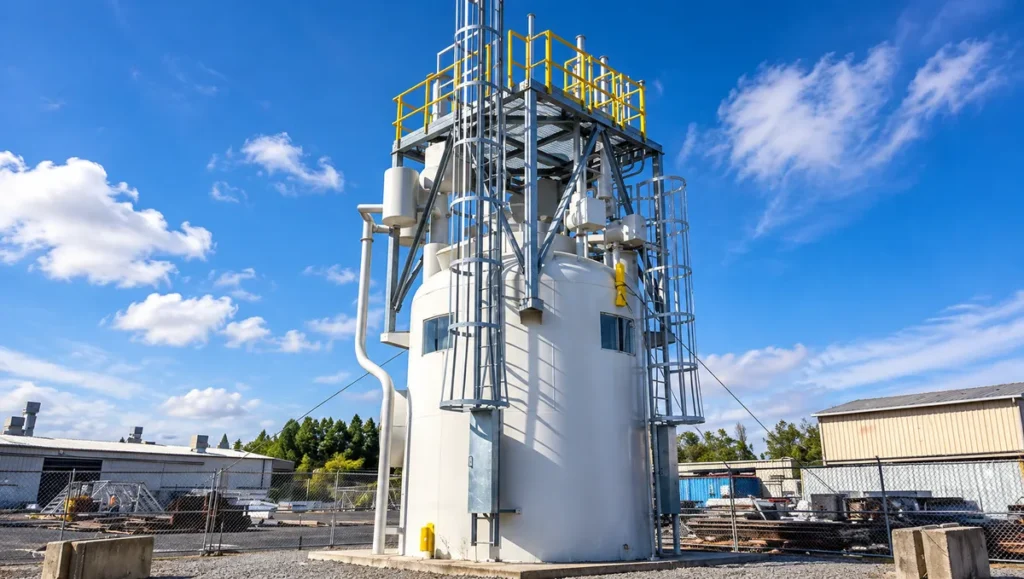
The development of AI computing centres in Armenia is increasing electricity demand and creating a need for new generating capacity. According to MIT professor and nuclear physicist Areg Danagoulian, building a new nuclear plant could be the right decision for Armenia. However, selecting its technology, financing and partner requires a thorough assessment of risks. He believes that if Armenia seeks to preserve its energy sovereignty through nuclear power, it must also consider the consequences of dependence on Russian technology and financing.
AI centres are changing Armenia’s energy balance
According to Danagoulian, Armenia’s economy has grown approximately sevenfold over the past two decades, while electricity consumption has increased by only 50–80%. This partly reflects the structure of the economy. Relatively low-energy sectors predominate, while industries requiring large amounts of energy are less developed than in several other countries.
In his assessment, this has been one of Armenia’s advantages. Its energy dependence has remained relatively limited compared with the size of its economy.
However, the construction of computing centres for artificial intelligence is changing the situation. These facilities require substantial electricity for data processing, model training and continuous operation.
Danagoulian recalled that Firebird’s computing centre has already launched in Armenia and that new projects are under discussion. He also cited the prime minister’s statement that Amazon had expressed interest in establishing centres in the country, provided additional energy capacity was available.
According to the professor, such centres are usually built where electricity is relatively inexpensive. Armenia’s appeal also depends heavily on this factor.
One reason for relatively low electricity prices is inexpensive Russian gas. Another is power from the existing nuclear plant. Danagoulian explained that the Soviet Union covered the capital costs of building the Metsamor plant. Armenia therefore does not currently pay interest on a construction loan for it.
The situation would be different for a new plant. Construction financing would have to be secured, and borrowing costs would affect the cost of electricity generation.
Nevertheless, rising consumption makes new energy capacity necessary.
Why a Russian nuclear plant in Armenia carries risks
Danagoulian believes preserving energy sovereignty should be the decisive consideration when selecting a new nuclear plant. If Armenia simply needed more electricity, it could build additional thermal power plants more quickly. It could then increase imports of Russian, Azerbaijani or Iranian gas. These options would involve lower capital costs and faster implementation.
However, Armenia is pursuing nuclear energy to maintain its own energy capabilities and reduce dependence on external suppliers. Danagoulian believes this objective requires careful selection of the plant’s technology and partner.
He acknowledges that Russia has accumulated considerable experience in building nuclear reactors over the past two or three decades. One advantage is that it predominantly works with one or two reactor types. This has enabled it to standardise construction processes.
The professor believes Russian offers could also be cheaper than Western alternatives. That factor must be acknowledged honestly.
However, he says price and technical experience alone are insufficient grounds for a decision.
“It would be strange to choose the nuclear path for energy sovereignty, but then build a Russian reactor. In that case, we are effectively throwing away the benefits of sovereignty,” Danagoulian said.
His concern is that Russia could gain political leverage during construction. For example, four or five years after work begins, Moscow could demand that Armenia sign new agreements or abandon a programme of cooperation with the West.
If Armenia rejected those demands, Russia could delay construction. Armenia would then face an energy problem, while plans for new computing centres could be endangered. International companies, including Amazon and NVIDIA, might move their investments elsewhere rather than wait for the necessary energy infrastructure.
Danagoulian recalled that Armenia has previously encountered such risks in its relations with Russia. He cited events in 2011 and problems involving delayed weapons deliveries in 2022.
“If that risk does not exist, let the Russian side explain why it does not exist and why this will never happen again,” the professor said.
A nuclear plant’s true cost goes beyond the reactor price
Danagoulian’s other concern relates to financing. He noted that Russia’s offer has traditionally included not only reactor construction but also financing.
If Russia is now proposing a consortium involving several companies or countries, it is essential to establish who will provide the funds and on what terms.
According to the professor, assessments often focus on a nuclear plant’s total construction price. However, interest rates and loan repayment terms are also decisive for long-term costs.
He compared this with buying an apartment: a larger loan at a lower interest rate may be more advantageous over time than a smaller loan at a higher rate.
Danagoulian said Russia’s proposed consortium model raises additional financing questions. If Russia is no longer prepared to provide the necessary construction funding, Armenia needs to understand why it continues to consider that option.
He cited the nuclear plant project in Türkiye as an example. According to him, after American banks froze lending in 2022, Türkiye had to finance construction from its own resources. Its economy can support such a burden, whereas the same solution might not be realistic for Armenia.
Before selecting a new nuclear plant, Armenia must therefore establish more than its construction cost. It must clarify funding sources, interest rates and the conditions on which uninterrupted implementation will depend.
Prospective Amazon investment and the risks of a large nuclear plant
Addressing the prime minister’s statement that Amazon would be ready to invest if Armenia had an additional 1,000 MW available, Danagoulian urged caution. Such a statement does not mean Armenia can immediately meet that demand.
The country currently has no additional 1,000 MW available. If a new nuclear plant is built, the required capacity might become available in ten years at best.
“The question is whether Amazon’s offer will still stand in ten years. It might, or it might not. When you build a 1,000 MW reactor, you incur major costs expecting to recover that money by selling electricity to those centres. But ten years is a long time. We do not know how the world will change,” Danagoulian said.
According to him, Armenia could build a large nuclear plant based on expectations of future investment by international companies. Years later, those companies might change their plans and locate their centres elsewhere. Armenia would then have to recover substantial costs without the anticipated demand.
As a solution, Danagoulian proposed considering small modular reactors. These would allow generating capacity to expand in stages: initially to 300 MW, then to 600 and 900 MW as demand increases.
He believes this approach would allow new capacity to reflect actual electricity consumption, rather than relying solely on forecasts of future investment.
Danagoulian stressed that building a large nuclear plant is not inherently a mistake. The issue is what risks Armenia is prepared to accept in pursuit of greater future economic benefits. If the government selects the riskier option, it must be confident that the potential advantages justify those risks.
👉 Economy • 13.10.2026