
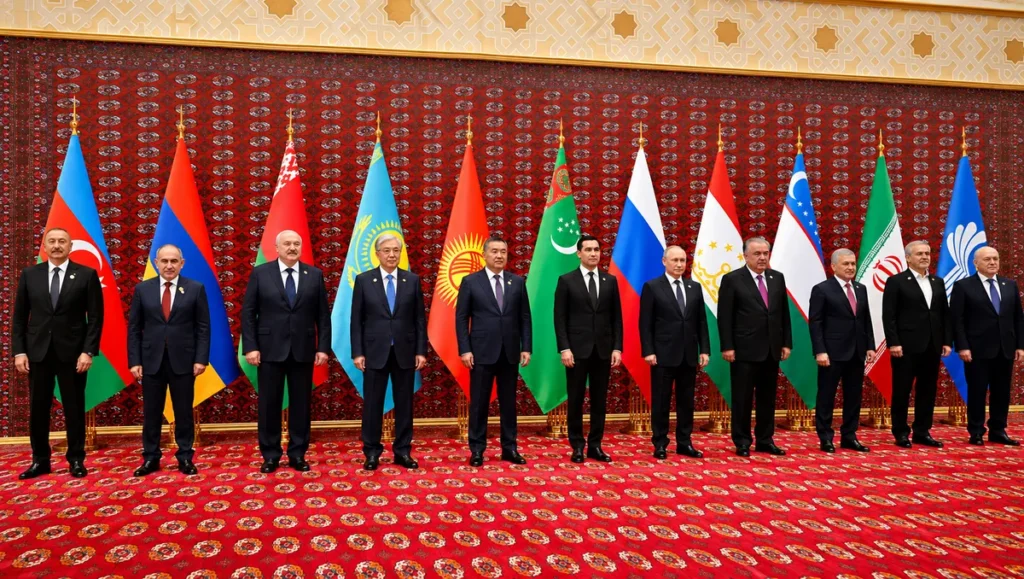
Russia lacks the resources to continue the war in Ukraine while maintaining its influence in the South Caucasus and Central Asia. Moscow will therefore have to set priorities, and its position in the South Caucasus could weaken. Political analyst Armen Baghdasaryan believes a shift in the regional balance of power poses serious risks for Armenia. The country’s security depends heavily on relations between Russia, Türkiye and Iran.
According to Baghdasaryan, Russia’s main problem is its deep involvement in the war in Ukraine. At the same time, it is trying to secure an easing of Western sanctions. However, Moscow lacks the resources to maintain the same level of presence on every front. Meanwhile, China’s influence is growing in Central Asia, and new political processes are unfolding in the South Caucasus.
The analyst does not rule out Russia losing some of its influence in the South Caucasus under these conditions. He also highlights Iran’s growing role. In his assessment, Tehran could view regional arrangements between Armenia and the United States negatively.
“Just as Ukraine regarded it as a stab in the back, Iran could perceive it in the same way. Iran considers Israel and the United States its existential enemies. Under these circumstances, how should it view such a deal with them?” Baghdasaryan asks.
According to him, Iran does not yet have sufficient capabilities to implement large regional programmes independently. However, it can obstruct other countries’ initiatives. This also explains the importance of Armenian-Iranian relations. If Armenia’s plans to reopen transport links depend on regional cooperation, implementation without Iran’s participation could become more difficult.
Armenia needs agreement among regional powers
Asked which poses a greater risk for Armenia—a weakened Russia or a stronger Russia reasserting its position—Baghdasaryan stresses that regional stability should be Armenia’s priority.
The analyst believes stability in the South Caucasus can be ensured through agreement between Russia, Türkiye and Iran. If that balance breaks down, the risk of war increases. Armenia, he says, suffers the most severe consequences because of its vulnerable position.
“When war breaks out here, we suffer the most because we are in the most vulnerable position,” he says.
According to Baghdasaryan, Armenia does not benefit from deeper hostility between Russia and Türkiye, Russia and Iran, or Türkiye and Iran. He believes regional security issues should be settled through mutual agreement.
The analyst considers it difficult, in the foreseeable future, to turn the South Caucasus into a region outside all military alliances and enjoying lasting peace. Under these circumstances, he considers inclusion in the Russian security system preferable for Armenia to inclusion in the Western system. In his assessment, this is because Türkiye is the West’s principal regional pillar.
Baghdasaryan notes that Armenia’s calculations could be different if the West’s main regional partner were France or Poland, for example.
What can the EU offer Armenia?
The analyst also addressed the possible consequences of suspending the EAEU treaty’s application to Armenia. According to him, the situation might not change substantially before December. Much will depend on what the European Union offers Armenia.
Baghdasaryan doubts that the EU could provide economic or political support during that period sufficient to offset the consequences of a sharp deterioration in relations with Russia. In his assessment, Russian-American arrangements have left the European Union in a difficult position, without clear solutions to its own problems.
The analyst believes Armenia’s authorities could face two difficult options. The first would be to continue pursuing the European direction, explaining that strengthening sovereignty requires enduring possible socioeconomic hardship. The second would be to return to Russia’s sphere of influence on less favourable terms.
In Baghdasaryan’s assessment, these circumstances further complicate Armenia’s position amid regional and international realignments.
Regional cooperation rather than outside intervention
Discussing the central message for Armenia, Baghdasaryan says regional problems should primarily be resolved through cooperation among the region’s countries.
According to him, bringing in outside powers could intensify existing disagreements. Agreement between Russia, Türkiye and Iran would instead make it possible to preserve relative stability.
“Set aside your grievances and do not bring outside powers into the region. You can see that these matters can be settled here. It might not be the best option for you, but bringing in outside powers will make things worse. We are told: look, serious cooperation is taking place in Central Asia with Iran and Türkiye participating. We alone are trying to bring in outside powers because we are the most vulnerable. They tell us: do not do it,” the analyst concludes.
👉 Region