
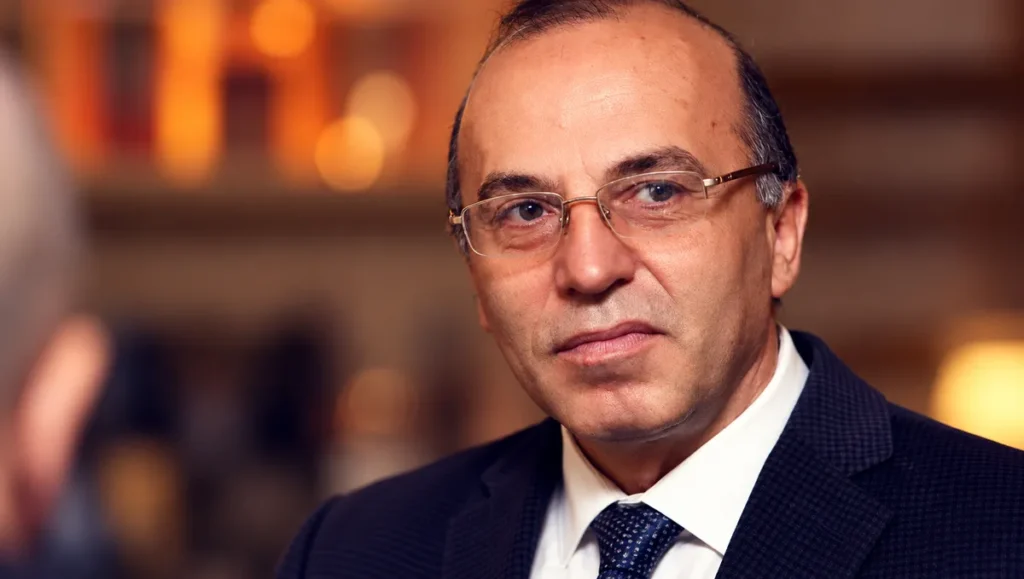
Armenia has already suffered losses of around $1 billion because of imprudent policies. Rising energy prices could bring its economy to a standstill, economist Tatul Manaseryan has warned.
According to him, Armenia is only complicating the situation by attempting to manoeuvre between Brussels and Moscow simultaneously.
“Both poles are making demands of us. Yet we still think we are playing children’s games and that, with this provincial mindset, we can outsmart serious powers such as Brussels and Moscow. Then we can say: look, we did whatever we wanted. No, we are the ones in the most miserable position today,” Manaseryan said.
In the economist’s assessment, the authorities cannot take clear steps to fully resolve foreign trade problems and keep the economy manageable. As a result, prices are rising and people’s quality of life is declining. However, the expert believes this is only the beginning.
Manaseryan warned that rising energy prices would deal an even heavier blow to Armenia’s economy. According to him, high poverty levels will limit people’s ability to withstand economic shocks.
Poverty increases households’ vulnerability
The article also links these concerns to official statistical data. According to the latest estimates from Armenia’s Statistical Committee, the poverty rate stands at around 21.7%, while extreme poverty is estimated at 0.6%. Expert reports indicate that nearly one in four children lives below the poverty line. This makes families particularly vulnerable to any increase in utility tariffs or food prices.
“In the near future, we will face a catastrophic economic situation because of energy prices alone. Unfortunately, Armenia’s economy will no longer be able to function. Both the economy and a significant share of the population will be paralysed,” he said. Manaseryan added that, with poverty already high, it is difficult to expect it to decline.
The economist has no doubt that energy prices will rise for Armenia.
“The Russian Federation makes brilliant use of gas diplomacy in its relations with the entire world. I do not think the Republic of Armenia will be an exception. We reap what we sow,” he said.
Manaseryan believes the crisis has already begun
Asked when an economic crisis might occur, Manaseryan said that, in his assessment, it has already begun. Its consequences, however, are not yet being fully felt.
To support his assessment, he referred to the Central Bank’s latest statement. He stressed that the regulator had discussed the need to raise interest rates to contain inflation and limit negative trends. It had also warned about threats to Armenia’s economy if gas prices increased.
On September 15, Central Bank Governor Martin Galstyan said a possible increase in the price of Russian gas could accelerate inflation and weaken economic activity. In his assessment, if Russia decided to raise the gas price for Armenia, it would have a “double negative effect on the economy”. It would accelerate inflation while weakening economic activity and employment. In such a scenario, he said, the Central Bank would have to respond with stronger and unconventional measures.
On the same day, the Central Bank’s Board raised the policy rate by 0.25 percentage points to 6.75%. According to the regulator, the decision aimed to contain inflationary pressures and maintain price stability.
Higher gas prices could push up other costs
Experts also stress that an increase in Armenia’s gas tariff would inevitably raise more than utility bills. Industrial goods and food prices would also rise, because natural gas is a principal input in electricity generation and heating. This creates the risk of an inflationary spiral that is difficult to control, particularly when purchasing power is declining.
“The Central Bank is not a politicised institution and is independent of the government,” Manaseryan stressed, urging people to take the regulator’s warnings seriously.
👉 Economy