
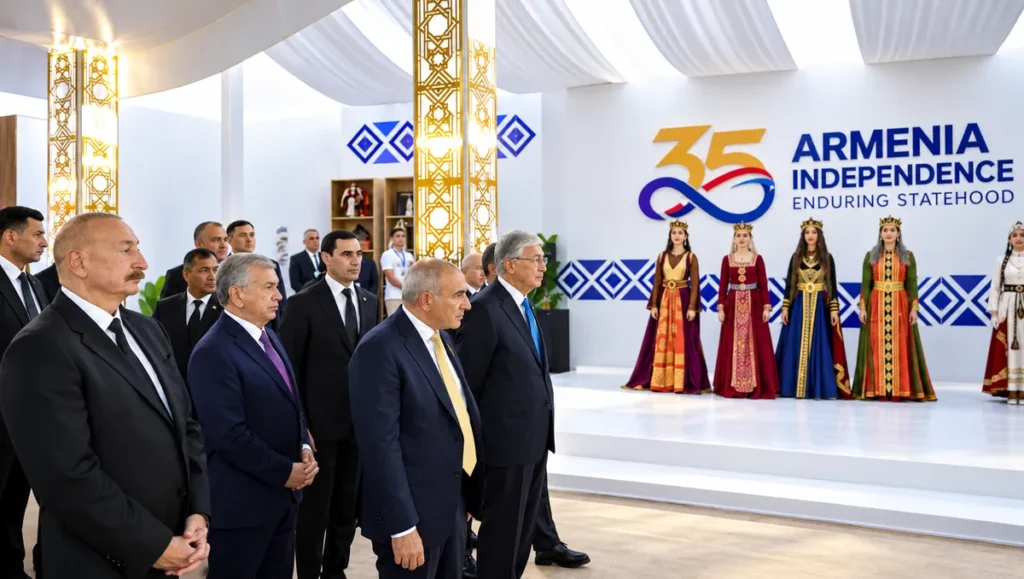
Following contacts with Azerbaijani President Ilham Aliyev in Turkmenistan, Armenian Prime Minister Nikol Pashinyan publicly discussed the possibility of resolving the enclave and exclave issue through territorial exchanges with Baku.
Are Armenia and Azerbaijan approaching a historic compromise? What could change in the border delimitation process? Can this complicated legacy of the Soviet past be resolved while ensuring secure borders, uninterrupted transport links and prospects for lasting peace for Armenia?
Political analyst Johnny Melikyan said the idea of exchanging territories is not new. It has previously featured in discussions about border delimitation and possible approaches to the process. He noted, however, that the issue has resurfaced amid some negative developments in Armenian-Azerbaijani relations.
“This statement came against the backdrop of the current dynamics, which are moving somewhat in a negative direction. There were also some discussions in the neighbouring country. This suggests that certain discussions may be taking place through diplomatic channels,” Melikyan said.
Territorial exchanges require a pragmatic approach
In the analyst’s view, border delimitation requires pragmatism. The task involves more than defining the boundary. It must also preserve normal life in border communities, access to roads and the ability to use water resources.
Mutual concessions and territorial exchanges could therefore offer an acceptable solution in some cases.
“If the parties approach the issue pragmatically, solutions must be found that involve certain concessions by both sides: one area could be exchanged for another, and acceptable arrangements could be found along the entire border,” he said.
At the same time, Melikyan warned that the process would be complicated and could take many years. He cited the delimitation of the Armenia-Georgia border, which has remained unfinished for decades.
Is Baku ready to take practical steps?
Melikyan is also sceptical of assessments suggesting that genuine progress has already been made. He said territories under Azerbaijani control have strategic significance.
It remains unclear whether Baku will take practical steps towards returning areas important to Armenia and reaching mutually acceptable solutions during delimitation.
“Today, I do not share the optimism that Aliyev has recognised the importance of regional stability, peace and cooperation. I see a different trend, one that reflects his revisionism and revanchism towards the region,” the analyst said.
In his assessment, Azerbaijan seeks to become the state that determines key regional decisions. This poses a serious challenge, particularly for Armenia and Georgia.
Melikyan believes individual statements cannot reverse that trend. Actual policy changes and constructive action are needed.
Nevertheless, he does not rule out the possibility that developments outside the region could affect Baku’s calculations. Events to the north and south, alongside regional and international factors, could encourage Azerbaijan to adopt a more pragmatic position.
Moving from statements to agreements
The analyst said such a development could create new opportunities for stability and cooperation after years of conflict, losses and tragic events.
“I would be very happy to share optimistic thoughts in the near future, but today it is still too early to speak of substantial progress,” Johnny Melikyan concluded.
He stressed that subsequent developments would show whether the parties could move from statements to concrete agreements and a new stage of regional cooperation.
👉 Politics