
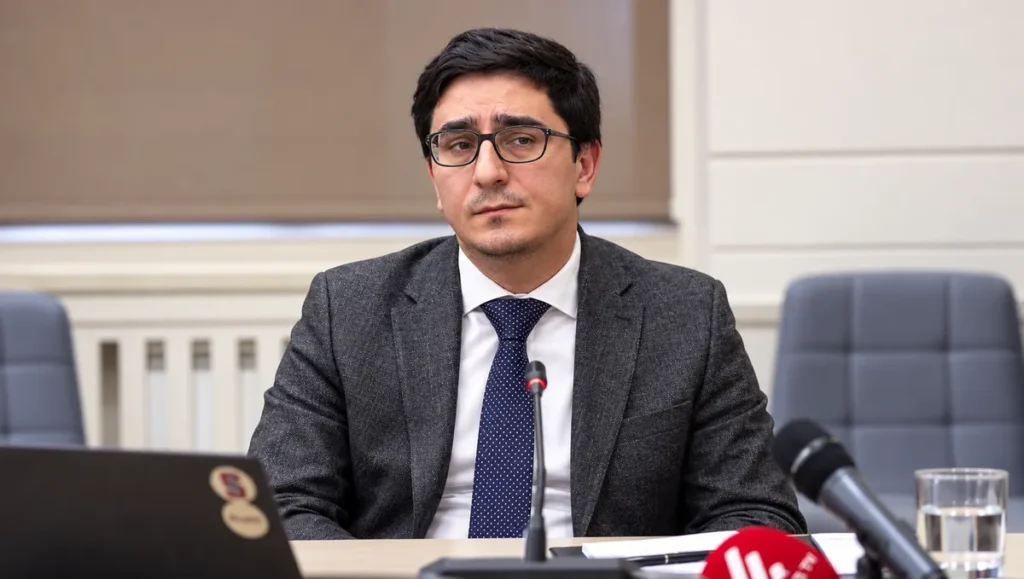
The value of international courts cannot be judged solely by whether Azerbaijan changes its behaviour immediately after their decisions. Legal proceedings give Armenia a forum to present its arguments and evidence, challenge narratives advanced by Baku and exert some deterrent effect. Yeghishe Kirakosyan, a candidate of legal sciences and Armenia’s former representative on international legal matters, made this assessment.
He said that countries with a history of conflict, such as Armenia, have a particular need to remain engaged in international courts. The contest over how a conflict is described continues during legal proceedings.
“When you have no international forum where you can present an argument, evidence and the truth from your point of view in any way, you lose,” Kirakosyan said.
In his view, international courts can partly balance inequalities that exist in political relations. Before a court, the parties have legal opportunities to present their positions and influence the examination of a case. Kirakosyan added that bringing a case before an international court is itself an expression of sovereignty.
Why decisions by international courts matter
According to Kirakosyan, the effectiveness of international litigation should not be measured only by whether Azerbaijan immediately complies with a decision. During his time in office, people often asked whether court decisions mattered if Azerbaijan did not respond or change its behaviour.
He believes that this approach overlooks the long-term impact of judicial decisions.
“Expecting an active response or an immediate, sharp change in behaviour is also a little naive,” Kirakosyan said. He added that even without immediate changes, international court decisions have a clear impact and play a certain deterrent role.
In his view, scepticism about international law and courts could weaken states’ interest in maintaining a rules-based legal order. It is particularly important for countries such as Armenia to remain engaged in the international legal system.
Kirakosyan described the international legal order as a system undergoing a difficult transformation. He believes the current instability will not last forever and that the system will be reconsidered over time.
Can other states defend Armenians’ rights in international courts?
Discussing the possibilities offered by international litigation, Kirakosyan also addressed whether other states could apply to international courts to defend the rights of Armenians held in Baku.
He said there are precedents in international practice. As examples, he cited The Gambia’s case against Myanmar before the International Court of Justice and South Africa’s case against Israel.
According to Kirakosyan, those cases relate to the concept of erga omnes obligations. These are obligations whose observance is of concern to the international community as a whole. They include obligations concerning the prohibition of racial discrimination and the protection of fundamental human rights.
He explained that, when such obligations are breached, other states may under certain conditions bring legal claims against the state responsible, even if they have not been directly harmed themselves.
At the same time, Kirakosyan noted that the Gambia and South Africa cases have distinct legal features. They demonstrate that other states can take part in international court proceedings, but each proposed action must be assessed against its specific legal basis.
Trials of Armenians in Baku
Kirakosyan separately addressed the trials of Armenian captives in Baku, describing them as unlawful from the outset.
In his assessment, the denial of justice in these proceedings could reach an extreme degree. He said it would be naive to expect such trials to provide legal safeguards.
He stressed that allowing one side to a conflict to administer justice in conflict and post-conflict situations raises serious problems. This, he said, is one reason international courts have an important role in such circumstances.
Kirakosyan also discussed the relationship between territorial integrity and the right of peoples to self-determination. In his view, international law rests on the complementary existence of these two principles. Treating either one in isolation distorts the logic of the international legal order.
“Sovereignty over a territory becomes meaningless without its people, because the meaning of sovereignty itself is, first and foremost, about human beings,” he said.
Kirakosyan believes that people must remain at the centre of international law and that territorial integrity cannot be considered separately from the right of peoples to self-determination.
👉 Law