
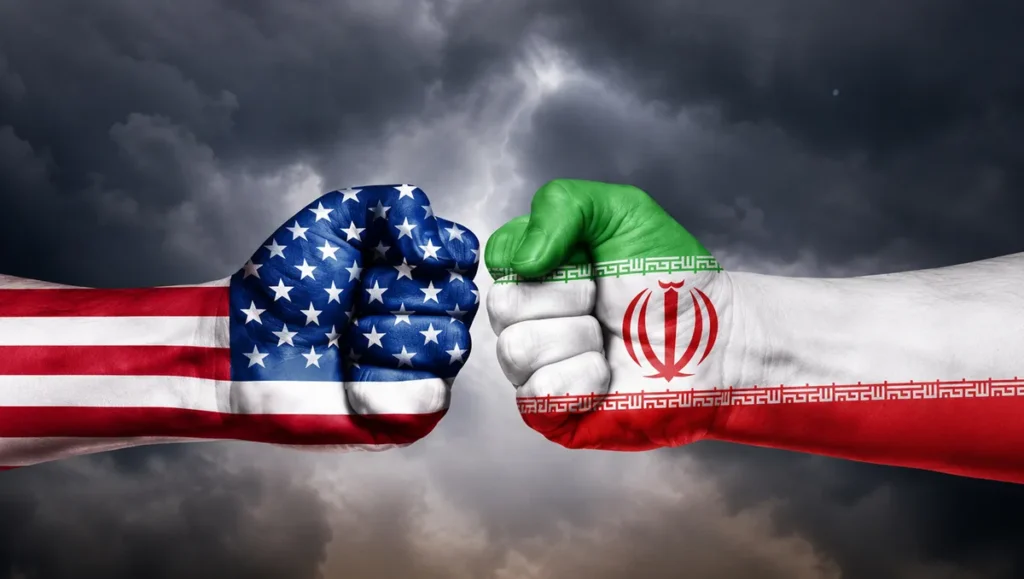
At present, both the United States and Iran appear more inclined to compromise, and they may reach agreements on certain issues, international affairs analyst Armen Petrosyan said. At the same time, he did not rule out a resumption of military operations or further strikes if negotiations fail to produce a political agreement.
According to Petrosyan, the continuing uncertainty in the region is creating serious problems for economic activity. A prolonged confrontation in a state of neither war nor peace cannot continue indefinitely.
Reopening the Strait of Hormuz as part of a possible agreement
Petrosyan said the parties are more inclined to compromise at this stage, though that does not mean the conflict can be resolved completely.
“I do not think the conflict can be resolved definitively under the current conditions. But agreements on certain issues certainly cannot be ruled out.
“I think there is an opportunity concerning the reopening of the Strait of Hormuz. Different options are being discussed, such as unfreezing some Iranian assets in exchange for reopening the strait,” the analyst said.
A resumption of military operations cannot be ruled out either
Petrosyan stressed that the military scenario remains possible alongside diplomatic solutions to specific issues. If the parties cannot reach a final agreement, he said, the present uncertainty cannot be sustained for long.
“Military action cannot be ruled out, because that scenario has also been under discussion for some time.
“A situation of neither war nor peace cannot be prolonged indefinitely. The American presence in the region continues, and that entails significant costs for both the United States and Iran.
“In this conflict environment, they constantly expend resources while anticipating unpredictable actions by the United States. More broadly, this uncertainty creates major problems for economic activity across the region,” he said.
Iran has managed to influence domestic politics in the US and Israel
In the analyst’s assessment, Iran has found tactical ways during the confrontation to affect not only regional developments but also domestic political processes in the United States and Israel.
“Let us not forget that Iran managed to win amid the US midterm elections. They have found tactical means of influencing the electoral process in the United States as well. Let us also remember that the confrontation with Iran affected Israel’s elections to some extent,” Petrosyan said.
A final agreement is impossible without Israel’s position
Petrosyan said continuing regional uncertainty makes it difficult to expect a final US-Iran agreement in the near future. He also emphasized Israel’s role, saying that any arrangement would have to be acceptable to that country to some extent.
“The most important issue here is that uncertainty in the region continues. Under these conditions, I do not think the United States and Iran can reach a final agreement.
“That agreement would certainly have to be acceptable to Israel to some extent. As long as there is uncertainty in Israel, however, I do not think they can express a unified position. Without Israel’s final position, this issue cannot be resolved definitively,” he said.
The US may try to end the confrontation through limited military action
Discussing possible developments, Petrosyan said that if no political agreement is reached, the United States will have to find some way to end the current situation and leave the region. Washington could then continue using its previous tools — economic and political sanctions — or resort to military action.
“Why do I say both options are possible? If the parties ultimately fail to agree at the political level, the United States will somehow have to bring this situation to an end and leave the region while continuing to use its previous tools, meaning economic and political sanctions.
“What possibilities are there in that case? There could be limited military operations, but on a much larger scale than before: precisely targeted operations against, for example, Iran’s nuclear facilities or essential infrastructure.
“This would allow the United States to show that it has nevertheless achieved certain objectives. For example, it could say that Iran no longer has the ability to acquire nuclear weapons, and then the United States could leave.
“That option exists. But as I have said, partial solutions are also possible. The upcoming talks will probably show which way events will develop,” the analyst said.
Developments involving Iran and Ukraine are connected
Petrosyan also pointed to a possible connection between the US-Iran confrontation and the Russia-Ukraine war. In his assessment, a lack of a ceasefire or interim agreement in Ukraine could lead Washington to focus once again on the situation involving Iran.
“There is another parallel: the course of the Russia-Ukraine war is, to some extent, connected with the course of the US-Iran confrontation and efforts to resolve it.
“If Russia and Ukraine cannot reach even an interim agreement — and a ceasefire agreement does not appear likely at this point — I think the United States will leave that conflict and return to the issues concerning Iran.
“After all, Trump needs at least some measurable success. In this case, it is the United States itself that has concrete actions it can take.
“With Russia and Ukraine, the United States is only mediating, and the positions of the parties matter. In the confrontation between Iran and the United States, however, it is the United States itself that must act. I think certain steps may be taken here, and perhaps even a decision of principle will be made,” Petrosyan concluded.
👉 Regional