
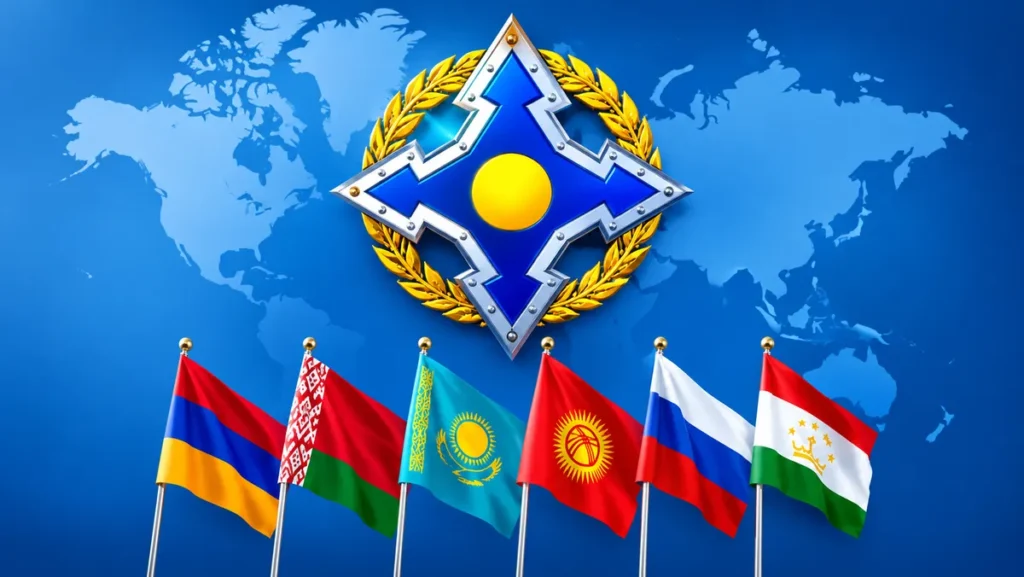
Armenia has found itself in the most dangerous situation: it remains a member of the Collective Security Treaty Organization (CSTO) but has lost its voting rights and ability to veto decisions within the organization, political analyst Stepan Danielyan said. In his view, Armenia continues to bear the obligations of membership while losing the ability to participate in and influence decisions.
Danielyan noted that Armenia is the CSTO’s only member in the South Caucasus, a fact that also has some bearing on Azerbaijan and Georgia. If Armenia leaves the organization, he said, the South Caucasus will fall outside Russia’s sphere of control, raising the question of who would fill the resulting power vacuum.
In the analyst’s assessment, other powers, particularly Türkiye and Iran, would then compete for influence in the region. Tehran, he argued, would not accept an expansion of Turkish influence. As a result, Armenia could become a center of conflict without a functioning security system.
Danielyan also drew attention to Russia’s position that Moscow does not intend to remove Armenia from the CSTO and distinguishes its relationship with Armenia’s leadership from its relationship with the Armenian people. According to him, the Russian view is that current leaders may change, while relations with the Armenian people will continue.
The analyst stressed, however, that this too is a cause for concern. Armenia remains a member, and the CSTO’s rules and agreements remain in force, but the country can no longer influence decisions.
“The system is there, we are a CSTO member, and all those rules and agreements are in force, but we have lost our vote. Developments are taking place around us, the CSTO makes decisions and, in certain circumstances, could send troops into Armenia to ensure security, as it did in Kazakhstan. Yet Armenia has no way to influence that,” he said.
According to Danielyan, Armenia was previously able to influence other CSTO members as well. That ability gave it a measure of value because it could help shape collective decisions and defend its position.
“Now you have stayed rather than leaving, but you have lost your vote. You have no voice, and things can be done to you without your opinion being taken into account. Nor can you influence the others. This is the most dangerous situation Armenia has found itself in,” the analyst said.
A country that remains a member of an organization without a vote becomes an object of bargaining, Danielyan argued.
In his view, if Armenia had left the CSTO, that step could at least have been seen as an attempt to find another security system or political platform, although he also doubts how realistic such a scenario would be. Remaining in the organization without voting rights, he believes, is far more dangerous.
Danielyan also stressed that losing the vote and the ability to veto decisions reduces Armenia’s value to other countries. Armenia could have been of interest to the United States or Iran as a state able to influence decisions within the CSTO, he said. Having lost that tool, it also loses the ability to influence other actors and reach political arrangements with them.
“You could have been valuable to America because you had a veto or a voice in the CSTO. Or you could have been valuable to Iran: it could have spoken with you and, through you, reached agreements with other CSTO member states. That possibility no longer exists,” the analyst said.
👉 Politics