
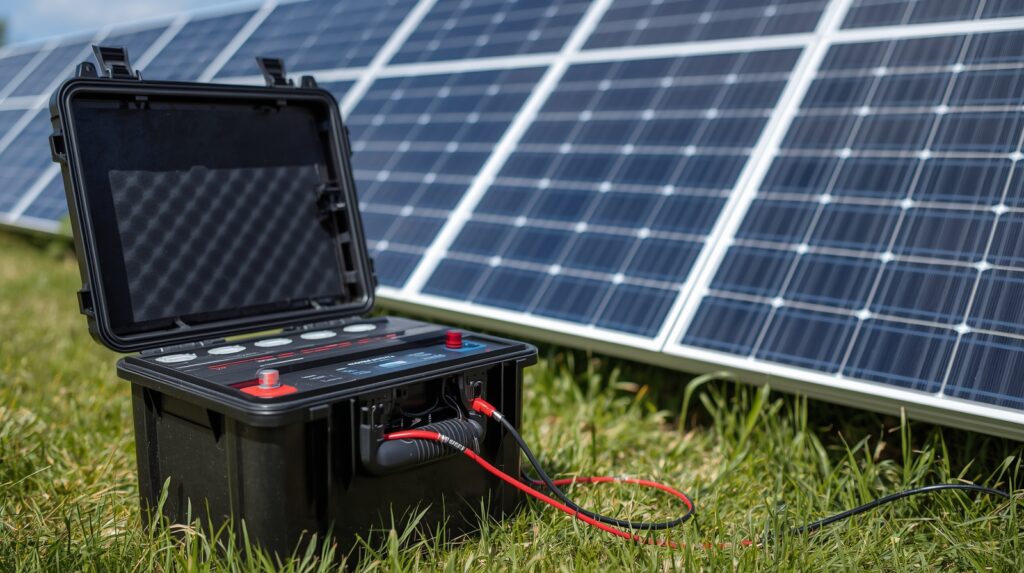
In the era of global digitalization and the shift to sustainable energy, the production of electric batteries is becoming a key driver of economic growth. During a recent visit to India, Armenia’s Minister of Economy Gevorg Papoyan proposed that the leading engineering company HBL India (HBL Engineering Ltd) launch a joint manufacturing project in Armenia.
This initiative reflects Armenia’s rising interest in high-tech industries and opens opportunities for cooperation between the two countries. Despite their different scales, both nations face similar challenges in the energy sector.
Engineering Heritage and New Innovation
Armenia, a country with three million people and a strong engineering tradition, was once a regional hub for energy innovations during the Soviet period. Today, it aims to revive this potential.
The company Elbat has invested $30 million to expand its lead-acid battery production for automotive and industrial use. Another player, SOLARA, founded in 2019, produces 350 MW of solar panels and integrates them with energy-storage systems, including batteries.
However, Armenia’s battery industry remains modest. Production is still centered on lead-acid batteries, while lithium-ion technology is only beginning to develop. Experts predict that by 2030, lithium-ion storage systems could help Armenia meet a 20–30% rise in energy demand and strengthen energy security.
India’s Expanding Battery Market
India — a nation of 1.4 billion people with fast-growing green-energy capacity — is a major global market.
HBL Engineering, founded in 1977 in Hyderabad, is a leader in advanced battery technologies: lead-acid, nickel–cadmium, and lithium-ion. The company supplies aviation, railways, defense, and telecommunications. It exports to 80 countries, has offices in the US and EU, holds ISO certifications, and ranks second in the world for nickel–cadmium battery production.
In 2024, HBL’s revenue exceeded $2.7 billion, with exports growing by 40%.
Global Demand: Rapid and Rising
Global demand for electric batteries is surging. In 2024, it passed 1 TWh, a 25% increase, and is expected to reach 3 TWh by 2030.
Electric vehicles are the main driver, accounting for 85% of total demand. EV sales reached 17 million in 2024.
In Armenia, demand is still small but promising. EV use is rising, and there is export potential to the EAEU market (up to 10% share).
According to McKinsey, the global shortage of lithium-ion cells may reach 300 GWh by 2030. A joint Armenia–HBL factory could fill specific niches, such as batteries for railways and defense — a $15 billion combined market.
Partnership Prospects
Armenia aims to diversify its economy, while India seeks new export markets for high-tech products under its PLI scheme, including 50 GWh of battery capacity.
The most realistic model is a 50/50 joint venture in Armenia’s Free Economic Zone. The main product would be lithium-ion batteries for EVs and energy-storage systems.
Challenges remain. Armenia has copper and zinc but lacks lithium. Logistics are also difficult. Integration into India’s supply chains could solve both issues.
A factory of this type could create around 1,000 jobs and quickly reach strong export performance, considering global demand.
Toward a Green Future
Given current trends, the Armenia–India partnership has the potential to become more than just another manufacturing facility. It could make a genuine contribution to the global shift toward a green economy.
The key question is whether these discussions will move beyond “good intentions” — a common obstacle in Armenia — and eventually turn into real agreements and practical action.