
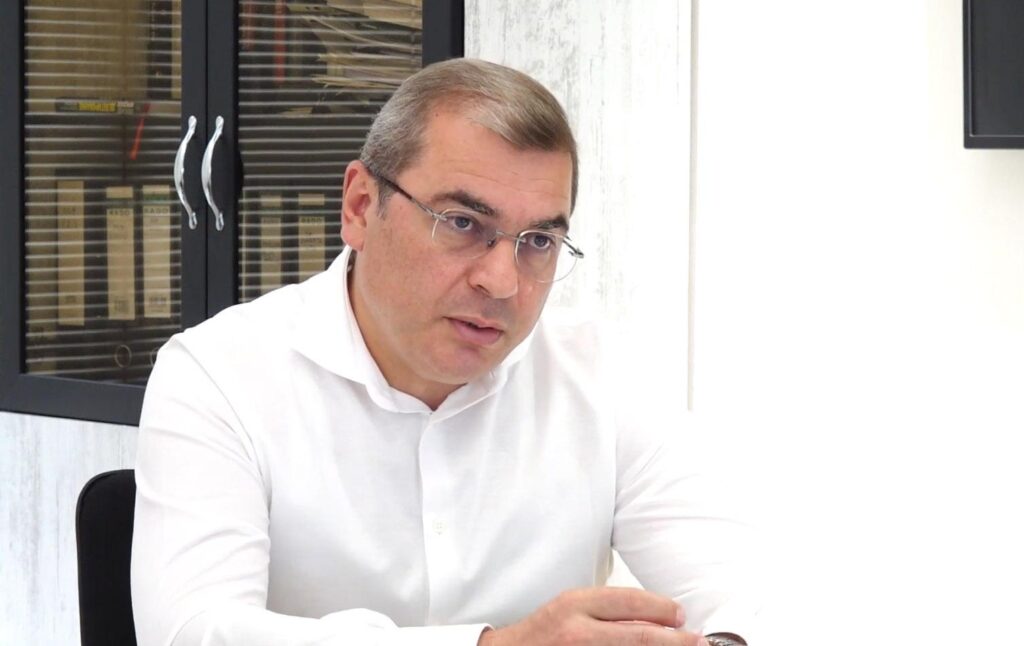
Armenia’s public debt is rising rapidly, raising serious concerns. Recent statements by Finance Minister Vahe Hovhannisyan have triggered public debate, as former Chairman of the State Revenue Committee David Ananyan argues that these statements mislead society.
Debt Growth in Real Numbers
The minister claimed that the debt has not doubled but increased by only 80%. However, according to Ananyan, this is inaccurate. He states that Armenia’s public debt has doubled in USD terms and grown by 66% in drams.
In 2017, the debt amounted to 3.28 trillion drams (6.77 billion USD). By September 2025, it had reached 5.43 trillion drams (14.20 billion USD). As a result, the debt in dollars increased 2.1 times. This happened due to the appreciation of the dram, which softened the dram-based debt figures on paper. In reality, the debt burden has not decreased.
Why Domestic Debt Is Rising Faster
Ananyan notes that most of the increase came from domestic borrowing. Over the past two years, domestic debt grew by more than 630 billion drams. For the first time, its share exceeded external debt: 51.4% versus 48.6%.
At first glance, this might look like a positive shift. However, the expert explains that the reason is different: international credit markets have essentially closed for Armenia. As a result, the government was forced to borrow domestically — from local banks.
Domestic Borrowing Is More Expensive
External loans were traditionally secured at interest rates of 2–3%. In contrast, domestic government bonds carry yields of 8–10%, making internal borrowing significantly more expensive for the budget.
According to Ananyan, what the minister calls “stabilization” actually means something else: the government is borrowing from its own citizens at a higher cost just to cover the widening budget deficit. Consequently, Armenia’s public debt continues to grow under increasingly unfavorable conditions.
External Debt Has Not Decreased — It Has Become Unavailable
Ananyan emphasizes that external debt did not shrink. Instead, Armenia simply cannot secure new foreign loans. This indicates weakening financial credibility and declining trust from international institutions.
The strengthening of the dram has also created an illusion of reduced debt. The exchange rate fell from 522 drams per dollar to 382 drams per dollar, making the USD value of the debt appear smaller than the real obligations, which must be repaid in drams.
Conclusion: A Debt Dead End, Not Stabilization
Ananyan concludes that the country is not experiencing debt stability — it is facing a debt dead end. External loans are inaccessible, and domestic borrowing is becoming more expensive. As a result, Armenia’s public debt is growing and becoming a serious risk for the nation’s fiscal system.
Ultimately, it is clear that Armenia’s public debt is now one of the most critical economic challenges facing the country.