
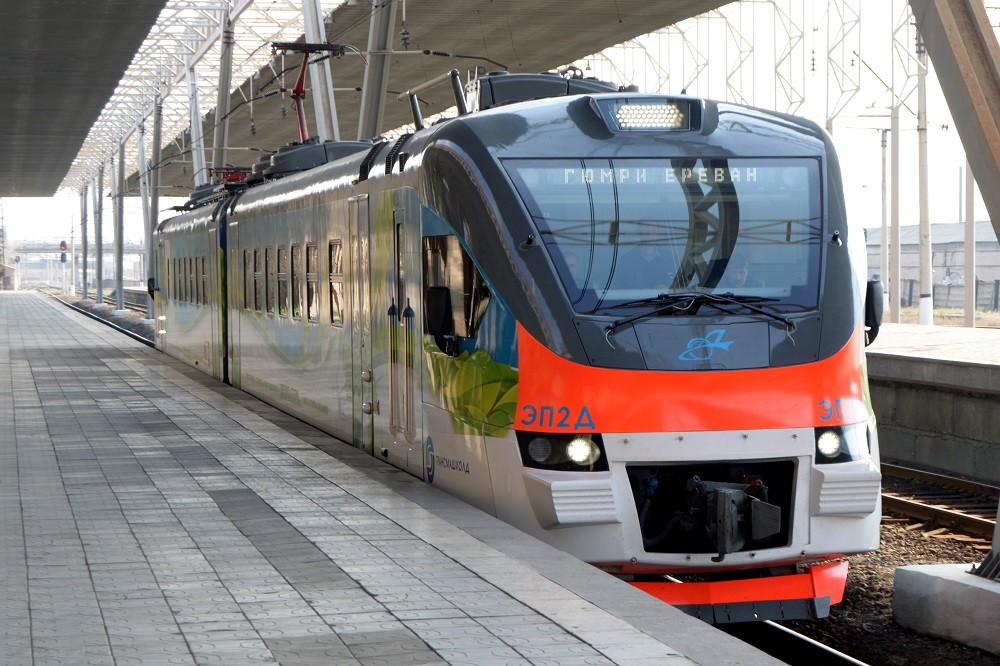
One of the largest systemic problems in the implementation of Armenia’s communication and transport projects is the Russian management model, particularly the concession-based management of Armenia’s railways. This view is expressed by economic commentator Hayk Gevorgyan. According to him, it is precisely this management model that has resulted in the country today having railway sections that require restoration but in practice either no longer exist or are in very poor condition.
Poor management, unrealized investments, and missing lines
According to Gevorgyan, years of inefficient or incomplete management have led to the fact that many routes have simply dropped out of the operational network. Meanwhile, under conditions of potential unblocking and the development of regional communications, these lines should be rapidly restored.
“This is a serious problem, and personally I have little hope that it will be resolved within the framework of the current model,” he notes, while not ruling out that, in theory, Russia may attempt to change its approach — not by obstructing the processes, but by trying to derive income from them.
At the same time, Gevorgyan doubts that the Russian side will be able to convincingly explain to its own society why it does not invest in its domestic railway system, yet is prepared to finance Armenia’s railways. “Even from a purely economic standpoint, the prospects there are far from encouraging,” he emphasizes.
The non-extension of the concession as the most likely scenario
According to the economic commentator, Armenia’s decisions will largely depend on the behavior of the Russian side. However, there are already objective reasons to assume that the concession agreement may be terminated in 2027–2028.
“Something tells me that in 2028 the concession will not be extended, and this will be the result not of political will, but of economic realities,” Gevorgyan stresses.
In his view, Russia simply lacks the financial capacity necessary to carry out large-scale investments in Armenia’s railways within a short period of time. These investments would need to be both substantial in volume and rapid in execution, while Russia’s own railways are currently facing serious financial difficulties inside the country.
The commentator recalls that, unlike certain electricity networks, Armenia’s railways are the property of the Republic of Armenia and are only transferred for trust management.
“If the management is good, we continue; if it is bad, we do not. From a legal standpoint, this is entirely within Armenia’s jurisdiction,” he emphasizes, hinting that extending the concession is not an automatic process.
Armenia has alternatives
According to Gevorgyan, with a high degree of probability, this section is not included in the current concession, since at the time the concession agreement was signed it did not, in fact, exist: it was dismantled in the 1990s and would have to be rebuilt from scratch.
Within the concession framework, he notes, only existing or partially preserved sections can be discussed, such as the Ijevan–Akhurik line, which is also currently closed due to landslides.
If Russia refuses to participate or ignores the Armenian prime minister’s calls to restore certain railway sections, Armenia, according to Gevorgyan, has alternative options — involving other stakeholders.
He reminds that after many years of being a closed country, Armenia may turn into a transit railway hub, which would immediately increase the value of this infrastructure and the interest of international players.