
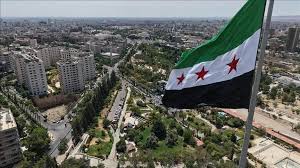
Key negotiations recorded in Syria and the emerging situation mark a serious turning point in Kurdish autonomy and in the political process of restructuring the country. As recent developments indicate, the unification of the country under the control of the central government is now on the agenda — a process that appears promising, yet is filled with complex and challenging obstacles.
What has happened
According to Middle East analyst Sako Aryan, the Syrian government and the Kurdish-aligned Syrian Democratic Forces have reached an agreement to place Kurdish civilian and armed structures under the control of the central government, overcoming relatively strong resistance in several strategic areas. As a result of this agreement, Syrian government forces are establishing control over Raqqa, Tabqa, and other regions that had previously been under SDF control.
Regional significance
Aryan notes that in the previous period, northeastern Syria effectively functioned as a developing autonomous political system, possessing its own institutions, local forces, and military and civilian administrations. However, developments over recent weeks have shown that this autonomy is being pushed toward full centralization.
“There are four key pillars in Syria that hinder strict centralization across the entire country. The first is the stable Kurdish autonomy, which was considered a reliable ally of the United States. At this stage, however, that alliance has already collapsed, and the situation is changing fundamentally,” Aryan emphasizes.
Clashes that occurred prior to the agreement, particularly in the areas of Aleppo, Ashrafieh, and Khan Shaykhun, led to the rapid advance of Syrian forces, bringing strategic territories under their control, including the oil fields of Raqqa.
According to Aryan, the United States played a crucial role in this process by sponsoring the negotiations and exerting pressure on all parties to halt hostilities and promote the agreement. At the same time, Turkey, which had previously viewed the SDF as an extension of the PKK and a terrorist force, welcomed the agreement, seeing it as a development that serves its security objectives along the border and removes elements of SDF’s independent control and autonomy.
The end of autonomy and the next steps
Aryan states that this agreement effectively means that “Kurdish autonomy as a de facto structure will no longer exist.” Under the new conditions, Kurdish administrative civilian and military bodies will be merged into the infrastructure of Syria’s central authorities. This integration may logically evolve into a form of regional self-governance that does not carry the attributes of separate state authority.
In Aryan’s view, “the Kurds will become part of Syria’s political reality, enjoying cultural, linguistic, and legal rights, but without independence or dual power.” He stresses that the most critical issue now is how the new authorities will proceed while taking into account the diversity and complexity of Syria’s ethnic, religious, and local demands.
“Today we already see how former autonomous structures are being integrated into the new system, but it remains unclear to what extent this agreement will satisfy all parties and become a stable foundation for the country’s future structure,” Aryan concludes.