
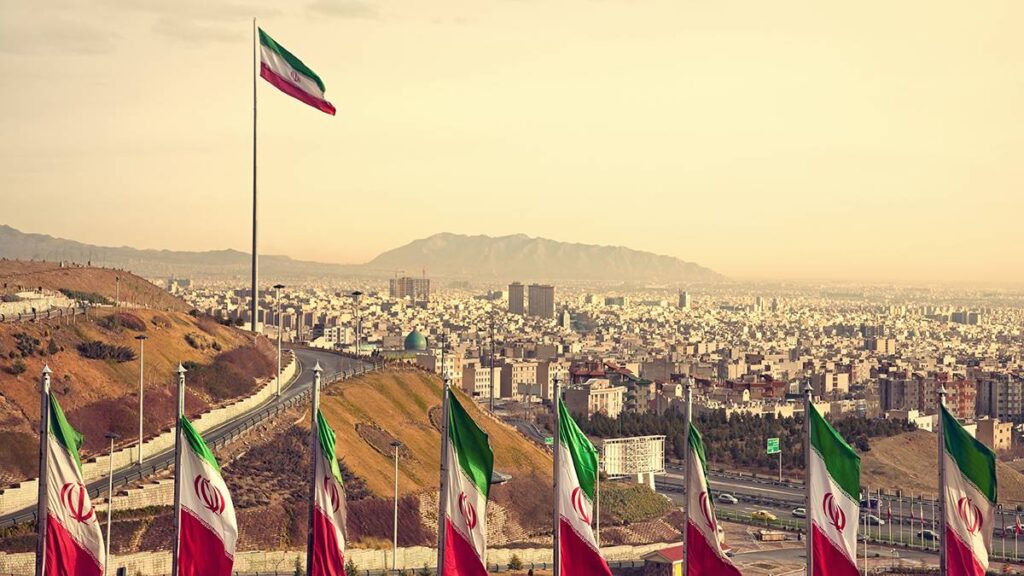
What is happening in Iran, Armenia’s friendly and immediate neighboring country? In recent weeks, this question has become a subject of active discussion in both expert and media circles. Some analysts speak of a deepening crisis, expanding protests, and even harsh slogans against the authorities. Others argue that such assessments are exaggerated and largely driven by external propaganda.
As is often the case, the real picture is far more complex and multi-layered. Iranian political analyst Pouya Hosseini explains the processes currently unfolding in the country.
Two layers of protest: social discontent and security challenges
According to him, two main layers of protest activity have formed in Iran. The first involves broad segments of society dissatisfied with the socio-economic situation. In recent months, the country has experienced several waves of price increases, while the national currency, the rial, has significantly depreciated against the US dollar. This has directly hit citizens’ purchasing power and become a key driver of street protests.
At the same time, Iran’s Supreme Leader has publicly acknowledged the legitimacy of peaceful protests. The authorities have stated that they do not obstruct peaceful demonstrations and recognize public discontent, emphasizing the state’s responsibility to address socio-economic problems.
Peaceful protest and the role of law enforcement
Hosseini notes that Iran clearly distinguishes between peaceful protests and riots. In the case of peaceful demonstrations, law enforcement agencies generally adopt a restrained stance. However, when provocations, clashes, or security threats emerge, the police act firmly.
Special attention is paid to groups that may be linked to internal or external actors seeking to turn peaceful protests into unrest. In such cases, arrests and preventive measures are carried out.
Root causes of the economic crisis
At the core of Iran’s economic problems, the analyst says, lies the dual exchange rate system. The country operates with both an official and a market dollar exchange rate. This creates serious distortions in trade and financial flows.
Large exporters are required to repatriate foreign currency earnings through the state banking system. When the official rate is significantly lower than the market rate, exporters are reluctant to do so. As a result, Hosseini notes, millions and even billions of dollars remain outside the country, worsening the domestic currency shortage and fueling further depreciation of the rial.
A “painful but necessary surgery”
To overcome the crisis, Iranian authorities are attempting what the analyst describes as a “painful but necessary economic surgery.” This involves unifying the official and market exchange rates. The move is intended to encourage exporters to bring foreign currency back into the country and stabilize the financial system.
However, the measure carries serious short-term consequences, including sharp price increases, social tension, and significant hardship for the population. The state is trying to mitigate the impact through social transfers, food assistance programs, and other support mechanisms.
There is no consensus within Iran regarding the proposed reform. Some experts argue that such a “surgery” should have been carried out only after preliminary economic stabilization. Otherwise, the economy may not withstand the burden. Others believe that without this step, the crisis would only deepen.
Risks of external influence
Hosseini also warns that periods of instability create opportunities for external actors and their networks. Their goal, he says, is to draw peaceful protesters into confrontations with security forces, generate casualties, and further destabilize the country. These risks, according to the analyst, explain why Iran’s national security and law enforcement bodies resort to harsh measures against provocative elements.